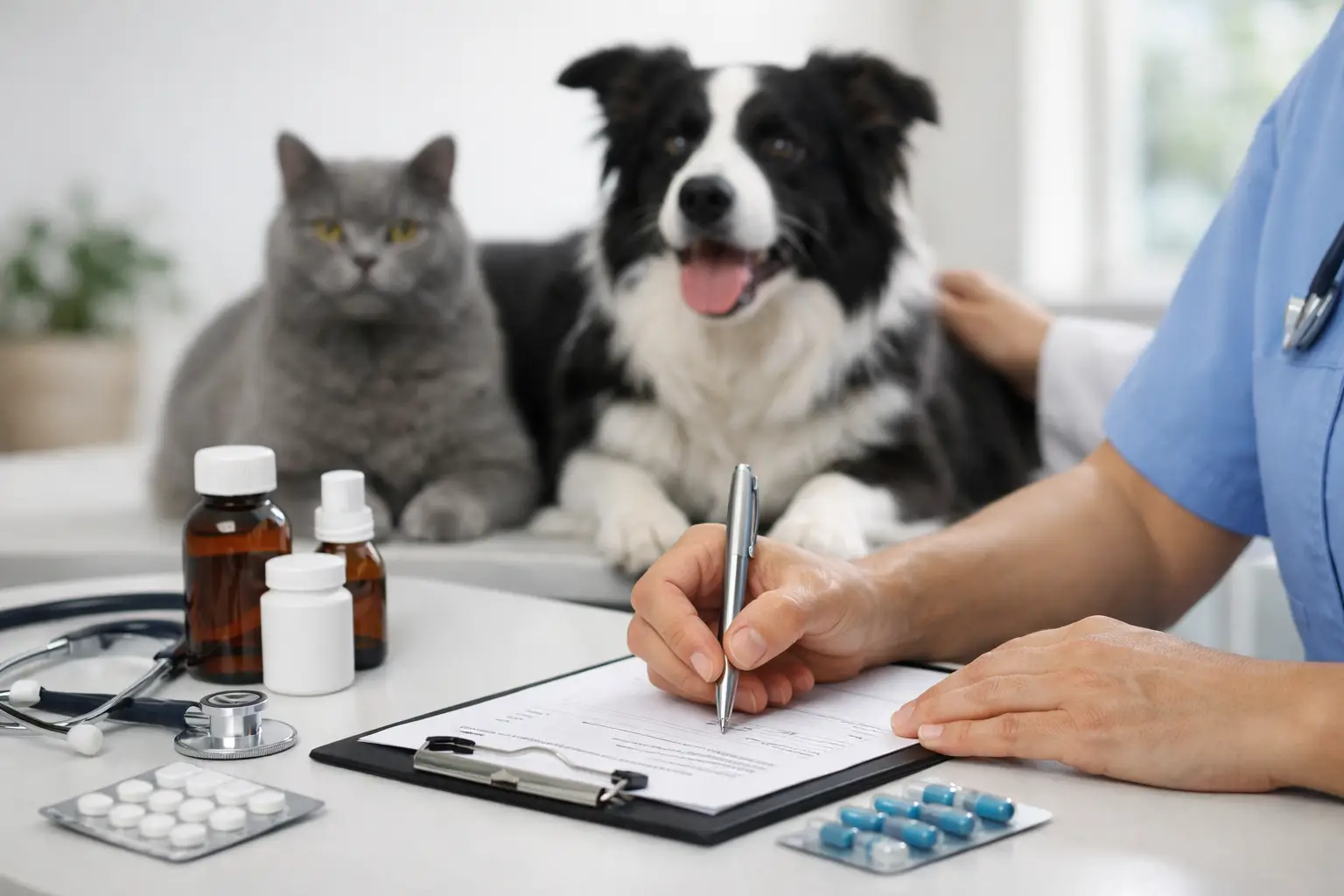
That familiar moment at the end of a vet visit can feel a bit uncomfortable: your pet needs medication, the price is given, and you are left wondering whether you have any choice. A written veterinary prescription UK gives you that choice. It allows you to buy a prescribed medicine from another legitimate supplier rather than only from the practice that examined your pet.
It is not about cutting corners or treating your dog or cat from the internet. It is about being able to compare prices, understand what you are paying for, and make a sensible decision while keeping your pet’s care safe. When bills are already worrying, that bit of control matters.
💊 What is a written veterinary prescription?
A written prescription is a document from the vet who has assessed your pet. It sets out the medicine, strength, dose, directions and the animal it is for. You can then take it to a registered veterinary pharmacy, including a reputable online pharmacy, for the medication to be dispensed.
Many commonly prescribed veterinary medicines are classed as POM-V, meaning Prescription Only Medicine - Veterinarian. These include a range of pain relief, antibiotics, anti-itch treatments, heart medicines and long-term medications. A vet must decide that the medicine is appropriate before it can be prescribed.
The prescription does not make medication risk-free or interchangeable. Your vet still needs enough recent knowledge of your pet’s health to prescribe responsibly. For some conditions that may mean an examination, blood tests, a urine sample, or a check-up before further medication can be issued.
Your right to ask for a prescription
If your vet has prescribed a POM-V medicine, you can ask for a written prescription. Practices may charge a reasonable fee for producing one, and that fee should be made clear. They are also allowed to decide, on clinical grounds, that your pet needs to be seen again before a prescription is issued or repeated.
That is not a trick to force another consultation. Medicines can affect the liver, kidneys, blood pressure, appetite and behaviour. A dose that suited a young, otherwise healthy dog may no longer be right once they are older, have lost weight, or started another treatment. The safest option is not always the cheapest box on a website.
But asking should never feel awkward. A clear conversation might sound like this: “Could I have a written prescription, please? I would like to compare the price of the medicine.” It is a perfectly reasonable request.
A good practice should also explain the other option plainly: the cost of buying the medicine directly from them, the prescription charge , and when a recheck is needed. You can then do the maths without pressure.
When buying elsewhere can make sense
For a short course of medication, particularly a low-cost tablet or liquid, the saving may be small once you add a prescription fee and delivery. Buying directly from the vet can be the simplest route, especially if your pet needs treatment that day.
For ongoing medication, the difference can be more meaningful. Dogs and cats taking long-term pain relief, thyroid treatment, heart medication or allergy medication may need repeat supplies for months or years. Even a modest saving per pack can add up.
There are practical considerations too. A local supplier may have the medicine immediately, while an online pharmacy might need a few days to process the prescription and dispatch it. If your pet has only two tablets left, waiting for a delivery is not a good plan.
Before ordering, check that you are using a legitimate UK supplier and that the product is exactly the one prescribed. Do not substitute the strength, formulation or brand without asking the prescribing vet. A chew, capsule, tablet and liquid are not always equivalent, even when the active ingredient sounds similar.
🐾 Why your vet may need to see your pet again
A prescription is not a lifetime pass for repeat medicines. How often a pet needs a review depends on the condition, the drug and their overall health. A cat on long-term anti-inflammatory medication, for example, may need monitoring blood tests because kidney function can change quietly. A dog receiving medication for itchy skin may need a review if the underlying trigger has changed.
This is where an unhurried consultation is valuable. Rather than simply approving another box of tablets, your vet can ask whether the medicine is helping, whether your pet is eating normally, whether there have been side effects, and whether the dose still matches their weight. It is proper medical care, not paperwork for paperwork’s sake.
For nervous pets, this can be especially helpful at home. No wrestling with the cat carrier, no car journey and no crowded waiting room. At Vet on the Loose, home appointments are at least 30 minutes, creating room to discuss treatment options, medication costs and the practical realities of giving tablets to a determined cat.
That familiar moment at the end of a vet visit can feel a bit uncomfortable: your pet needs medication, the price is given, and you are left wondering whether you have any choice. A written veterinary prescription UK gives you that choice. It allows you to buy a prescribed medicine from another legitimate supplier rather than only from the practice that examined your pet.
It is not about cutting corners or treating your dog or cat from the internet. It is about being able to compare prices, understand what you are paying for, and make a sensible decision while keeping your pet’s care safe. When bills are already worrying, that bit of control matters.
💊 What is a written veterinary prescription?
A written prescription is a document from the vet who has assessed your pet. It sets out the medicine, strength, dose, directions and the animal it is for. You can then take it to a registered veterinary pharmacy, including a reputable online pharmacy, for the medication to be dispensed.
Many commonly prescribed veterinary medicines are classed as POM-V, meaning Prescription Only Medicine - Veterinarian. These include a range of pain relief, antibiotics, anti-itch treatments, heart medicines and long-term medications. A vet must decide that the medicine is appropriate before it can be prescribed.
The prescription does not make medication risk-free or interchangeable. Your vet still needs enough recent knowledge of your pet’s health to prescribe responsibly. For some conditions that may mean an examination, blood tests, a urine sample, or a check-up before further medication can be issued.
Your right to ask for a prescription
If your vet has prescribed a POM-V medicine, you can ask for a written prescription. Practices may charge a reasonable fee for producing one, and that fee should be made clear. They are also allowed to decide, on clinical grounds, that your pet needs to be seen again before a prescription is issued or repeated.
That is not a trick to force another consultation. Medicines can affect the liver, kidneys, blood pressure, appetite and behaviour. A dose that suited a young, otherwise healthy dog may no longer be right once they are older, have lost weight, or started another treatment. The safest option is not always the cheapest box on a website.
But asking should never feel awkward. A clear conversation might sound like this: “Could I have a written prescription, please? I would like to compare the price of the medicine.” It is a perfectly reasonable request.
A good practice should also explain the other option plainly: the cost of buying the medicine directly from them, the prescription charge , and when a recheck is needed. You can then do the maths without pressure.
When buying elsewhere can make sense
For a short course of medication, particularly a low-cost tablet or liquid, the saving may be small once you add a prescription fee and delivery. Buying directly from the vet can be the simplest route, especially if your pet needs treatment that day.
For ongoing medication, the difference can be more meaningful. Dogs and cats taking long-term pain relief, thyroid treatment, heart medication or allergy medication may need repeat supplies for months or years. Even a modest saving per pack can add up.
There are practical considerations too. A local supplier may have the medicine immediately, while an online pharmacy might need a few days to process the prescription and dispatch it. If your pet has only two tablets left, waiting for a delivery is not a good plan.
Before ordering, check that you are using a legitimate UK supplier and that the product is exactly the one prescribed. Do not substitute the strength, formulation or brand without asking the prescribing vet. A chew, capsule, tablet and liquid are not always equivalent, even when the active ingredient sounds similar.
🐾 Why your vet may need to see your pet again
A prescription is not a lifetime pass for repeat medicines. How often a pet needs a review depends on the condition, the drug and their overall health. A cat on long-term anti-inflammatory medication, for example, may need monitoring blood tests because kidney function can change quietly. A dog receiving medication for itchy skin may need a review if the underlying trigger has changed.
This is where an unhurried consultation is valuable. Rather than simply approving another box of tablets, your vet can ask whether the medicine is helping, whether your pet is eating normally, whether there have been side effects, and whether the dose still matches their weight. It is proper medical care, not paperwork for paperwork’s sake.
For nervous pets, this can be especially helpful at home. No wrestling with the cat carrier, no car journey and no crowded waiting room. At Vet on the Loose, home appointments are at least 30 minutes, creating room to discuss treatment options, medication costs and the practical realities of giving tablets to a determined cat.
How long does a veterinary prescription last?
The expiry date is stated on the prescription, and it may be shorter than the legal maximum if your vet feels that is clinically appropriate. In general, veterinary prescriptions can be valid for up to six months. There are important exceptions: in case of controlled drugs, for example, there're tighter rules and are generally valid for 28 days.
Do not assume a prescription can be used repeatedly. The document will state whether repeats are permitted and, if so, how many. The pharmacy must follow those instructions. If your pet’s symptoms have worsened, changed or returned after treatment, contact your vet rather than using an old prescription as a shortcut.
It is also wise to order routine repeat medication before you run out. Give yourself time for the prescription to be prepared, accepted by the supplier and delivered. A few days’ planning avoids the stressful choice between an urgent purchase and missed doses.
What should be on the prescription?
The technical details are the vet’s responsibility, but checking the basics can prevent delays. It should identify your pet and you as the keeper, name the prescribing vet and practice, give the date, and state the medicine, quantity, strength and dosage instructions. It should also explain any permitted repeats.
If something looks wrong - perhaps the pet’s weight has changed, the dose does not match what you discussed, or the supplier says a detail is missing - pause and ask. Never guess a dose or split medication unless your vet has specifically advised it.
Keep the prescription and packaging together until the course is finished. This is useful if another family member gives the medicine, if you need to speak to an out-of-hours vet, or if side effects develop. For liquid medicines, use the supplied syringe rather than a kitchen spoon. Small details make a real difference to safe dosing.
A prescription is choice, not a compromise
There is no prize for paying more than you need to, and there should be no guilt in asking what medication will cost. Equally, the cheapest option is not automatically the right one if it delays urgent treatment, comes from an unverified source, or bypasses the checks your pet needs.
The best veterinary care leaves space for both facts: your pet deserves safe, properly considered treatment, and you deserve transparency about the cost. Ask about a written prescription, ask when a recheck is needed, and ask what options are genuinely available. Then you can make the decision with a clear head - preferably while your pet is at home, comfortable, and you are enjoying a cuppa.