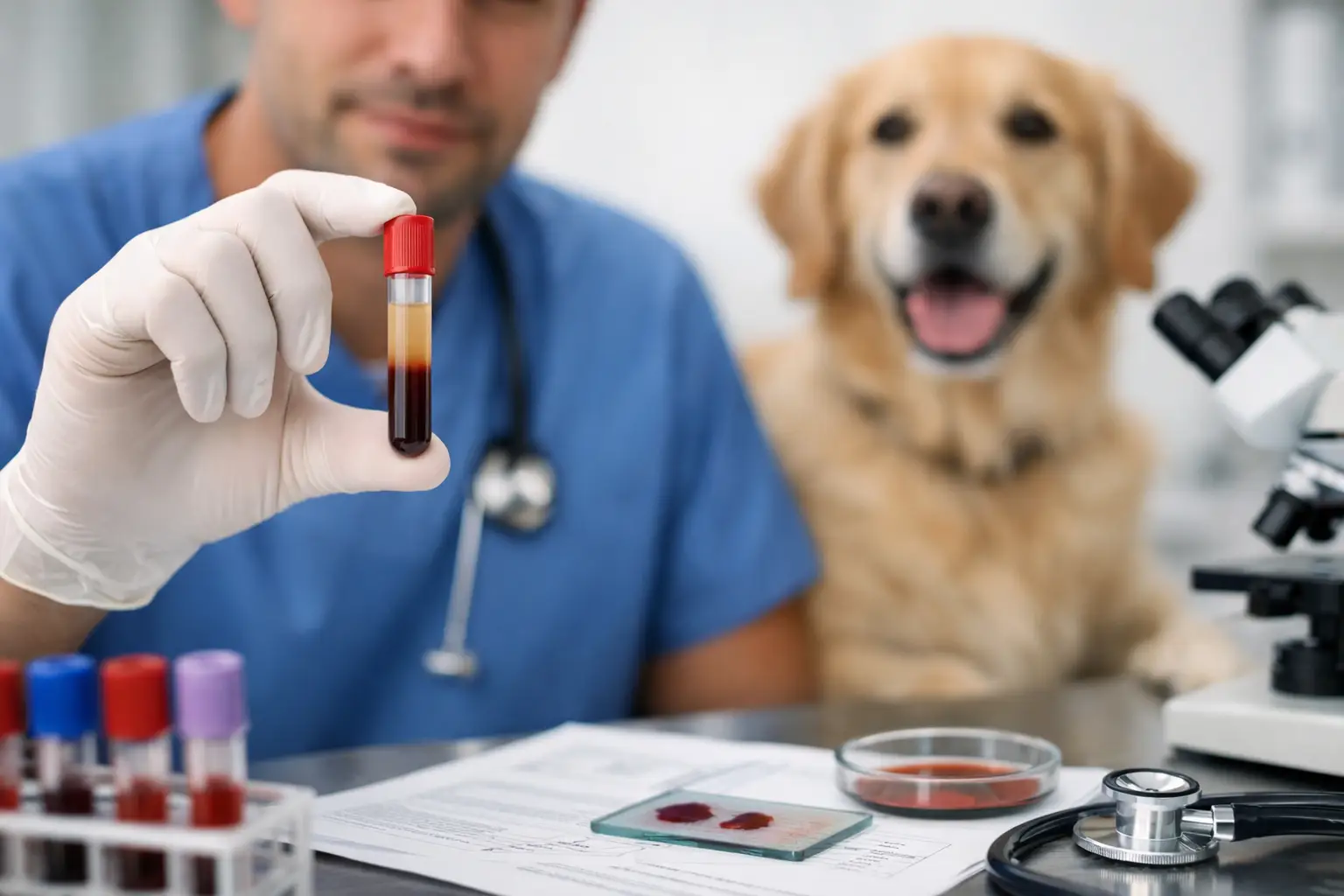
A pet can still greet you at the door, eat most of their dinner and enjoy a cuddle while something is quietly changing inside. That is where veterinary blood testing can be genuinely helpful. It gives us information we cannot get from looking, listening or feeling alone - often without putting your dog or cat through a stressful day at a busy surgery.
Blood tests are not something to fear, nor are they automatically needed at every appointment. They are one useful part of the bigger picture: your pet’s history, their examination, any symptoms you have noticed and, crucially, what feels right for your family and budget.
🩸 What does veterinary blood testing check?
A blood sample can tell us how several major organs and body systems are functioning. The exact tests depend on why we are taking the sample, but they commonly include a haematology profile and biochemistry profile.
Haematology looks at blood cells. Red blood cells carry oxygen around the body, so low levels may point towards anaemia. White blood cells form part of the immune system and can change with inflammation, infection, stress and some cancers. Platelets help blood to clot, although a low platelet reading in cats can sometimes simply be caused by clumping in the sample rather than a true problem.
Biochemistry looks at substances in the liquid part of the blood. This can give clues about the kidneys, liver, blood sugar, proteins, salts and minerals. Depending on the situation, we may also check thyroid levels, pancreatic markers, hormones or other more specific tests.
The word “clue” matters here. A blood result is rarely a diagnosis on its own. A mildly raised liver value does not automatically mean liver failure, just as normal bloods do not rule out every possible illness. Results need interpreting in context, sometimes alongside urine testing, a repeat sample, imaging or a referral.
A pet can still greet you at the door, eat most of their dinner and enjoy a cuddle while something is quietly changing inside. That is where veterinary blood testing can be genuinely helpful. It gives us information we cannot get from looking, listening or feeling alone - often without putting your dog or cat through a stressful day at a busy surgery.
Blood tests are not something to fear, nor are they automatically needed at every appointment. They are one useful part of the bigger picture: your pet’s history, their examination, any symptoms you have noticed and, crucially, what feels right for your family and budget.
🩸 What does veterinary blood testing check?
A blood sample can tell us how several major organs and body systems are functioning. The exact tests depend on why we are taking the sample, but they commonly include a haematology profile and biochemistry profile.
Haematology looks at blood cells. Red blood cells carry oxygen around the body, so low levels may point towards anaemia. White blood cells form part of the immune system and can change with inflammation, infection, stress and some cancers. Platelets help blood to clot, although a low platelet reading in cats can sometimes simply be caused by clumping in the sample rather than a true problem.
Biochemistry looks at substances in the liquid part of the blood. This can give clues about the kidneys, liver, blood sugar, proteins, salts and minerals. Depending on the situation, we may also check thyroid levels, pancreatic markers, hormones or other more specific tests.
The word “clue” matters here. A blood result is rarely a diagnosis on its own. A mildly raised liver value does not automatically mean liver failure, just as normal bloods do not rule out every possible illness. Results need interpreting in context, sometimes alongside urine testing, a repeat sample, imaging or a referral.
When is a blood test worth considering?
There are times when blood testing is a sensible next step because it may change what we do for your pet. If your dog has suddenly started drinking more, your cat is losing weight despite eating well, or either is vomiting repeatedly, a blood test may help narrow down the causes.
We often suggest testing for signs that can be easy to overlook at first: reduced appetite, low energy, bad breath, changes in toileting, weakness, unexplained weight change, yellowing of the gums or skin, or a coat that has lost its usual shine. In older pets especially, these changes may develop slowly enough to feel like “just getting old”. Ageing is real, but it should not be used as a catch-all explanation before we have checked for treatable problems.
Before anaesthesia or a procedure
Pre-anaesthetic blood tests help assess whether the body is likely to cope well with medicines and anaesthesia. They can identify concerns that may affect the safest anaesthetic plan, such as kidney or liver changes, dehydration, anaemia or altered blood sugar.
They cannot promise a risk-free procedure. No test can do that. But they provide useful information for making an informed decision rather than relying on guesswork.
Monitoring an existing condition
For pets taking long-term medication, blood testing may be recommended to make sure treatment is helping and not causing unwanted effects. This is common with conditions such as diabetes, thyroid disease, Cushing’s disease, kidney disease, arthritis pain management and epilepsy.
Regular checks can feel frustrating when your pet seems fine, particularly when costs are tight. Yet monitoring may let us adjust a dose early, avoid a medication becoming unsafe or spot that a condition is changing before your pet feels unwell. The right interval varies widely. Some pets need a recheck in weeks; others may only need one every few months.
A baseline for healthy adult and senior pets
A baseline blood test records what is normal for an individual pet at a particular point in time. This can be useful before symptoms start, particularly for senior dogs and cats. A future change from their normal may matter even when a result still sits within a laboratory reference range.
That said, routine screening is a choice, not a guilt test. A young, healthy pet with no concerning history may not need extensive blood work simply because they are at a vaccination appointment. We will explain what is being suggested, why it may help and what it is likely to cost , so you can decide without pressure.
🏠 Blood tests without the waiting-room drama
For many cats, the carrier is the first sign that something dreadful is about to happen. For some dogs, the car journey, unfamiliar smells and other anxious animals in reception are just as difficult. By the time they see a vet, their stress levels can be high - and that is not ideal for anyone.
Taking a sample at home can make a real difference. Your pet is on familiar ground, you are nearby, and there is time to let them settle rather than rushing through a standard 15-minute slot. A calm dog may happily stand by the sofa with a few treats. A cat may prefer a quiet room, a favourite blanket and a gentle, patient approach.
At Vet on the Loose, home consultations last at least 30 minutes. That gives room for the conversation first: what has changed, what you are worried about, and whether blood testing is the best next step. If it is, we can take the sample during the visit and arrange laboratory analysis where appropriate.
Not every pet will find a blood draw easy, even at home. Some are needle-shy, sore, very frightened or simply having a bad day. We may suggest trying again with a different plan, using calming support, or arranging a clinic visit if additional equipment or assistance is needed. Forcing the issue rarely creates a good experience for your pet or reliable results.
What happens when we take the sample?
Most blood samples are taken from a vein in the neck or front leg. We may clip a small patch of fur, clean the skin and use a fine needle. The collection itself usually takes only a few moments. Your pet might notice a brief scratch, but many are more interested in the treats afterwards.
A small plaster or light pressure is used afterwards to reduce bruising. Occasionally, pets develop a little bruise or temporary tenderness at the site. Serious complications are uncommon, but do let us know if there is swelling, continued bleeding or discomfort that does not settle.
Some tests require fasting, especially where blood fats or glucose could affect interpretation. This does not mean every blood test needs an empty stomach, and fasting is not suitable for every animal. Young pets, diabetic pets and those prone to sickness need individual advice. Water is usually fine, but always check before the appointment rather than withholding food unnecessarily.
Results: numbers need a proper conversation
Laboratory reports can look alarming: coloured boxes, arrows and unfamiliar abbreviations everywhere. A result outside the reference range is not automatically an emergency, and a result inside it is not always the whole story.
Reference ranges are built from results in many healthy animals. Your pet may naturally sit at one end of that range. Stress, recent meals, exercise, hydration, breed, age and medicines can all influence certain values. A greyhound’s blood profile, for example, can look different from that of other dogs without signalling illness.
What matters is the pattern. Are several kidney values changing together? Does the result fit with increased thirst and dilute urine? Has a value moved significantly since last time? Is a repeat test needed once a temporary upset has passed? These are the questions a vet should talk through with you in plain English.
Sometimes the answer will be reassuring: no obvious concerns, so we monitor your pet and carry on. Sometimes it will be a clear route to treatment. Other times, results will raise a question rather than settle one. That can be disappointing, but it still helps direct the next sensible step instead of paying for tests at random.
Clear choices matter as much as clinical care
Testing should never feel like a string of surprises added to a bill at the end of an appointment. Before a sample is taken, you should understand the purpose of the test, whether it is urgent, what sort of results it may provide and what the likely next steps could be.
There are trade-offs. A broad profile may offer a useful overview but cost more than a targeted test. Sending samples to an external laboratory can provide detailed analysis but may take longer than an in-house check. Further tests may give more certainty, but only if their answer will change treatment or help you make a decision.
If finances mean you need to stage investigations, say so. A good plan can often start with the tests most likely to answer the immediate question, then review once results are back. Your pet deserves thoughtful care, and you deserve honest options rather than pressure.
When not to wait for routine testing
Blood tests are valuable, but a poorly pet may need urgent hands-on care before laboratory results return. Seek prompt veterinary advice if your pet has collapsed, is struggling to breathe, has repeated vomiting or diarrhoea, cannot pass urine, has a swollen painful abdomen, seems severely weak, has pale gums, or may have eaten something poisonous.
For less dramatic changes, a short note on appetite, drinking, toileting, energy and weight can be incredibly useful at the appointment. You know what is normal for your pet better than anyone. Bring those observations, ask every question you need to ask, and give yourself permission to make decisions with good information and a cuppa beside you.