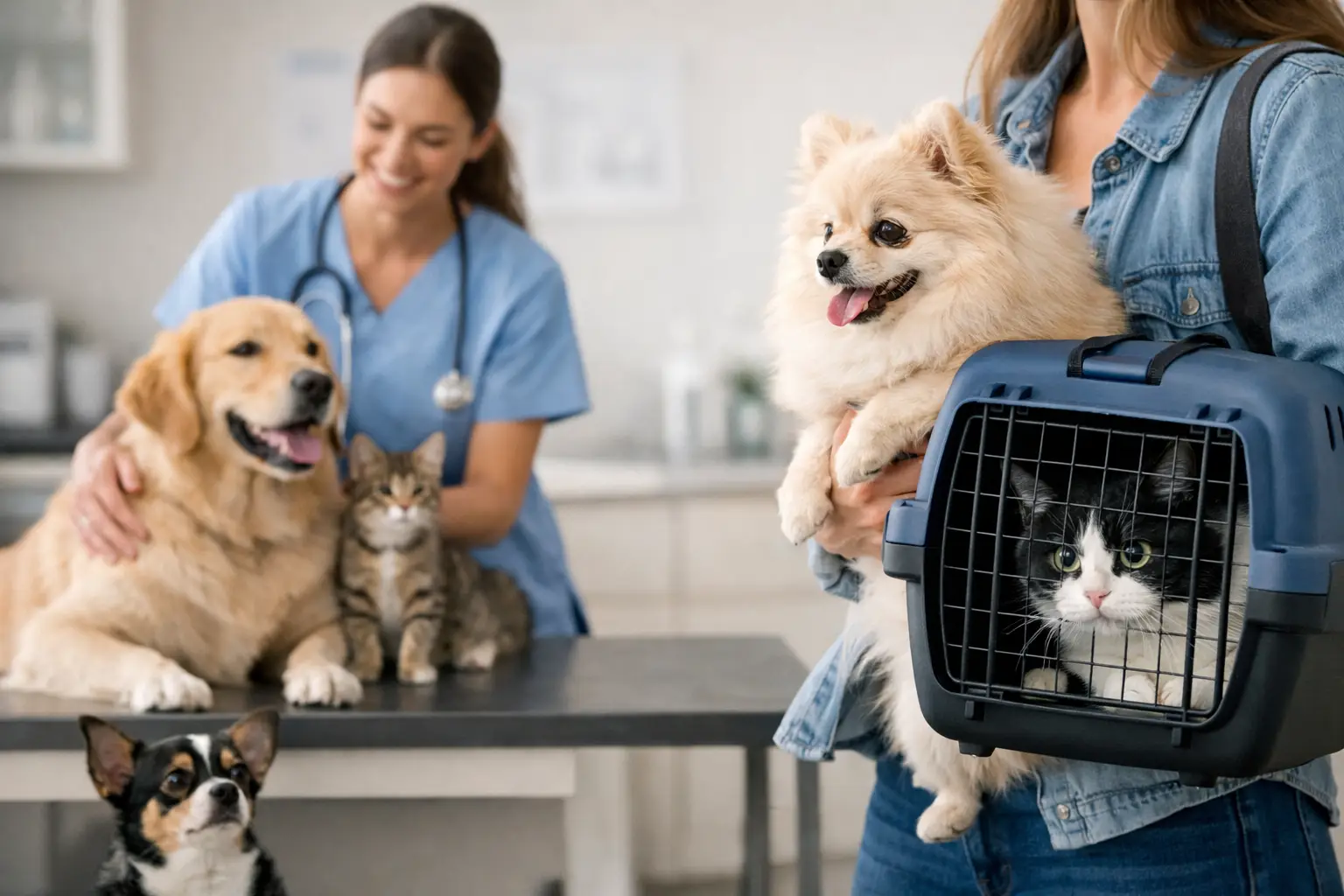
One pet needing a check-up is manageable. Three pets needing vaccinations, nail checks, repeat medication and a chat about that intermittent cough can feel like a military operation - especially when one cat has vanished behind the wardrobe and the dog has decided the carrier is suspicious.
A vet visit for multiple pets does not have to mean several stressful journeys, a waiting room full of anxious animals, or a day spent juggling appointments. With a little planning, it can be a calmer, more useful way to keep the whole household well.
🐾 Why book one vet visit for multiple pets?
Multi-pet homes are busy homes. It is easy for routine care to slip when every animal needs a separate trip to the surgery. You may notice one pet is due a booster, then remember another needs a prescription review, while the oldest one has been drinking a little more than usual. Before long, you are trying to arrange several appointments around work, school runs and carrier negotiations.
Seeing more than one pet during the same visit can make preventative care far easier to keep on top of. Vaccinations, weight checks, parasite-control discussions, skin concerns, ear checks and repeat medication reviews can often be dealt with in one properly planned session.
For many dogs and cats, the biggest benefit is emotional rather than practical. Cats are rarely thrilled by a car journey and an unfamiliar waiting room. Some dogs become overexcited or frightened around other animals. At home, they are in their own familiar space, with familiar smells and people nearby. That gives your vet a more realistic picture of how they are behaving too.
There is a financial side as well. Always ask how travel or call-out fees work before booking. At Vet on the Loose, there is one travel fee for the visit, regardless of how many pets are seen, with consultation and treatment charges explained per pet. Clear pricing matters when you are caring for a small furry crowd.
🗓️ Plan the vet visit for multiple pets before the day
The best group appointments are not rushed. When you book , say exactly how many animals you would like the vet to see, their species, approximate ages and the reason for each consultation. A healthy young cat needing a vaccination is very different from an elderly dog with new mobility problems, and that information helps the appointment be given the right amount of time.
It also helps to be honest about temperament. Mention if your dog is worried by strangers, if a cat is likely to hide, or if two pets do not cope well being handled in the same room. This is not embarrassing information. It is useful clinical information, and it allows the visit to be organised around the animals rather than expecting them to behave like tiny, polite patients.
If one pet has a more urgent concern, flag it when you book. A pet who is struggling to breathe, has collapsed, is having repeated seizures, cannot pass urine, has eaten something toxic or is in severe pain needs urgent veterinary advice rather than waiting for a combined routine appointment. Group visits are brilliant for planned care, but emergencies need to come first.
Make a simple note for each pet
You do not need a colour-coded spreadsheet unless that is your idea of consultation and chill. A note on your phone is enough. Write down each pet's name, current medication, the concern you want to discuss and when you first noticed it.
Include practical details that can otherwise vanish from your mind when the vet arrives: how often the pet is eating, drinking, weeing or being sick; whether a lump has changed; which ear is being scratched; and whether the problem is daily, weekly or only after exercise. Photos and short videos can be particularly helpful for limping, coughing, odd breathing, seizures or behaviour that may not happen during the appointment.
🏠 Set the house up for calm, not chaos
Home visits remove the journey and waiting room, but a little preparation still makes a big difference. Choose a quiet room with good light and enough space for an examination. If possible, keep the pets who are not being seen first away from the front door. A doorbell, excited dog and nervous cat are not the ideal opening act.
For cats, it is sensible to shut doors to favourite hiding places before the appointment begins. Under the bed may be a safe place in normal life, but it makes a health check difficult. Give them a quiet room, leave their carrier open with familiar bedding inside, and let them settle. Do not chase them around the house ten minutes before the vet arrives if you can help it.
For dogs, a short sniffy walk beforehand can take the edge off excess excitement. Avoid a big meal immediately before an examination if blood tests might be needed, unless your vet has advised otherwise. Keep leads handy and have a few favourite treats available, provided there are no dietary restrictions.
Where pets live together peacefully, it is often helpful for them to remain within sight or smell of one another. Some are reassured by their companion. Others become more unsettled, protective or competitive. It depends on your household, and there is no prize for having every animal in the room at once. Seeing them one at a time is often calmer and safer.
💉 What can be done in one appointment?
Routine care is usually the easiest fit for a multi-pet booking. Your vet can assess each animal individually, check weight and body condition, listen to the heart and lungs, examine eyes, ears, teeth and skin, and discuss vaccinations or parasite prevention where appropriate.
It is also a good opportunity to step back and spot patterns. If two cats in the same home are itchy, for example, the answer may involve flea control, diet, environment or all three. If several pets are gaining weight, it may be time to look at portion sizes, treats and who is feeding whom. No judgement - multi-pet feeding arrangements can become wonderfully confusing.
Diagnostic tests may also be possible during a home appointment. Blood or urine testing can be valuable for concerns such as increased thirst, weight loss, vomiting, reduced appetite, kidney monitoring or medication checks. Not every issue can be diagnosed on the spot, and some pets will need imaging, hospital treatment or referral. A good vet will explain what can be managed at home, what needs a clinic setting, and why.
🐶🐱 Give every pet their own moment
It can be tempting to focus on the animal with the obvious problem and rush through the rest. Try not to. Each pet deserves an individual examination and conversation, even if they are all the same breed, from the same litter or apparently very similar in personality.
Avoid comparing their symptoms too closely. One older cat sleeping more may be perfectly comfortable; another may be quietly developing arthritis, dental pain or kidney disease. One dog drinking more water after a hot day may be normal; a continuing increase is worth investigating. The value of a longer appointment is having time to talk through those differences without feeling that the next person is waiting outside.
If cost is a concern, say so early. It is entirely reasonable to ask which tests are most useful now, what can safely be monitored, what a medication is for, and whether a written prescription is an option. Veterinary care should involve informed choices, not pressure or mystery bills handed over at the end.
After the appointment: keep the routine going
Before the vet leaves, make sure you know what happens next for each animal. That may be a vaccination date, a course of tablets, a diet trial, a urine sample to collect, test results to await or signs that mean you should call sooner. If several pets have treatment plans, put reminders in your phone before life gets busy again.
It is worth giving everyone a quiet hour afterwards too. A pet may be sleepy after a stressful examination, mildly sore after an injection, or simply fed up that their afternoon involved being weighed. Separate pets briefly if one is wearing an unfamiliar clinical smell and the others are reacting to it.
Caring for multiple pets means noticing a lot, organising a lot and loving a lot. Booking their care together can take some of the strain out of the process, leaving you with more time for the nice bit: a settled home, healthy animals and, ideally, a chance to enjoy that cuppa while everybody relaxes.