The carrier comes out and your cat vanishes behind the sofa. By the time you have negotiated them into it, driven to the surgery and sat beside an unfamiliar dog in the waiting room, everyone is on edge. A stress-free vet for cats is not about pretending veterinary care is always pleasant. It is about removing the avoidable bits of stress, so your cat can be assessed properly and you can ask questions without watching the clock.
For many cats, home is the place where they feel safest. It smells right, sounds right and contains all the usual hiding places. That changes the starting point of a consultation enormously.
🐱 Why a trip to the vet can feel huge to a cat
Cats are creatures of territory and routine. A car journey, strange noises, unfamiliar people and the scent of other animals can be overwhelming before the examination has even begun. Some will freeze quietly in their carrier. Others howl, drool, soil themselves or become defensive. None of these reactions mean they are ‘bad’ cats. They are simply telling us they do not feel safe.
This matters because anxiety can affect more than behaviour. A frightened cat may have a raised heart rate, higher blood pressure or blood glucose readings that are harder to interpret. They may resist being handled, making a quick check-up feel impossible. The owner can leave feeling guilty, while the cat takes hours or days to settle back at home.
A calm approach does not remove the need for a proper examination, vaccination, blood test or treatment. It gives us a better chance of doing those things gently, at a pace that suits the cat in front of us.
🏠 What a stress-free vet visit at home looks like
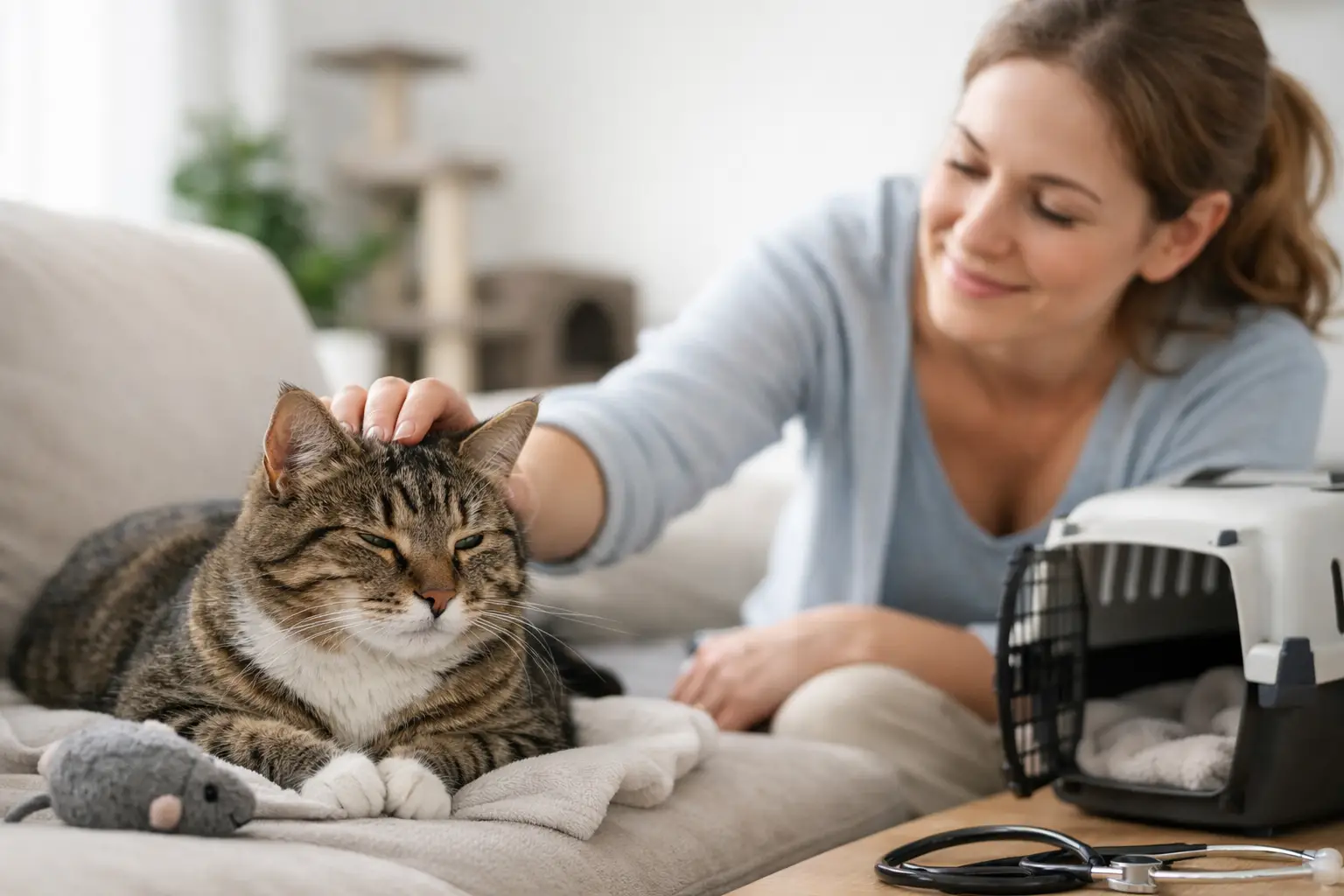
Home visits are not about chasing a cat around the house or expecting them to sit politely on the kitchen table. Often, the best first step is simply allowing them to decide where they feel most comfortable. That may be on a favourite blanket, on the windowsill, under a chair, or with their head peeking from a box.
A good home consultation starts with watching as much as examining. How is your cat walking? Are they bright and interested in what is going on? Is their coat well kept? Have they chosen a usual resting spot? These everyday observations can be genuinely useful, and they are much harder to make in a clinical room when a cat is shut down with worry.
Then comes calm, careful handling. There may be treats, a towel, quiet pauses and a little negotiation. Some cats are happiest being examined on their owner’s lap. Others prefer a stable surface. If a procedure cannot be carried out safely or kindly on that day, it is better to talk through the options than force the issue. Occasionally, a clinic setting, pre-visit medication or sedation will be the safest choice. Low stress should never mean compromised care.
⏰ Time changes the whole appointment
Rushed appointments and cats are a poor match. It can take several minutes for a nervous cat to emerge, sniff a hand or accept a treat. If the appointment is nearly over before they have settled, the pressure to get everything done can make the experience worse for everyone.
That is why longer appointments matter. Vet on the Loose offers a minimum of 30 minutes for every consultation, allowing time to listen to your concerns, take a proper history and let your cat set the pace where possible. You can explain that they have been drinking more, missing the litter tray, hiding upstairs or crying at night without trying to squeeze the important details into a final 30 seconds.
For multi-cat households, this can be especially helpful. One travel fee for the household means it is possible to discuss more than one pet during the same visit, rather than putting each cat through a separate carrier-and-car ordeal. It also gives you the chance to compare notes on appetite, weight and behaviour when you are living with several very different feline personalities.
🔍 A calmer visit can still be a thorough one
There is a misconception that veterinary care at home is only for vaccinations or an obvious minor problem. In reality, many routine investigations can be started in a familiar room. A consultation may include a full physical examination, vaccinations, discussions about flea and worm control , urine testing and diagnostic blood samples where appropriate.
Home is also a valuable place to talk about subtle changes. Cats are famously good at hiding illness. A cat who has become quieter, stopped jumping on the sofa, changed their eating habits or started toileting outside the tray may be in pain or unwell. Seeing the home environment can help put those changes into context. Is the litter tray difficult to reach? Is a new pet causing tension? Has an older cat stopped using the stairs?
There are limits, and being candid about them is part of good care. X-rays, ultrasound scans, major procedures, hospitalisation and emergency treatment need proper clinic or hospital facilities. If your cat needs those services, a home-visiting vet can explain why, help you understand the next step and ensure that referral is based on clinical need rather than convenience.
💊 Less stress does not mean less choice on cost
Worry about a vet visit is not always only about the cat. Many owners are anxious about the bill, particularly when a small concern turns into blood tests, medication or follow-up care. Clear pricing does not make illness easier, but it does mean fewer unpleasant surprises.
Ask what the consultation fee covers, whether there is a travel charge, what diagnostics are recommended and what can reasonably wait. A vet should be happy to explain the purpose of each test and the likely next steps if the result is abnormal. You should not feel pushed into decisions you do not understand.
It is also reasonable to ask about medicine prices and written prescriptions. Sometimes the convenience of having medication supplied directly is right for you. At other times, a written prescription gives you more choice. The important thing is that you know the options, as well as the cost and the clinical reasons for treatment.
😺 Help your cat before the appointment
A home visit removes the journey and waiting room, but a little preparation can make it even calmer. Choose a quiet room if your household is busy, and let children know that the cat needs space. Keep the cat indoors for a few hours beforehand if they are likely to disappear just before the appointment.
Have a few favourite treats ready, but do not worry if your cat refuses them. Let the vet know in advance if your cat is very fearful, has bitten or scratched when frightened, or is difficult to handle. That is useful information, not a confession. It helps create a plan that is safer for your cat and for everyone involved.
If you can, make a note of when the problem started and take a short video of anything that only happens at home, such as limping, coughing, unusual breathing, a strange walk or litter tray behaviour. Cats often decide to act completely normally the moment a professional arrives. A video can be much more revealing than a perfect description.
🕊️ When home is the kindest setting
For cats nearing the end of life , home can offer something no waiting room can: privacy, familiar smells and the people they trust nearby. Saying goodbye is never routine, even when it is the kindest decision. A home visit allows time to talk through the process, discuss sedation first, and decide what feels right for your family and your cat.
There is no need to rush straight out afterwards. You can sit with them, say what you need to say and make arrangements for aftercare in your own time. For many owners, that quiet space is a small but meaningful comfort during a heartbreaking day.
Whether your cat needs a vaccination, answers about a worrying change or a gentle goodbye, their care should not begin with a battle over a carrier. A calm room, an unhurried conversation and a vet willing to work at their pace can make the next appointment feel far more manageable. Put the kettle on, keep their favourite blanket nearby, and let home do some of the comforting.