The moment your dog starts taking the stairs more slowly, leaving food in the bowl or sleeping through the doorbell, it is easy to put it down to “just getting older”. Sometimes it is simply age. But a senior dog health check helps separate normal ageing from discomfort, illness or a change that can be treated early.
Older dogs are brilliant at quietly adapting. They may avoid jumping into the car rather than yelp, drink a little more without making a fuss, or become grumpy when touched where something aches. A calm, unhurried appointment gives us the chance to put those small clues together - and gives you time to ask every question that has been niggling away at you.
Why a senior dog health check is worth doing 🐾
Ageing is not a disease, but the risk of disease rises as dogs get older. Arthritis, dental pain, heart disease, kidney problems, diabetes, thyroid conditions and changes in eyesight or hearing can develop gradually. The earlier we find a problem, the more options there are to keep your dog comfortable and maintain their quality of life.
A check-up is not about hunting for problems for the sake of it, or turning every grey muzzle into a medical emergency. It is about getting a useful picture of how your individual dog is doing. A lively 11-year-old terrier and a slowing eight-year-old giant breed may both be considered senior, but their needs, risks and pace of ageing are very different.
For many senior dogs, a health check every six months is sensible. That is because six months feels like a short time to us, but it is a meaningful stretch in an older dog’s life. Your vet can advise whether your dog needs more frequent reviews, particularly if they are on long-term medication or have an existing condition.
What happens at an older dog check-up?
A good consultation should not feel like a quick once-over before the next patient comes in. Your vet will want to hear what life looks like at home: walks, sleep, appetite, thirst, toileting, mood and mobility. Those everyday details often matter as much as the physical examination.
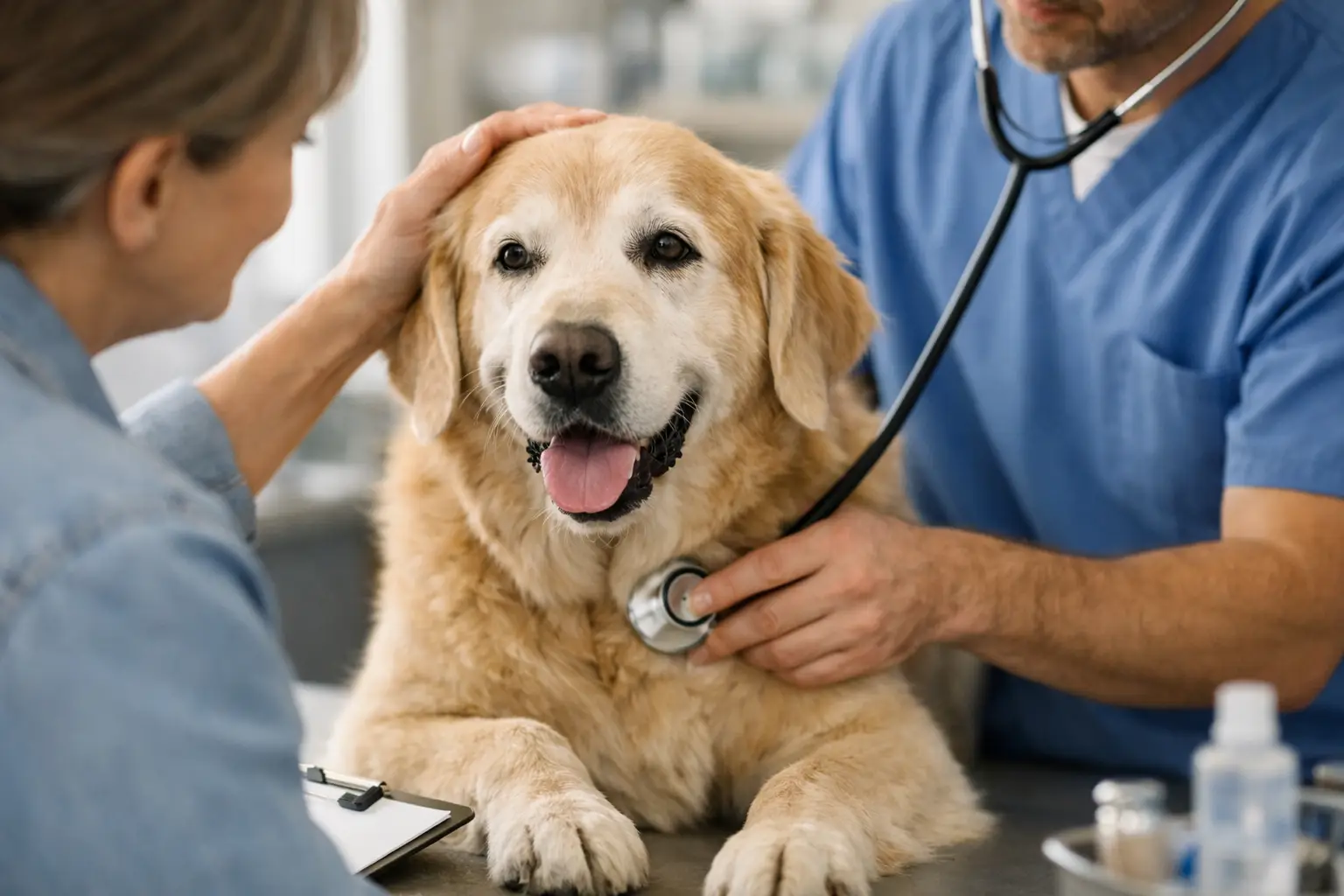
The examination usually includes listening to the heart and lungs, checking weight and body condition, feeling the abdomen, assessing joints and muscles, looking at the eyes and ears, examining the mouth and teeth, and checking the skin and coat. We may also assess lymph nodes, temperature and hydration, depending on what is going on.
Weight deserves special attention. A slow increase can make sore joints much harder to manage, while unnoticed weight loss can be an early clue to several illnesses. Bringing your dog in for a regular weigh-in is a simple way to spot a trend before it becomes a bigger concern.
Blood and urine tests can show what your dog cannot
A dog can appear bright, affectionate and fairly normal while internal changes are beginning. Blood tests can help assess organ function, blood cells, blood sugar and other markers relevant to your dog’s symptoms and age. Urine testing can provide valuable information about kidney function, diabetes, infection and hydration.
Tests are not automatically necessary for every older dog at every visit. It depends on their age, breed, medical history, current medication and examination findings. However, a baseline set of results can be very useful. If something changes later, we have a clearer idea of what is normal for your dog rather than relying only on broad reference ranges.
If testing is recommended, you should be told why, what it may tell us and what it is likely to cost before you decide. Clear choices matter. There is a difference between a thoughtful diagnostic plan and a worrying list of add-ons delivered when you are standing at the desk with a nervous dog and no time to think.
Changes to mention, even if they seem small
You know your dog’s normal better than anyone. Please do not worry about sounding overcautious. The details that feel minor at home can be clinically useful, especially when several appear together.
Make a note if you have noticed four or more of the following:
- drinking or urinating more, or having new accidents indoors
- eating less, eating more, dropping food or chewing on one side
- stiffness after rest, reluctance to jump, slower walks or slipping on floors
- panting at rest, coughing, restless nights or reduced stamina
- weight gain or loss, even where appetite seems unchanged
- confusion, altered sleep patterns, increased anxiety or a change in sociability
A video on your phone can be particularly helpful for intermittent limping, coughing, unusual breathing or episodes that do not happen in the consultation. A short clip of how your dog rises from bed or walks after a nap can reveal far more than trying to describe it from memory.
Mobility is about more than walks
Many owners expect arthritis to look dramatic. In reality, it often begins with small adjustments: taking longer to settle, avoiding a favourite sofa, hanging back at the kerb or choosing not to play. Some dogs become quieter. Others seem irritable because they are anticipating pain.
There are often practical changes that can help alongside veterinary treatment. Non-slip runners on hard floors, a supportive bed, a ramp for the car and shorter, steadier walks can make a real difference. Keeping nails trimmed is also more important than it sounds, as long nails can affect grip and joint posture.
Pain relief is never one-size-fits-all. Older dogs may have kidney, liver or stomach considerations that affect which medicines are appropriate. This is one reason regular checks and, where needed, monitoring blood tests are so valuable. Please do not give human painkillers unless specifically directed by a vet - several are dangerous for dogs.
A calmer appointment can give a truer picture 🏠
For some senior dogs, the hardest part of veterinary care is getting there. The car journey, strange smells, slippery floors and busy waiting room can leave them anxious or exhausted before the appointment has begun. A dog who is tense at the surgery may not walk, stand or behave as they normally do at home.
An in-home consultation can be especially helpful for older dogs with mobility issues, anxiety, sight or hearing loss, or several health concerns to discuss. They can stay on their own bed, have a little sniff around between checks and avoid the post-appointment scramble back into the car. You can put the kettle on, talk properly and show the vet the stairs, flooring or sleeping spot that may be affecting them.
At Vet on the Loose, appointments are a minimum of 30 minutes, allowing room for that proper conversation rather than a rushed list of symptoms. For multi-pet households, one travel fee for the visit can also make it easier to have everyone checked without turning the day into a logistical marathon.
How to prepare without overthinking it
You do not need to create a dossier, although a few notes are useful. Write down any medicines, supplements and flea or worming products your dog receives, including the dose if you know it. Note changes in eating, drinking, toileting and mobility, along with roughly when they started.
If urine testing might be useful, ask in advance whether a fresh sample is needed and how it should be collected and stored. Do not worry if you cannot manage it - there are other options, and your vet can guide you. If your dog is food-motivated, have a few favourite treats ready unless they have been asked to fast for a planned blood test.
Most of all, be honest about what you are seeing and what feels manageable. Treatment plans should fit real life. The right approach for a large dog on the third floor of a flat may differ from that for a small dog in a home with a garden, even if their diagnosis is similar.
When the focus shifts to comfort
Some senior health checks bring reassuring news and a straightforward plan. Others reveal that a condition is progressing. That can be upsetting, but it does not mean there is nothing to do. Comfort care can include pain management, help with mobility, appetite support, monitoring plans and frank conversations about good days, bad days and what your dog enjoys.
There is no prize for carrying on with treatment that causes more stress than benefit. Equally, choosing palliative care is not “giving up”. It is a loving, active decision to protect comfort and dignity, with your dog’s personality and your family’s circumstances at the centre.
Your older dog does not need to behave like a puppy to have a good life. The aim of a senior dog health check is to notice the changes that matter, ease the ones we can, and make sure the years ahead contain as many comfortable naps, familiar walks and tail-wagging moments as possible.