That limp has appeared after dinner. Your cat has been hiding under the bed since breakfast. Or perhaps your dog’s ear is looking sore, but the thought of getting them into the car and through a busy waiting room feels like a battle before you have even started. A remote vet consultation can be a very useful first step in the right situation - but it is not a replacement for hands-on care when your pet needs it.
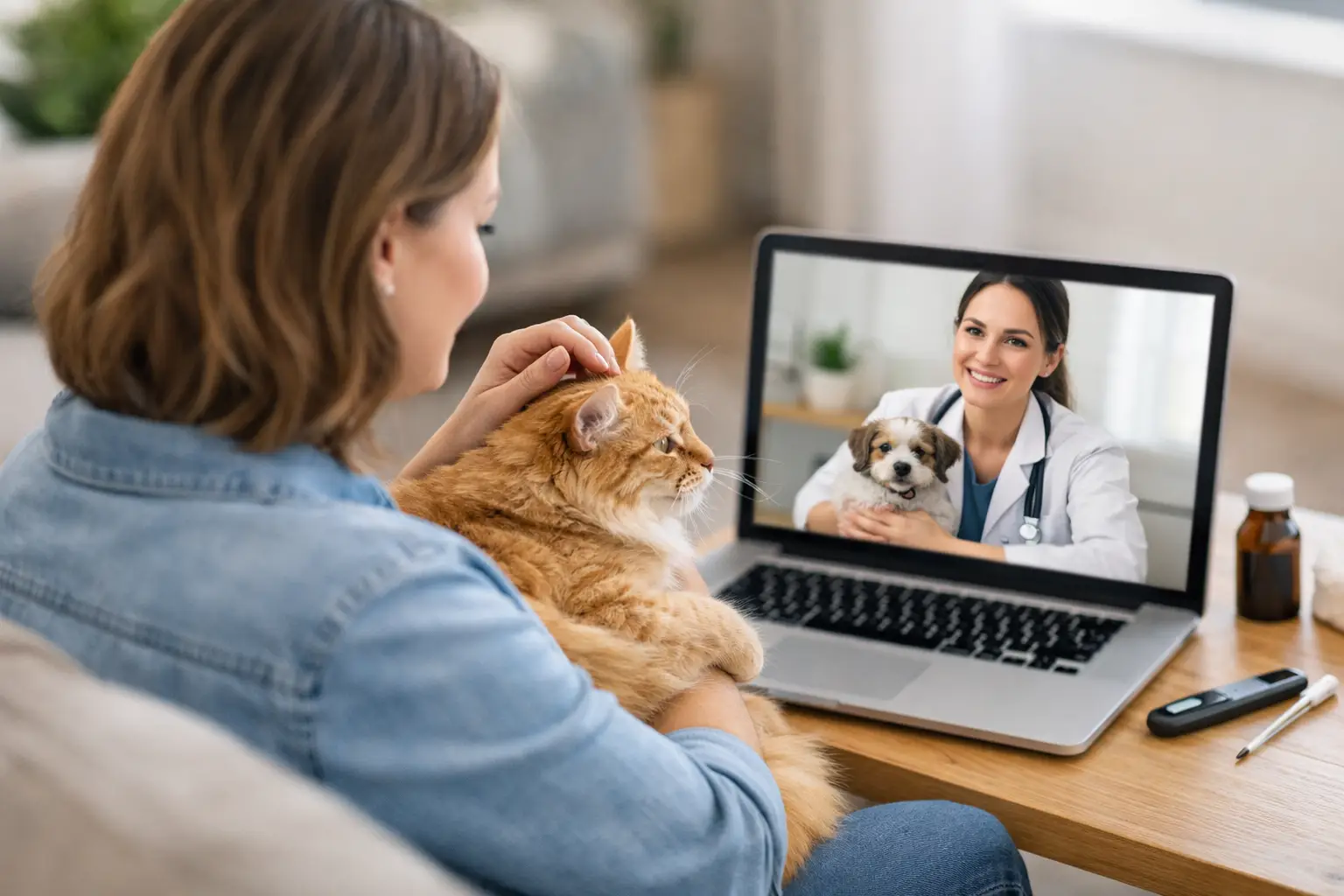
A video or telephone appointment gives you time to talk through what has changed, show a vet what you are seeing, and make a sensible plan. Sometimes that plan is simple monitoring and practical advice. Sometimes it is a prompt home visit or clinic appointment. The point is not to force every problem into a screen. It is to get your pet the right level of care without unnecessary stress, delay or guesswork.
What happens in a remote veterinary consultation?
Remote consultations are usually held by video call, although a telephone call can be suitable for follow-up discussions or questions where seeing your pet is not essential. You will be asked about your pet’s age, normal behaviour, eating and drinking, toileting, current medication and the symptoms you have noticed. Small details matter: when did it start, has it worsened, and is your pet otherwise themselves?
On video, a vet may be able to look at your pet’s posture, breathing, eyes, skin, mobility or general demeanour. You may be asked to show a sore paw, a rash, a lump you have found, or a short video of an intermittent limp. This can be particularly helpful with cats, who often behave very differently once they reach a veterinary surgery.
There are limits, and being honest about them protects your pet. A vet cannot listen to the heart and lungs, feel an abdomen, check a temperature, examine inside an ear or take a blood sample through a screen. Remote care works best when it is used as clinical triage and advice, not as a promise that every concern can be diagnosed from your kitchen.
When a remote vet consultation can help 🐾
A remote appointment can be a sensible option for mild, non-urgent concerns, especially when you are unsure whether your pet needs an examination. It can help with a change in appetite where your pet is otherwise bright, minor skin irritation, a discussion about a recurring issue, post-treatment check-ins, behavioural concerns or advice on parasite prevention.
It is also useful when your pet is already known to the practice and you need to discuss how they are responding to treatment. Perhaps a wound is healing and you want reassurance that it looks as expected. Perhaps your dog is taking medication and you need to talk through a change in appetite or whether a repeat prescription is appropriate. A proper conversation can stop you relying on internet searches that are frightening, contradictory and rarely specific to your pet.
For busy families, older owners and households with several pets, remote advice can make the first conversation far easier to arrange. You do not need to locate the cat carrier, persuade a nervous dog into the car or take time away from work before you even know whether an appointment in person is needed. Consultation and chill, with a cuppa nearby, can be genuinely helpful.
When your pet needs to be seen in person
If your pet is very unwell, remote advice is not the place to wait and see. Difficulty breathing, collapse, seizures, severe bleeding, repeated vomiting, a swollen or painful abdomen, suspected poisoning, inability to pass urine, serious trauma or sudden weakness need urgent veterinary attention. Call a veterinary practice straight away and follow their emergency instructions.
Less dramatic symptoms can still require a hands-on examination. Persistent lameness, ear pain, eye problems, dental pain, unexplained weight loss, a new or growing lump, ongoing diarrhoea, feverishness and changes in drinking or urination often need more than a camera can provide. Your vet may need to palpate the area, take a temperature, look down an ear canal, test urine or arrange blood tests.
This is where a mobile service can make a real difference. Rather than putting off an examination because your pet hates travelling, you can arrange for the vet to come to them. At home, many dogs and cats are more settled, owners can give a clearer picture of normal routines, and there is more space for questions than in a rushed 15-minute slot. Vet on the Loose offers a minimum 30-minute appointment, so there is time to examine, explain and decide on the next step together.
How to prepare for a remote appointment
A little preparation makes video advice much more useful. Choose a quiet, well-lit room and keep your pet nearby, without forcing them to sit still if they are anxious. Have their medication to hand, along with any recent weights, vaccination information or notes from another practice if relevant.
Before the call, write down when the problem began and what has changed since then. If the issue comes and goes, such as coughing, limping, sneezing or an odd movement, take a short video while it is happening. A clear clip filmed in daylight is often more useful than trying to recreate the moment on a call. It also helps to know whether your pet is eating, drinking, urinating and passing stools normally.
Be as open as you can, even if you worry something sounds minor or embarrassing. Mention a scavenged sock, a change in food, access to human medication, a fall from the sofa or a missed dose. Vets are not there to judge. Those details can change the advice completely.
Prescriptions, costs and realistic expectations
One understandable question is whether a remote consultation means medication can simply be prescribed. Sometimes medication may be appropriate, but it depends on your pet’s condition, their history and what the vet can safely assess. Veterinary prescribing rules exist to keep animals safe, and there are many situations where a physical examination must come first.
A good remote consultation should be clear about this from the start. You should leave knowing whether to monitor at home, arrange an examination, provide a sample, alter an existing plan, or seek urgent help. You should also understand likely costs before further tests or treatment are carried out. Clarity matters, particularly when pet care bills can feel worrying and unpredictable.
If medication is needed after an appropriate consultation, ask about your options . Written prescriptions can give owners choice over where medicines are dispensed, while a vet can still advise on the correct product, dose and safe use. The cheapest-looking option is not always suitable, but neither should you feel left in the dark about the cost of treatment.
Remote advice is part of care, not a shortcut
The best use of remote veterinary care is thoughtful and personal. It can spare an anxious pet an unnecessary journey, help an owner act sooner, and make follow-up support easier. Equally, it should lead to an in-person examination without hesitation when that is what your pet needs.
If you are not sure whether your dog or cat needs to be seen, trust the change you have noticed. You know what is normal for them. A calm conversation with a vet can turn that uneasy feeling into a clear, kind plan - and that is often the most helpful place to start.