

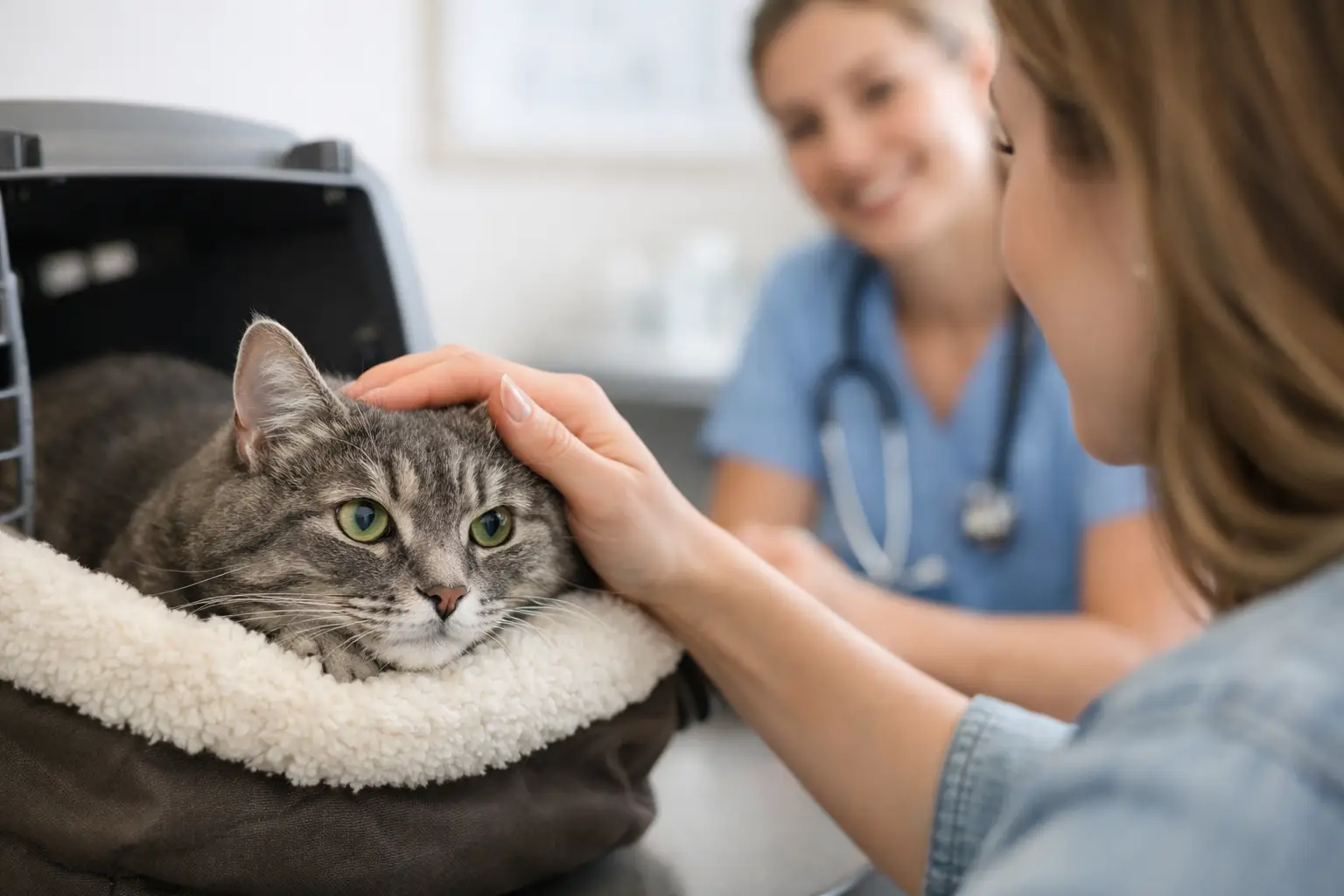
The moment the carrier appears, many cats know something is up. They vanish under the bed, fight the zip, cry in the car and arrive at the surgery already frightened. To reduce cat vet anxiety, the most useful changes often begin long before an appointment - and they do not need to be complicated.
Cats are not being difficult when they hide, hiss or freeze. They are reacting to unfamiliar smells, handling, noise, travel and a loss of control. A little planning can make routine care far less upsetting, while helping your vet get a clearer picture of how your cat is really feeling.
🐾 Why vet visits feel so big to cats
For most cats, home is their safe territory. A veterinary visit can mean being placed in a box they dislike, travelling in a moving car, meeting unfamiliar people and animals, then being examined on a slippery table under bright lights. That is a lot to process in a short space of time.
Stress can also change what we see in the consultation. A frightened cat may have a raised heart rate, tense muscles and a temperature that is higher than normal. They may be impossible to examine safely, despite being affectionate and relaxed at home. This is why a calm approach is not just about being kind - it can support better veterinary decisions too.
Some cats cope reasonably well with clinic visits, especially if they have had calm, positive experiences from kittenhood. Others find every stage difficult. Age, previous illness, pain and temperament all play a part, so there is no single approach that works for every cat.
🧺 Make the carrier part of everyday life
The carrier is often the first battle, so make it less of an event. Rather than storing it in the shed until appointment day, leave it open in a familiar room with a soft blanket inside. Add a treat, a favourite toy or a little of your cat’s usual bedding now and again. The aim is for it to become a perfectly ordinary place to nap, not a warning that trouble is coming.
Choose a sturdy carrier that opens from the top as well as the front, if possible. It is much easier to lift a nervous cat out gently than to pull them through a small doorway. A carrier with a removable top can be especially helpful, as some cats can be examined while sitting in the base with the top taken off.
Avoid chasing your cat around the house when it is time to leave. If you can, calmly close them into one quiet room with the carrier well before you need to go. Keep the room dim, move slowly and use a towel to guide them gently if needed. A frantic capture will make the next carrier experience harder.
Start small with handling at home
Most veterinary examinations involve looking at the eyes, ears and mouth, listening to the chest, feeling the tummy and checking paws or nails. You can help by making gentle handling a normal part of home life.
When your cat is settled, briefly touch a paw, lift an ear flap or run your hand along their sides, then stop before they become irritated. Follow with something they enjoy, whether that is a small treat, a chin scratch or simply being left in peace. Keep sessions short. The point is not to practise a full examination, but to build tolerance and trust over time.
Never hold a cat down to “get them used to it”. Forced handling can make anxiety worse and may lead to biting or scratching. If your cat is already fearful, painful or reactive, ask for individual advice before trying more hands-on practice.
🌿 Keep appointment day quiet and predictable
On the day, give yourself more time than you think you need. Cats notice rushing, raised voices and household chaos. A calm owner, a quiet room and a carrier prepared in advance can make a genuine difference.
A familiar-smelling towel over the carrier can offer privacy during travel and reduce visual stimulation. Make sure air can still circulate properly. In the car, secure the carrier so it cannot slide about, keep music low and avoid opening it, even if your cat cries. A distressed cat can escape very quickly in a car park or on the pavement.
Pheromone sprays may help some cats when used on bedding or inside the carrier beforehand, although results vary. They are not a magic fix, and they should never be sprayed directly onto your cat. For cats with severe fear, your vet may recommend anti-anxiety medication before an appointment. This is not a failure or a last resort. Used appropriately, it can prevent a frightening experience and make necessary care safer.
A calmer setting can reduce cat vet anxiety
For many cats, the journey and waiting room are the hardest parts. An at-home consultation removes both. Your cat can remain in their own familiar space, with their usual smells, hiding spots and people nearby. There is no car journey, no barking dog across the room and no queue of unfamiliar animals before they are seen.
This does not mean every cat will be delighted to meet a vet at home. Some will still hide upstairs or object to an examination, particularly if they are sore or unwell. But they often settle more readily when the appointment is unhurried and they are not already overwhelmed by travel.
At Vet on the Loose, home appointments last a minimum of 30 minutes. That extra time matters. It allows for a quiet hello, a chat about what you have noticed and a gentler pace than trying to fit a worried cat into a rushed slot. You can pop the kettle on, let your cat take a breath and give the consultation room to unfold.
Home care is particularly useful for routine checks, vaccinations , blood or urine testing, multi-cat households and older cats who struggle with travel. There are occasions when a clinic is the better option - for example, where imaging, surgery, hospital monitoring or more extensive equipment is needed. A good vet will be clear about that, rather than pretending that one setting suits every problem.
Help your vet see the real cat
Cats often hide symptoms, and a nervous cat may not show their usual behaviour during an appointment. Before the visit, make a few notes: when the problem started, whether appetite or litter tray habits have changed, what food and medication they have had, and whether they have been drinking more or less.
Short videos can be very helpful too. If your cat is limping, coughing, struggling to jump, having odd episodes or behaving differently, a video taken at home may show far more than they will demonstrate in front of a stranger. Do not delay urgent care to gather perfect evidence, though. If your cat is having difficulty breathing, has collapsed, cannot pass urine, has suffered a serious injury or seems severely unwell, seek urgent veterinary advice straight away.
Be honest about your cat’s behaviour. Tell the vet if they bite, scratch, panic in carriers or dislike being touched in a particular area. This is useful information, not something to feel embarrassed about. It helps everyone choose a safer, kinder plan.
Think beyond the appointment
How the visit ends affects the next one. Once you are home, let your cat come out of the carrier in their own time. Keep things quiet and avoid making a fuss if they want to hide for a while. If you have more than one cat, be aware that the returning cat may smell unfamiliar after a clinic visit, which can occasionally cause tension. Give them space and supervise any reintroductions calmly.
Then leave the carrier out again. A few treats inside over the following days are a small investment in an easier future appointment.
Your cat does not need to enjoy veterinary care for it to be manageable. The goal is simply fewer frightening moments, more choice where possible and enough calm that the care they need can happen with dignity. That is a very good place to start.