The doorbell goes, your dog starts barking, the children want to say hello and suddenly the calm, convenient home vaccination you pictured feels a little less calm. The good news is that a few small choices can make a huge difference. Knowing how to prepare dog for home vaccination means your vet can properly examine your dog, give the vaccination safely and make the whole visit feel far less like a big event.
For many dogs, being vaccinated at home is easier than a trip to the surgery. There is no car journey, no unfamiliar waiting room and no close encounter with a cat in a carrier or another worried dog. But home is still your dog's territory, and a visitor with a stethoscope can be exciting, strange or occasionally suspicious. A little preparation gives everyone the best chance of a consultation and chill.
🐾 Prepare your dog for home vaccination without the fuss
A vaccination appointment is not simply a quick injection. Your vet needs to check that your dog is well enough to be vaccinated on the day, discuss any concerns you have and review their vaccination history. That examination matters. Vaccines work best when given to a healthy dog, and signs such as vomiting, diarrhoea, coughing, unusual tiredness, a poor appetite or a flare-up of skin trouble may mean it is safer to postpone.
Try not to make the appointment feel mysterious. Keep your usual routine as normal as possible, including their walk, breakfast and rest time. A dog who has had an appropriate walk beforehand is often more settled, but avoid an exhausting run immediately before the vet arrives. The aim is relaxed, not worn out.
If your dog is food-motivated, keep a few small, high-value treats ready. Tiny pieces of chicken, cheese or their favourite soft treat can help create a positive association with the vet's arrival and give your dog something pleasant to focus on during the examination. If food is not their thing, a favourite toy, gentle praise or simply the comfort of being near you may work better.
There is no need to hold a dog tightly or trick them into an injection. In fact, restraint that feels frightening can make a nervous dog more worried next time. Your vet will assess your dog's body language and use the least stressful approach that is safe. Sometimes that means offering treats on the floor, examining them while they sit beside you or taking a brief pause rather than pushing ahead.
Choose a quiet, practical space
Your kitchen, lounge or hallway can all work well, provided there is enough light and room for your vet to examine your dog safely. A non-slip surface is ideal, especially for older dogs or those who are a little unsteady. If your floors are slippery, put down a familiar rug or blanket.
It helps to choose the space before the appointment rather than following an excited dog from room to room. Shut doors to rooms you do not want them dashing into, and keep other pets separate at first if their presence causes chaos. Your dog does not need an audience for their health check.
For dogs who bark at the door or become overexcited with visitors, answer the door calmly and have them on a lead if needed. Once the initial hello has passed, many dogs settle quickly. If yours is worried around strangers, tell the practice when booking. That information is useful, not embarrassing. A mobile vet can plan for a quieter introduction and allow more time for your dog to get comfortable.
Help your dog feel in control
Dogs communicate long before they growl or snap. Turning their head away, licking their lips, yawning, freezing, lifting a paw or trying to leave can all signal that they need more space. Let your vet know what your dog is usually like with handling, particularly around their ears, mouth, feet or back end.
If your dog wears a muzzle comfortably when needed, have it available, but do not put one on for the first time just before the appointment. A muzzle is a safety tool, not a punishment, and it should be introduced gradually with treats on a separate day. Most dogs will not need one, but open communication helps your vet make sensible decisions without drama.
Do not apologise for a nervous dog. Fear is not bad behaviour, and a good appointment is not measured by whether your dog sits perfectly still. It is measured by safe handling, clear communication and leaving your dog feeling as secure as possible.
Have the useful details to hand
Find your dog's vaccination card, passport if they have one and any previous veterinary records you hold. If you cannot find them, do not panic, but let the practice know in advance. The vaccination history helps your vet decide which vaccines are due and whether a restart course may be needed.
Mention any medication, supplements or recent treatment, including flea and worming products. Also flag previous vaccine reactions, even if they seemed mild. A little sleepiness after vaccination can happen, but facial swelling, hives, breathing difficulty, collapse or repeated vomiting are not symptoms to brush off. Your vet needs the full picture before choosing the right plan.
It is also worth writing down the questions that tend to occur to you at 11 pm. Perhaps your dog has been scratching more, their breath has changed, they seem stiff after a walk or you are unsure whether their parasite prevention is still suitable. Home appointments give you the chance to discuss the whole dog, not just the injection.
Be honest about health changes
Owners sometimes worry they are wasting an appointment if their dog seems under the weather and cannot be vaccinated. You are not. A check-up may still be valuable, and postponing a vaccine when a dog is unwell is a careful clinical choice, not a failure.
Equally, do not give pain relief or calming products intended for humans before the visit. Some are toxic to dogs, and others can affect the examination or interact with prescribed medicines. If your dog is very anxious, contact the vet beforehand so you can discuss suitable options rather than trying to manage it alone.
What happens during a home vaccination visit?
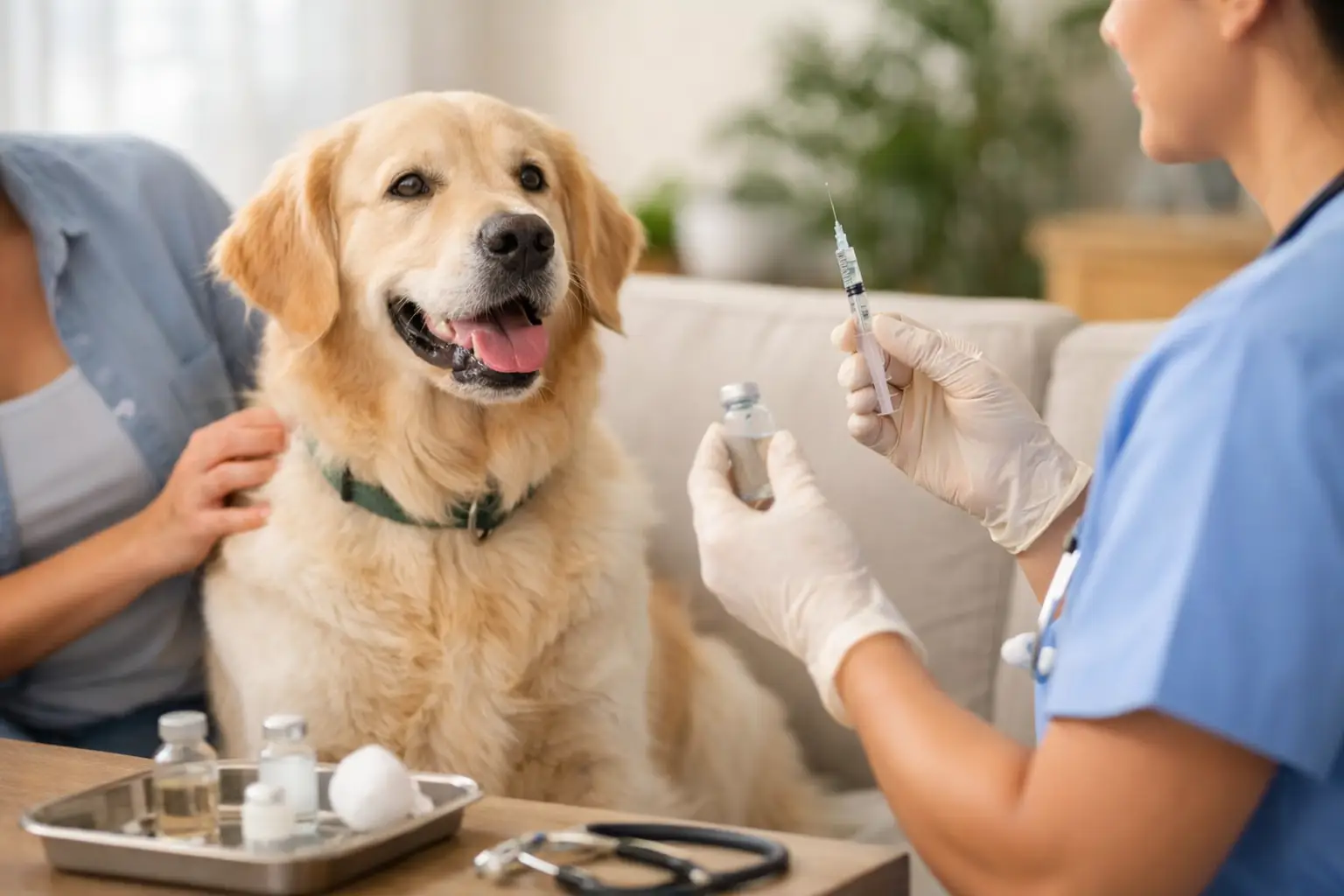
Your vet will usually start by getting to know your dog and listening to your concerns. They will carry out a health examination, which may include checking weight and body condition, listening to the heart and lungs, looking at the eyes and ears, feeling the abdomen and checking the skin, coat, teeth and joints where appropriate.
Only once they are satisfied your dog is fit for vaccination will they administer it. Most dogs barely notice, particularly when paired with a treat or some gentle distraction. The injection itself is quick, but it should never be rushed at the expense of a proper assessment.
At Vet on the Loose, appointments are a minimum of 30 minutes, which gives dogs time to settle and owners time to ask the questions that often get squeezed out of a standard appointment. It is particularly helpful for multi-pet homes , older dogs and anyone whose dog finds a conventional surgery overwhelming.
After the vaccination: keep the day gentle
Most dogs can carry on normally after a vaccine. A quiet day is sensible, though. Let them rest, offer water as usual and avoid planning a marathon walk, busy dog park visit or grooming appointment straight afterwards.
Mild tiredness, tenderness where the injection was given or a slightly reduced appetite for a day can occur. Keep an eye on them and follow the advice your vet gives for your individual dog. Contact a vet promptly if you see swelling around the face, difficulty breathing, collapse, severe lethargy, repeated vomiting or anything that feels markedly wrong. Trust your instincts - you know what is normal for your dog.
A calm home vaccination is not about making your dog behave perfectly. It is about meeting them where they feel safest, allowing enough time and treating their worries as real. Put the kettle on, keep the treats nearby and let the appointment work around the dog in front of you.