Knowing when the time may be right
The decision is rarely based on one bad afternoon. It is usually a pattern: more pain, more confusion, less interest in food, walks, affection or the things that once made your pet light up. Some pets have a clear diagnosis and a predictable decline; others simply become frailer, less mobile or less able to enjoy their ordinary routine.
Try looking at the whole week rather than judging one moment. Are the good days becoming fewer? Can pain, breathlessness, sickness or anxiety still be managed? Is your pet able to get comfortable, keep clean and reach food, water and the toilet? Most importantly, are they still having moments that feel like them?
A veterinary quality-of-life conversation can be a real relief. It is not about being told what to do. It is about having an honest assessment of your pet's comfort, what treatment can realistically achieve and whether waiting may bring more distress than benefit. Choosing euthanasia to prevent suffering is not giving up. It is a final act of care.
How to plan peaceful pet euthanasia without pressure
Where possible, arrange the appointment before your pet is in severe distress. That does not mean acting too soon. It means avoiding the awful situation where an emergency, perhaps in the middle of the night, leaves everyone frightened and short of choices.
When you speak to the vet, ask what the appointment will involve and how much time is allowed. A peaceful goodbye cannot be squeezed into a rushed slot. At Vet on the Loose, home visits are designed to be unhurried, with time for questions, cuddles and the pauses that families need.
It also helps to talk through practical details in advance. You may want a morning appointment, when your pet is usually settled, or later in the day so the household can be together. Think about the room where they are most comfortable. A favourite bed, a soft blanket, a patch of sun in the garden or the sofa beside you can all be right - there is no script to follow.
Decide who should be present, but leave room to change your mind. Some people want the whole family there; others feel calmer with one or two people. If a loved one lives elsewhere, they may wish to say goodbye beforehand by phone or video. There is no prize for coping in a particular way.
What happens during a home euthanasia visit 🐾
The vet will usually begin by talking with you, meeting your pet quietly and confirming that euthanasia remains the kindest choice. This is a chance to ask any final questions. If something has changed or you are uncertain, say so. You are allowed to pause.
In most cases, the first step is a sedative injection. This helps your pet become very relaxed and sleepy, often while being held or resting on their bed. It may take several minutes to work fully. The aim is to remove fear and make the next stage gentle.
Once your pet is deeply settled, the vet gives the final medication. It is an anaesthetic overdose, which causes the heart to stop. Your pet will be unconscious and unaware at this point. The vet will listen carefully to confirm that they have passed, then give you privacy and time with them.
There can occasionally be small movements, a final breath, muscle twitching or the release of urine or faeces after death. These are normal body reflexes, not signs that your pet is suffering or aware. Being told this beforehand can prevent a frightening surprise on an already emotional day.
You do not have to fill the room with words. Many owners stroke their pet, talk to them, play familiar music or offer a favourite treat before the sedative. Others simply sit close and enjoy a cuppa while their pet dozes. Quiet is perfectly loving too.
Preparing the space
Keep things simple. Have a comfortable place ready and make sure other pets are safely nearby if you would like them to have the chance to see or smell their companion afterwards. Some animals seem to understand; others show little reaction. Neither response is wrong.
If your dog is large or your cat is very anxious around strangers, mention this when booking. The vet can plan the visit around their needs. It may be sensible to give prescribed pain relief or calming medication beforehand, but only use medication under veterinary advice.
Children and other pets
Children often cope better with clear, gentle honesty than with confusing phrases such as “put to sleep forever” or “gone away”. Explain that the pet is very poorly, the vet will give medicine to stop their body working, and they will not feel pain. Let children choose whether to be present, rather than assuming either answer is best.
A child might draw a picture, choose a flower for the garden, help make a paw print or write a note. Teenagers may prefer privacy. Adults may find that they need it too. Grief does not follow age or rules.
For another dog or cat in the home, routine can be reassuring in the days afterwards. They may look for their friend, eat less or seem quieter for a while. Give them attention, gentle exercise and time, and seek veterinary advice if their behaviour or appetite does not improve.
Aftercare: deciding what feels right
You do not need to make every aftercare decision in the moment. However, it can ease the day to consider the options beforehand. You may choose individual cremation and have ashes returned, communal cremation, or burial where this is lawful and appropriate. Your vet can explain what is available and arrange collection if needed.
Some families want a keepsake: a paw print, a lock of fur, a collar, photographs or their pet's name on a candle. Others do not want anything physical at all. Both are valid. Grief is personal, and the right choice is simply the one you can live with kindly.
If cost is worrying you, ask for clear prices before the appointment. You should never feel embarrassed about this. Knowing the euthanasia, travel and aftercare costs means you can make decisions without a surprise bill hanging over a deeply sad day.
If your pet suddenly deteriorates
Sometimes there is no opportunity to plan. Severe breathing difficulty, uncontrolled pain, collapse, repeated seizures, significant bleeding or extreme distress need urgent veterinary advice. Call a vet straight away and explain exactly what you are seeing. The priority is always to relieve suffering, even if the ideal home goodbye is no longer possible.
Planning ahead is helpful, but it should not become another burden. If the time comes sooner than expected, you have not failed your pet. You are responding to the reality in front of you with love.
The last gift you give your pet is not a perfectly arranged day. It is the safety of your voice, your touch and the knowledge that they did not have to struggle alone. When the time feels close, a calm conversation with a vet can turn fear of the unknown into a gentler next step.
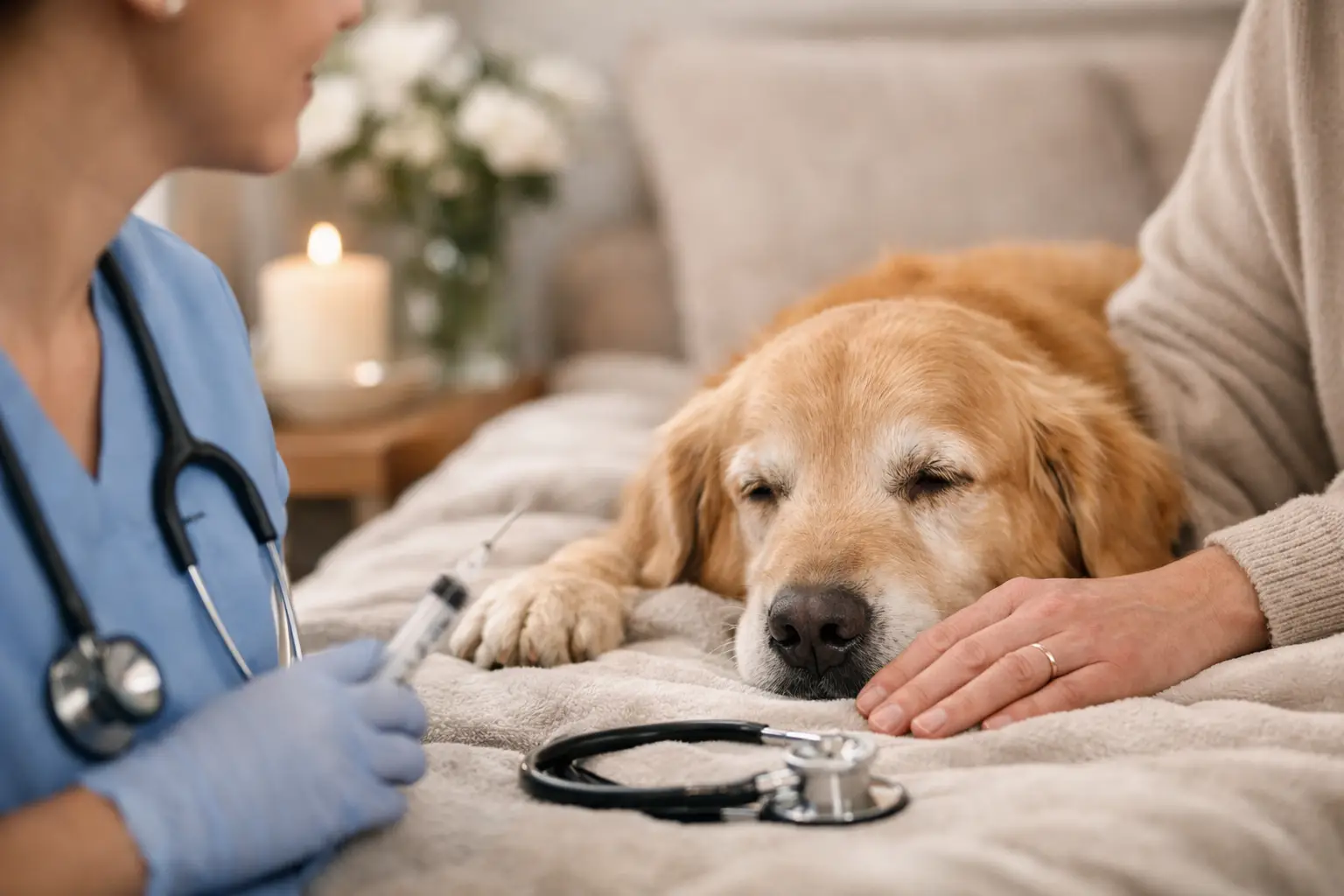
There is no perfect day to say goodbye to a much-loved dog or cat. But when their comfort is fading, it can help to plan peaceful pet euthanasia before a crisis forces a rushed decision. Knowing what will happen, where it will happen and who needs to be there gives you space to focus on the one thing that matters most: making your pet feel safe and loved.
For many families, home is the calmest setting. There is no carrier battle, car journey or busy waiting room. Your pet can rest in their favourite spot, surrounded by familiar smells, people and comforts. It is still an incredibly hard day, of course, but it need not be a frightening one.
Knowing when the time may be right
The decision is rarely based on one bad afternoon. It is usually a pattern: more pain, more confusion, less interest in food, walks, affection or the things that once made your pet light up. Some pets have a clear diagnosis and a predictable decline; others simply become frailer, less mobile or less able to enjoy their ordinary routine.
Try looking at the whole week rather than judging one moment. Are the good days becoming fewer? Can pain, breathlessness, sickness or anxiety still be managed? Is your pet able to get comfortable, keep clean and reach food, water and the toilet? Most importantly, are they still having moments that feel like them?
A veterinary quality-of-life conversation can be a real relief. It is not about being told what to do. It is about having an honest assessment of your pet's comfort, what treatment can realistically achieve and whether waiting may bring more distress than benefit. Choosing euthanasia to prevent suffering is not giving up. It is a final act of care.
How to plan peaceful pet euthanasia without pressure
Where possible, arrange the appointment before your pet is in severe distress. That does not mean acting too soon. It means avoiding the awful situation where an emergency, perhaps in the middle of the night, leaves everyone frightened and short of choices.
When you speak to the vet, ask what the appointment will involve and how much time is allowed. A peaceful goodbye cannot be squeezed into a rushed slot. At Vet on the Loose, home visits are designed to be unhurried, with time for questions, cuddles and the pauses that families need.
It also helps to talk through practical details in advance. You may want a morning appointment, when your pet is usually settled, or later in the day so the household can be together. Think about the room where they are most comfortable. A favourite bed, a soft blanket, a patch of sun in the garden or the sofa beside you can all be right - there is no script to follow.
Decide who should be present, but leave room to change your mind. Some people want the whole family there; others feel calmer with one or two people. If a loved one lives elsewhere, they may wish to say goodbye beforehand by phone or video. There is no prize for coping in a particular way.
What happens during a home euthanasia visit 🐾
The vet will usually begin by talking with you, meeting your pet quietly and confirming that euthanasia remains the kindest choice. This is a chance to ask any final questions. If something has changed or you are uncertain, say so. You are allowed to pause.
In most cases, the first step is a sedative injection. This helps your pet become very relaxed and sleepy, often while being held or resting on their bed. It may take several minutes to work fully. The aim is to remove fear and make the next stage gentle.
Once your pet is deeply settled, the vet gives the final medication. It is an anaesthetic overdose, which causes the heart to stop. Your pet will be unconscious and unaware at this point. The vet will listen carefully to confirm that they have passed, then give you privacy and time with them.
There can occasionally be small movements, a final breath, muscle twitching or the release of urine or faeces after death. These are normal body reflexes, not signs that your pet is suffering or aware. Being told this beforehand can prevent a frightening surprise on an already emotional day.
You do not have to fill the room with words. Many owners stroke their pet, talk to them, play familiar music or offer a favourite treat before the sedative. Others simply sit close and enjoy a cuppa while their pet dozes. Quiet is perfectly loving too.
Preparing the space
Keep things simple. Have a comfortable place ready and make sure other pets are safely nearby if you would like them to have the chance to see or smell their companion afterwards. Some animals seem to understand; others show little reaction. Neither response is wrong.
If your dog is large or your cat is very anxious around strangers, mention this when booking. The vet can plan the visit around their needs. It may be sensible to give prescribed pain relief or calming medication beforehand, but only use medication under veterinary advice.
Children and other pets
Children often cope better with clear, gentle honesty than with confusing phrases such as “put to sleep forever” or “gone away”. Explain that the pet is very poorly, the vet will give medicine to stop their body working, and they will not feel pain. Let children choose whether to be present, rather than assuming either answer is best.
A child might draw a picture, choose a flower for the garden, help make a paw print or write a note. Teenagers may prefer privacy. Adults may find that they need it too. Grief does not follow age or rules.
For another dog or cat in the home, routine can be reassuring in the days afterwards. They may look for their friend, eat less or seem quieter for a while. Give them attention, gentle exercise and time, and seek veterinary advice if their behaviour or appetite does not improve.
Aftercare: deciding what feels right
You do not need to make every aftercare decision in the moment. However, it can ease the day to consider the options beforehand. You may choose individual cremation and have ashes returned, communal cremation, or burial where this is lawful and appropriate. Your vet can explain what is available and arrange collection if needed.
Some families want a keepsake: a paw print, a lock of fur, a collar, photographs or their pet's name on a candle. Others do not want anything physical at all. Both are valid. Grief is personal, and the right choice is simply the one you can live with kindly.
If cost is worrying you, ask for clear prices before the appointment. You should never feel embarrassed about this. Knowing the euthanasia, travel and aftercare costs means you can make decisions without a surprise bill hanging over a deeply sad day.
If your pet suddenly deteriorates
Sometimes there is no opportunity to plan. Severe breathing difficulty, uncontrolled pain, collapse, repeated seizures, significant bleeding or extreme distress need urgent veterinary advice. Call a vet straight away and explain exactly what you are seeing. The priority is always to relieve suffering, even if the ideal home goodbye is no longer possible.
Planning ahead is helpful, but it should not become another burden. If the time comes sooner than expected, you have not failed your pet. You are responding to the reality in front of you with love.
The last gift you give your pet is not a perfectly arranged day. It is the safety of your voice, your touch and the knowledge that they did not have to struggle alone. When the time feels close, a calm conversation with a vet can turn fear of the unknown into a gentler next step.