🐾 Why pet vaccinations matter
Vaccines prepare the immune system to recognise certain infections before your pet meets them in real life. That means their body can respond more quickly and effectively if exposure happens. No vaccine gives an absolute guarantee, but vaccination greatly reduces the risk of severe illness and helps limit the spread of disease between animals.
For dogs, core protection commonly covers distemper, hepatitis, parvovirus and leptospirosis. Parvovirus, in particular, can cause severe vomiting and diarrhoea and can be fatal, especially in unvaccinated puppies. Leptospirosis can be picked up from contaminated water or environments where rodents have been, and it can also pose a risk to people.
For cats, core protection commonly includes cat flu viruses, feline panleukopenia and feline leukaemia virus for cats whose lifestyle puts them at risk. Cat flu is not simply a sniffle. It can leave cats feeling thoroughly unwell and may cause long-term problems in some cases. Panleukopenia is a particularly serious viral disease, especially for young cats.
Vaccination also protects the more vulnerable animals around yours: young puppies and kittens who have not completed their course, older pets, and pets whose immune systems are compromised. It is a practical bit of community care, as well as care for your own furry family member.
Puppy and kitten vaccinations: getting started
Puppies and kittens usually need a course of vaccinations when they are young, because the protection they receive from their mother gradually fades. The timing varies by vaccine and individual circumstances, so it is worth discussing the plan rather than relying on a friend’s calendar or an old social media post.
Until a puppy has completed the appropriate course and your vet has advised it is safe, avoid areas where unvaccinated dogs may have been. That does not mean they need to miss out on the world altogether. Gentle socialisation at home, being carried outside, hearing household noises, meeting healthy vaccinated dogs in controlled settings and travelling in the car can all help them grow into confident adults.
Kittens should be kept indoors until they have had the vaccinations recommended for them and are ready to explore safely. Their first appointments are also a useful chance to talk about parasite control, neutering, diet, microchipping and any behaviour worries before they become bigger issues.
What boosters do - and why timing can vary
After the initial course, most pets need booster vaccinations. However, not every component necessarily needs repeating at the same interval. Some vaccines provide longer-lasting immunity than others, while protection against infections such as leptospirosis may need more regular renewal.
This is why a vaccination appointment should include an actual conversation, not just a quick injection and a dash back out to reception. Your vet should review your pet’s records, ask about their lifestyle and check they are well enough to be vaccinated that day.
A dog who goes to day care, boarding kennels, training classes or shows may need evidence of current vaccinations. Requirements vary, especially for kennel cough vaccination, so check well before a planned stay rather than discovering a problem the week before your holiday. Cats going into a cattery will also usually need an up-to-date vaccination record.
If a booster is overdue, do not panic or assume you have failed your pet. The next step depends on how late it is, which vaccine is involved and the manufacturer’s guidance. In some situations, a single booster is suitable; in others, restarting a course may be advised. A vet can talk you through the sensible option without judgement.
🏠 A calmer way to manage pet vaccinations
For some pets, the hardest part of pet vaccinations is not the vaccine. It is the carrier battle, the car journey, the unfamiliar smells and the waiting room full of noises they cannot escape. Cats may already be frightened before they leave the house. Some dogs become worried the moment they spot the route to the surgery.
A home visit can change the feel of the whole experience. Your pet remains in familiar surroundings, with their own bed, their usual smells and the people they trust nearby. There is no reception queue and no nose-to-nose encounter with another anxious dog. You can make a cuppa while we take the time to let your pet settle - consultation and chill, if you like.
That does not mean every animal will adore injections. A calm, low-pressure approach still matters: treats where appropriate, gentle handling, allowing a nervous cat time to emerge, and avoiding the sense that everything must be completed in a rushed 15-minute slot. For very worried pets, your vet may suggest practical handling plans or discuss whether medication before future visits could help.
Vet on the Loose offers minimum 30-minute home consultations across parts of Essex, Hertfordshire and London , giving families space to ask questions and allowing the vaccination check to feel like proper veterinary care, not a conveyor belt.
When vaccination should wait
A pet should generally be bright, reasonably comfortable and well on the day of vaccination. If your dog or cat has vomiting, diarrhoea, a fever, a significant cough, is clearly off their food or seems unusually quiet, tell your vet before the appointment. Vaccination may need to be postponed while the underlying problem is assessed.
The same applies if your pet is receiving treatment for an illness or has a history of vaccine reactions. Most pets cope very well with vaccines, but individual medical history matters. Pregnancy, immune-suppressing medicines and chronic conditions are all reasons for a tailored discussion.
Mild side effects can happen. Your pet may be sleepy, a little tender where the injection was given, or less keen on dinner for a day or so. These effects are usually short-lived. Contact a vet promptly if you see facial swelling, hives, breathing difficulty, collapse, repeated vomiting, or if your pet seems very unwell. Serious reactions are uncommon, but they need urgent attention.
The check-up is part of the value
A vaccination appointment is also an opportunity to spot issues that can be easy to miss at home. Your pet may look perfectly fine while carrying extra weight, developing dental disease, showing early skin trouble or experiencing subtle joint pain. A physical examination can identify concerns early, when options are often simpler and kinder.
Bring up the small things. A dog who is drinking more, a cat who has started missing the litter tray, a new lump, bad breath, itching, or a change in appetite can all be worth mentioning. There is no prize for saving questions until they become emergencies.
It is also fair to ask what each vaccine is for, what it costs and whether it suits your pet’s lifestyle. Clear recommendations and transparent pricing help you make a decision with confidence. Preventive care should never feel like a sales pitch.
Keeping your pet’s record useful
Keep your pet’s vaccination card somewhere you can find it, take a clear photo of it, and note any boarding or travel deadlines in good time. If you move practice or adopt a pet with incomplete records, share everything you have. Even a photograph of an old card can help establish what has already been given.
For travel, vaccination requirements can be more specific and may involve strict dates, microchip rules and official paperwork. Do not leave this until the final few days before departure. A little forward planning protects your trip and saves a lot of avoidable stress.
The best vaccination plan is the one that protects your individual pet without making care feel frightening, confusing or financially mysterious. Start with an honest conversation, give your pet a calm day, and let preventative care be one less thing weighing on your mind.
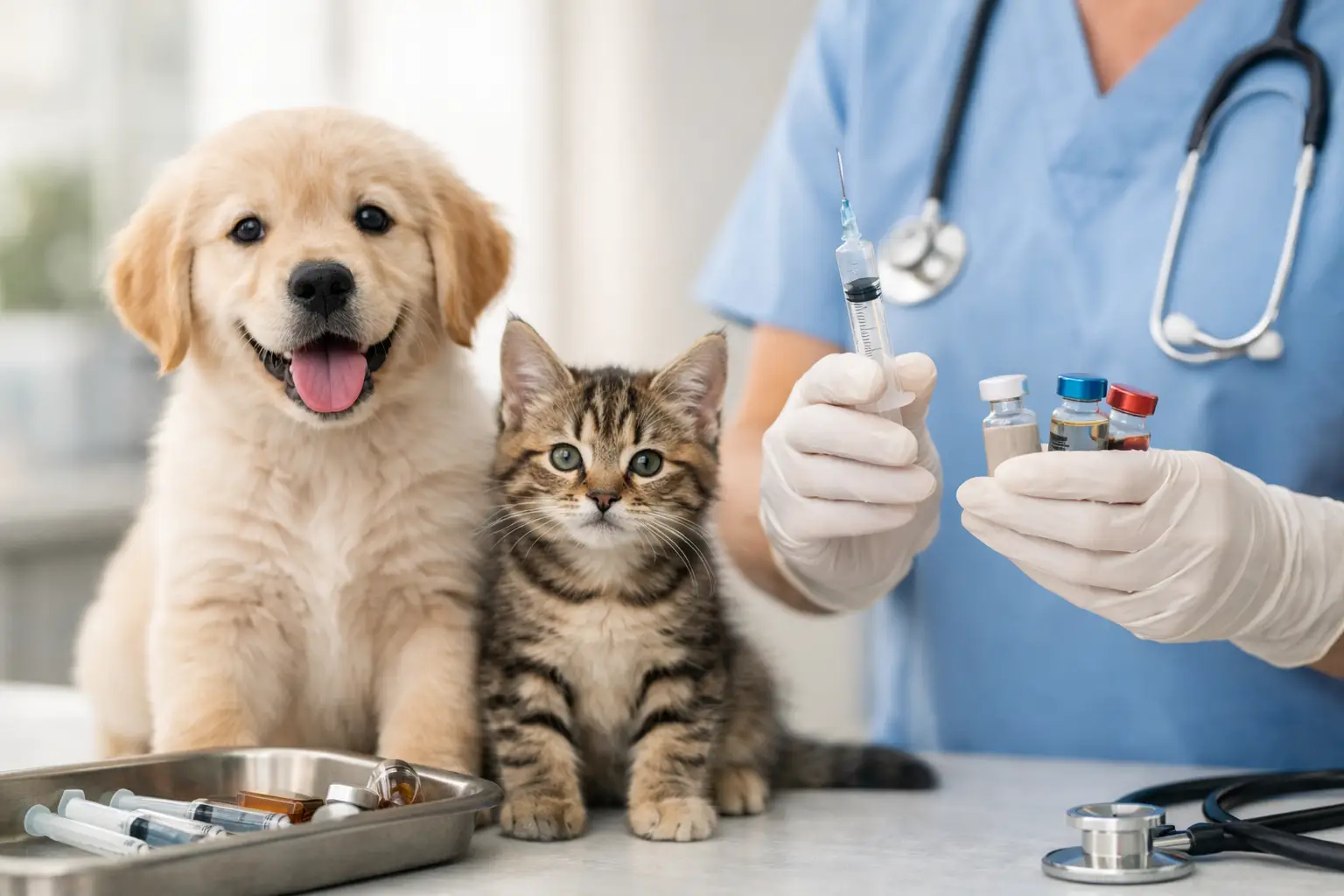
A puppy wriggling on the kitchen floor or a cat hiding behind the sofa is not being difficult - they are telling you that a vet visit can feel like a big event. Pet vaccinations are one of the simplest ways to protect dogs and cats from serious, sometimes life-threatening disease, but the appointment should not have to be a stressful ordeal for anyone.
The right vaccine plan is not about giving every possible injection on a fixed timetable. It is about your pet’s age, health, previous vaccination history and everyday life. A house cat has different exposure risks from a kitten who will roam outside. A dog who meets dozens of other dogs each week has different needs from one who mostly enjoys quiet lead walks.
🐾 Why pet vaccinations matter
Vaccines prepare the immune system to recognise certain infections before your pet meets them in real life. That means their body can respond more quickly and effectively if exposure happens. No vaccine gives an absolute guarantee, but vaccination greatly reduces the risk of severe illness and helps limit the spread of disease between animals.
For dogs, core protection commonly covers distemper, hepatitis, parvovirus and leptospirosis. Parvovirus, in particular, can cause severe vomiting and diarrhoea and can be fatal, especially in unvaccinated puppies. Leptospirosis can be picked up from contaminated water or environments where rodents have been, and it can also pose a risk to people.
For cats, core protection commonly includes cat flu viruses, feline panleukopenia and feline leukaemia virus for cats whose lifestyle puts them at risk. Cat flu is not simply a sniffle. It can leave cats feeling thoroughly unwell and may cause long-term problems in some cases. Panleukopenia is a particularly serious viral disease, especially for young cats.
Vaccination also protects the more vulnerable animals around yours: young puppies and kittens who have not completed their course, older pets, and pets whose immune systems are compromised. It is a practical bit of community care, as well as care for your own furry family member.
Puppy and kitten vaccinations: getting started
Puppies and kittens usually need a course of vaccinations when they are young, because the protection they receive from their mother gradually fades. The timing varies by vaccine and individual circumstances, so it is worth discussing the plan rather than relying on a friend’s calendar or an old social media post.
Until a puppy has completed the appropriate course and your vet has advised it is safe, avoid areas where unvaccinated dogs may have been. That does not mean they need to miss out on the world altogether. Gentle socialisation at home, being carried outside, hearing household noises, meeting healthy vaccinated dogs in controlled settings and travelling in the car can all help them grow into confident adults.
Kittens should be kept indoors until they have had the vaccinations recommended for them and are ready to explore safely. Their first appointments are also a useful chance to talk about parasite control, neutering, diet, microchipping and any behaviour worries before they become bigger issues.
What boosters do - and why timing can vary
After the initial course, most pets need booster vaccinations. However, not every component necessarily needs repeating at the same interval. Some vaccines provide longer-lasting immunity than others, while protection against infections such as leptospirosis may need more regular renewal.
This is why a vaccination appointment should include an actual conversation, not just a quick injection and a dash back out to reception. Your vet should review your pet’s records, ask about their lifestyle and check they are well enough to be vaccinated that day.
A dog who goes to day care, boarding kennels, training classes or shows may need evidence of current vaccinations. Requirements vary, especially for kennel cough vaccination, so check well before a planned stay rather than discovering a problem the week before your holiday. Cats going into a cattery will also usually need an up-to-date vaccination record.
If a booster is overdue, do not panic or assume you have failed your pet. The next step depends on how late it is, which vaccine is involved and the manufacturer’s guidance. In some situations, a single booster is suitable; in others, restarting a course may be advised. A vet can talk you through the sensible option without judgement.
🏠 A calmer way to manage pet vaccinations
For some pets, the hardest part of pet vaccinations is not the vaccine. It is the carrier battle, the car journey, the unfamiliar smells and the waiting room full of noises they cannot escape. Cats may already be frightened before they leave the house. Some dogs become worried the moment they spot the route to the surgery.
A home visit can change the feel of the whole experience. Your pet remains in familiar surroundings, with their own bed, their usual smells and the people they trust nearby. There is no reception queue and no nose-to-nose encounter with another anxious dog. You can make a cuppa while we take the time to let your pet settle - consultation and chill, if you like.
That does not mean every animal will adore injections. A calm, low-pressure approach still matters: treats where appropriate, gentle handling, allowing a nervous cat time to emerge, and avoiding the sense that everything must be completed in a rushed 15-minute slot. For very worried pets, your vet may suggest practical handling plans or discuss whether medication before future visits could help.
Vet on the Loose offers minimum 30-minute home consultations across parts of Essex, Hertfordshire and London , giving families space to ask questions and allowing the vaccination check to feel like proper veterinary care, not a conveyor belt.
When vaccination should wait
A pet should generally be bright, reasonably comfortable and well on the day of vaccination. If your dog or cat has vomiting, diarrhoea, a fever, a significant cough, is clearly off their food or seems unusually quiet, tell your vet before the appointment. Vaccination may need to be postponed while the underlying problem is assessed.
The same applies if your pet is receiving treatment for an illness or has a history of vaccine reactions. Most pets cope very well with vaccines, but individual medical history matters. Pregnancy, immune-suppressing medicines and chronic conditions are all reasons for a tailored discussion.
Mild side effects can happen. Your pet may be sleepy, a little tender where the injection was given, or less keen on dinner for a day or so. These effects are usually short-lived. Contact a vet promptly if you see facial swelling, hives, breathing difficulty, collapse, repeated vomiting, or if your pet seems very unwell. Serious reactions are uncommon, but they need urgent attention.
The check-up is part of the value
A vaccination appointment is also an opportunity to spot issues that can be easy to miss at home. Your pet may look perfectly fine while carrying extra weight, developing dental disease, showing early skin trouble or experiencing subtle joint pain. A physical examination can identify concerns early, when options are often simpler and kinder.
Bring up the small things. A dog who is drinking more, a cat who has started missing the litter tray, a new lump, bad breath, itching, or a change in appetite can all be worth mentioning. There is no prize for saving questions until they become emergencies.
It is also fair to ask what each vaccine is for, what it costs and whether it suits your pet’s lifestyle. Clear recommendations and transparent pricing help you make a decision with confidence. Preventive care should never feel like a sales pitch.
Keeping your pet’s record useful
Keep your pet’s vaccination card somewhere you can find it, take a clear photo of it, and note any boarding or travel deadlines in good time. If you move practice or adopt a pet with incomplete records, share everything you have. Even a photograph of an old card can help establish what has already been given.
For travel, vaccination requirements can be more specific and may involve strict dates, microchip rules and official paperwork. Do not leave this until the final few days before departure. A little forward planning protects your trip and saves a lot of avoidable stress.
The best vaccination plan is the one that protects your individual pet without making care feel frightening, confusing or financially mysterious. Start with an honest conversation, give your pet a calm day, and let preventative care be one less thing weighing on your mind.