

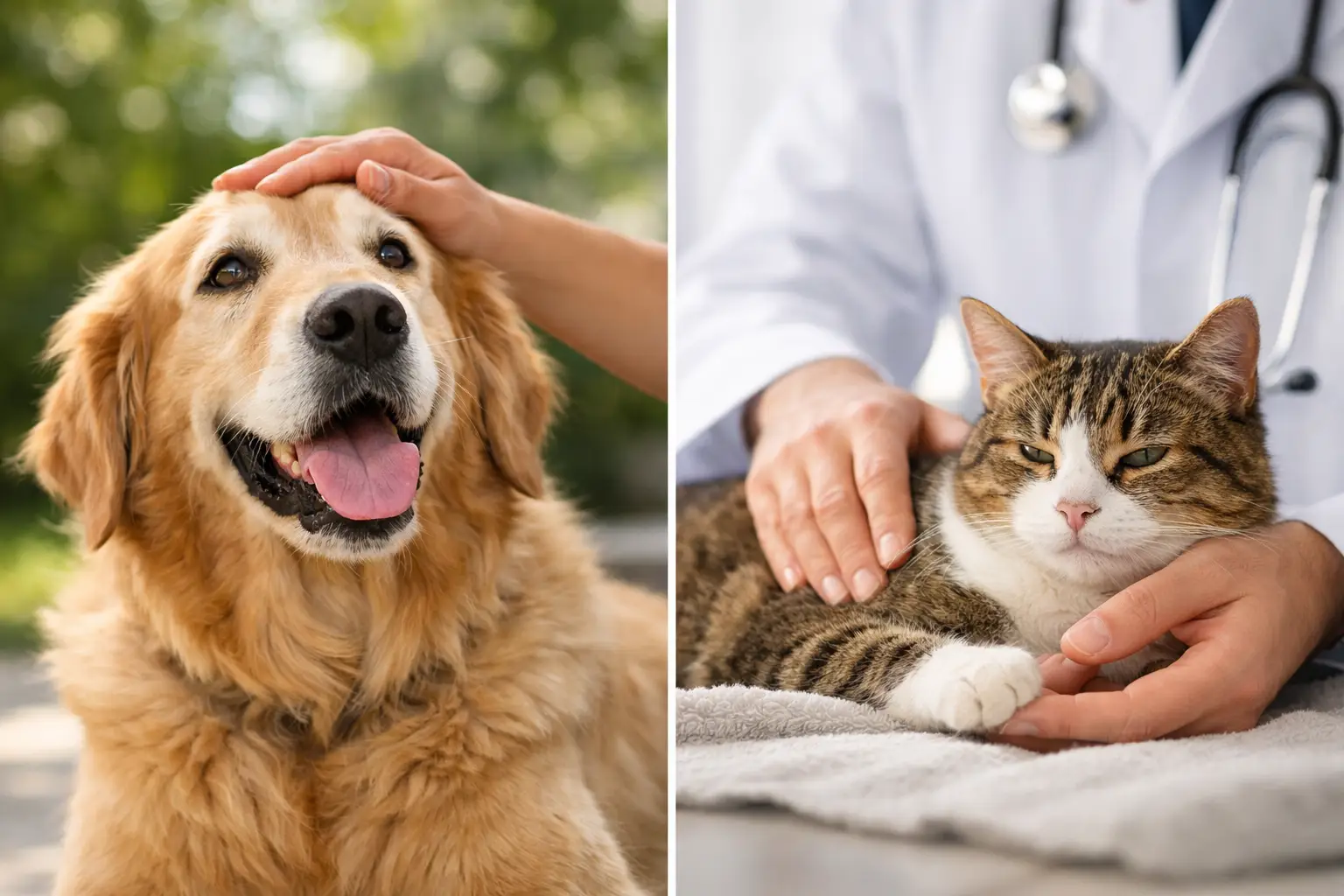
A pet quality of life assessment is not about finding a single ‘right’ day or putting a number on the love you have for your dog or cat. It is a practical, compassionate way to step back from the good days, bad days and sleepless worries, and ask a clearer question: is my pet still enjoying life more than they are enduring it?
This can be one of the hardest parts of loving an older pet or managing a long-term illness. Changes are often gradual. A dog who once raced to the door may now take a little longer to stand up. A cat may still purr on your lap but stop grooming properly or hide more often. Because you see them every day, it is easy to adjust to small changes without noticing how much has shifted.
🐾 What a pet quality of life assessment looks at
Quality of life is bigger than a diagnosis. Arthritis, heart disease, kidney problems, cancer, dementia and many other conditions can affect pets differently. Some animals live happily for a long time with a serious diagnosis when their symptoms are controlled. Others may struggle despite treatment because pain, fear, breathlessness or nausea are taking too much from their day.
A thoughtful assessment looks at your pet as an individual. It considers comfort, mobility, appetite, toileting, hygiene, interaction and enjoyment, alongside their medical condition. The aim is not to rush you towards a decision. It is to work out what support may improve their days and, when needed, help you recognise when keeping them comfortable is no longer possible.
Try to look for patterns rather than judging everything by one difficult afternoon. A pet can have an off day after a poor night, a change in weather or a stressful event. But several worrying days in a row, or a clear downward trend over a few weeks, deserves attention.
The everyday signs that matter most
Owners sometimes expect a pet in discomfort to cry, limp dramatically or stop eating altogether. In reality, dogs and cats can be remarkably good at hiding pain and illness. Cats in particular often become quieter rather than obviously unwell.
Look closely at whether your pet can still do the ordinary things that make them themselves. This may include:
- getting up, walking and settling without obvious struggle
- eating and drinking with interest, rather than persuasion
- staying clean and using the toilet without distress or repeated accidents
- seeking affection, company, play, sniffing time or another familiar pleasure
- resting comfortably, without panting, pacing, crying or repeatedly changing position
- having more good days than difficult ones.
The exact details will depend on your pet. A sociable Labrador may value a gentle potter and a sniff around the garden. A reserved cat may be happiest curled up on a favourite blanket, watching the household go by. The question is whether they still have access to the things they enjoy, in a way that feels comfortable and safe.
📔 Keep a simple good-day record
When emotions are running high, memory can be unfair. You may remember the alarming episode at 3 am more vividly than a peaceful afternoon, or cling to one lovely meal while overlooking a week of nausea. A short daily record can bring a little clarity.
Write down your pet’s appetite, comfort, mobility, toileting and mood each day. Use simple words such as good, mixed or difficult, and add one sentence about what you noticed. For example: “Ate breakfast, enjoyed sitting in the sun, but needed help on the stairs” gives far more useful information than trying to remember how things felt two weeks later.
Photographs and short videos can help too, especially for gait changes, breathing patterns or unusual behaviour. They are not there to make you feel clinical about a beloved family member. They give your vet a more accurate picture of what life is like between appointments.
It can also help to identify your pet’s three favourite things. Perhaps it is a treat, sleeping beside you and a slow walk. If they can no longer enjoy any of them, even with sensible support in place, that is an important change to discuss.
🩺 When treatment can make life better
A low quality of life score is not automatically a sign that euthanasia is the next step. Sometimes there are straightforward ways to make a meaningful difference. Pain relief may help an arthritic dog move more freely. Anti-sickness medication, appetite support or a diet adjustment may help a cat with kidney disease. Ramps, non-slip mats, a low-sided litter tray and a cosy bed can make home life easier.
Equally, treatment has trade-offs. Repeated journeys, tablets your pet fights every day, invasive tests or frequent hospital stays may be worthwhile if they offer real comfort or more good-quality time. They may be less appropriate if they cause more stress than benefit. There is no blanket answer, and a kind plan should fit both the animal and the family caring for them.
This is where an unhurried veterinary conversation matters. You should be able to ask what a medication is for, what improvement to expect, how quickly it should help and what to do if it does not. You should also feel able to ask about costs and alternatives without embarrassment. Caring decisions are never just emotional or medical - they have to be realistic for your household too.
🏠 Why assessing your pet at home can help
A nervous cat in a carrier or an older dog on a slippery surgery floor may not behave as they do at home. Their usual bed, food bowl, stairs, garden and family routines can tell a much fuller story.
A home visit allows a vet to see the practical detail: how your dog gets up from their favourite spot, whether your cat can reach the litter tray, or where a pet chooses to hide when they do not feel well. It also gives everyone space to talk without the pressure of a waiting room or a standard 15-minute slot.
For families across Essex, Hertfordshire and London , Vet on the Loose can assess dogs and cats in the place they know best. These appointments can be used to review symptoms, discuss pain control and practical adaptations, take diagnostic samples where appropriate, or simply talk honestly through what may lie ahead. There is time for questions, a cuppa and a proper conversation.
💛 Knowing when it may be time to say goodbye
No assessment can remove the sadness of this decision. Many owners worry that they will act too soon, while others fear they have waited too long. Both feelings come from love, not failure.
It may be time for a more urgent conversation if your pet is in pain that cannot be controlled, struggling to breathe, repeatedly distressed, unable to eat or drink enough, unable to stay clean, or having consistently more bad days than good ones. A sudden collapse, severe breathing difficulty, uncontrolled bleeding, repeated seizures or extreme pain needs urgent veterinary advice.
For some pets, there is a clear crisis. More often, it is a gradual realisation that the moments of joy are becoming fewer, and the difficult moments are becoming harder to manage. Choosing euthanasia in that situation can be a final act of kindness. It is not giving up on them. It is protecting them from further suffering when there is no longer a fair path back to comfort.
If home euthanasia is the right choice, it can allow your pet to stay in their familiar surroundings, close to the people they trust. The process should be gentle and explained at your pace, including sedation, time to say goodbye and aftercare options. You do not need to have every answer before you ask for help.
Your pet does not need perfect days. They need enough comfort, safety, pleasure and connection to feel like themselves. If you are worried, start the conversation early. A calm assessment now may bring practical relief, more precious good days, or the reassurance to make a kind decision when the time comes.