A prescription should not leave you choosing between doing right by your pet and paying an unexpected bill. This pet medication budgeting guide is for the real-life moments behind that worry: the cat who needs lifelong thyroid tablets, the dog sent home with pain relief after an injury, or the multi-pet household trying to make every pound stretch without cutting corners on care.
Medication costs can feel confusing because the price is rarely just the box of tablets. There may be a consultation, tests to confirm what is going on, a written prescription, repeat checks and sometimes monitoring blood tests. That is not automatically a sign that anyone is overcharging - safe prescribing needs veterinary judgement - but you deserve to know what each part is for before you commit.
💊 Start with the full cost, not the tablet price
When a vet recommends medicine, ask what the likely cost looks like over the next month, three months or year. For a short course of antibiotics after a straightforward infection, the answer may be simple. For arthritis, allergies, diabetes, heart disease, epilepsy or thyroid conditions, it is more useful to view medication as an ongoing care plan.
A clear estimate should separate the initial consultation, the medicine itself, any tests needed before starting treatment, and the check-ups or blood tests needed to make sure the dose remains safe and effective. Some medicines need closer monitoring than others. A cheap tablet can become poor value if it is not controlling symptoms and leads to repeated appointments, while a higher-priced option may be more practical if it works reliably and is easier for your pet to take.
Do not be embarrassed to say, ‘I need to budget for this.’ A good veterinary conversation makes room for that. There may be a clinically suitable lower-cost formulation, a different pack size, a staged diagnostic plan, or an alternative treatment route. Sometimes there is not a cheaper equivalent, and honesty about that matters too.
Build a pet medication budget before you need it
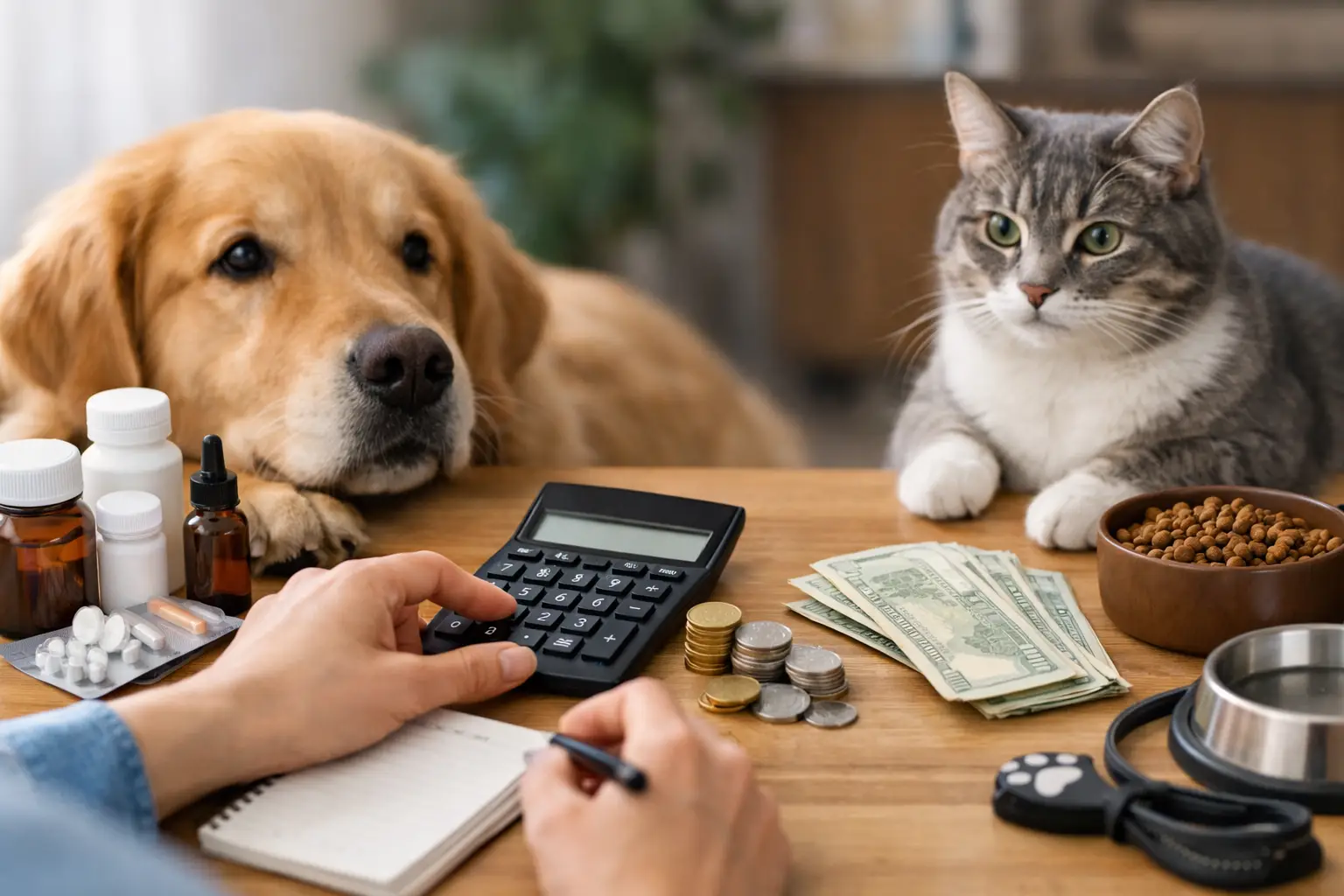
The easiest way to handle predictable costs is to turn them into a monthly amount. Look at what you spent on routine parasite prevention, repeat prescriptions and any known long-term treatment last year. Add expected check-ups and monitoring, then divide the total by 12. Put that amount into a separate pet-care pot each month, even if it starts small.
For example, if your dog’s regular medicines and planned reviews are likely to cost £360 across the year, setting aside £30 a month is far less stressful than finding the whole amount at once. Keep a little extra in the pot where possible for short courses of treatment, an ear infection or a flare-up of an existing condition.
This is especially useful in homes with more than one pet. Preventive treatments, vaccinations and prescription reviews often arrive at different times, which makes costs feel random. A simple note on your phone with each pet’s medicine, dose, refill date and expected review date can turn a surprise into something you have already planned for.
Include the costs people often miss
A medication budget is more realistic when it includes the surrounding care. Depending on your pet’s condition, this might mean follow-up examinations, blood or urine testing, prescription fees, special food, syringes, pill treats, flea and worming products, or travel costs to an appointment.
It is also worth planning for the occasional medicine that cannot be issued without a recheck. This is not needless red tape. Your vet has a responsibility to prescribe safely, and your pet’s weight, symptoms, kidney or liver function, and response to treatment can change over time. The sensible question is not ‘Can I avoid every review?’ but ‘What monitoring is essential, and when is it due?’
🧾 Ask for choice without compromising safety
Many owners assume they must buy medication from the practice that prescribed it. In fact, you can ask for a written prescription and obtain a veterinary medicine elsewhere, provided it is supplied legally and the prescription is valid. There may be a charge for writing the prescription, so compare the total cost rather than just the price shown for the medicine online.
A transparent practice should be comfortable explaining both options: supplying the medication directly, or issuing a written prescription so you can shop around. Vet on the Loose offers written prescriptions because owners should have that choice. Convenience has value too, particularly when you are juggling work, school runs and a pet who would rather not visit a surgery, so decide what works for your household rather than assuming one route is always cheapest.
If you buy from another supplier, use a properly registered UK veterinary medicine retailer or pharmacy. Be cautious about bargain websites with no clear contact details, medicines arriving from overseas, or products with unfamiliar packaging. Counterfeit, incorrectly stored or unsuitable medication is not a saving if it fails to treat your pet or causes harm.
Ask your vet whether a generic version is appropriate. Generic medicines contain the same active ingredient as the branded equivalent, but they are not available for every drug or every format. Flavoured liquids, tiny tablets, injections and licensed veterinary products can be worth the extra cost if they make treatment possible. There is little benefit in buying the lowest-priced tablet if your cat spits it behind the sofa every morning.
Plan ahead for repeat prescriptions
Running out of tablets on a Friday evening creates pressure, and pressured decisions are rarely cheap ones. Check your supplies when you have around one to two weeks left, allowing longer if a medicine needs ordering or your pet is due for a review before another prescription can be issued.
Keep medicines in their original packaging and note the dose clearly, especially if more than one person gives treatment. Store them exactly as directed. A medicine spoiled by heat, damp or incorrect refrigeration is money wasted and could leave your pet without effective treatment.
Never stretch a prescription by giving less than instructed, skip doses to make it last, or share medication between pets. Even two dogs of a similar size may need different doses, and cat and dog medicines are not interchangeable. Human painkillers and cold remedies can be extremely dangerous to animals. If the cost is becoming unmanageable, call before changing anything - there may be a safer plan.
When insurance helps, and when a savings pot helps more
Pet insurance can be very helpful for unexpected illness or injury, particularly where scans, surgery, hospitalisation or specialist care are involved. But policies vary widely. Some cover ongoing medication for a condition only while the policy remains active; some have excesses, percentage contributions or annual limits; and pre-existing conditions are usually excluded.
Read the renewal terms before relying on insurance for long-term prescriptions. If your pet already has a condition that is not covered, a dedicated monthly savings pot becomes even more valuable. For some households, the best approach is both: insurance for large surprises and savings for routine medicines, excesses and costs that sit outside the policy.
Avoid cancelling cover simply because your pet has had a quiet year. A new policy taken out later may exclude any condition recorded in your pet’s history, including signs that seemed minor at the time. It depends on your policy, finances and pet’s age, but it is a decision worth taking slowly.
Speak up early if the numbers no longer work
Veterinary teams would much rather know that cost is a concern at the start than discover later that medication has been stopped. You do not need to justify your household budget. Say what you can manage and ask what is medically essential today, what can safely wait, and whether there are different options with different costs.
For a pet with a long-term condition, ask for a written plan after each review: the diagnosis or working diagnosis, current medication, dose, next refill point, monitoring due date and likely cost range. It makes life easier when several family members share care, and it gives you something practical to budget from over a cuppa.
The goal is not to find the cheapest medicine at any cost. It is to make calm, informed choices early enough that your dog or cat keeps receiving safe treatment - and you keep control of the bill rather than fearing it.