When your dog is no longer racing to the door, or your cat has stopped seeking out their favourite sunny spot, the practical questions can arrive alongside the heartbreak. Pet hospice is not about giving up on them. It is about making the time that remains as comfortable, calm and meaningful as possible - for them and for you.
For many families, this is a period of uncertainty. You may be managing a condition that cannot be cured, such as cancer, organ disease or severe arthritis. Or perhaps your pet has simply become frailer with age. There is rarely one single moment when everything becomes clear. Hospice care gives you veterinary guidance, a plan for comfort and permission to focus on the small things that still matter.
🐾 What does pet hospice mean?
Pet hospice is supportive, end-of-life care for a dog or cat with a life-limiting illness or declining quality of life. The goal changes from trying to cure a disease to keeping your pet comfortable, managing symptoms and helping your family make thoughtful decisions as things change.
That might include pain relief, anti-sickness medicine, support with eating and drinking, help with mobility, skin and toileting care, and regular checks on how your pet is coping. It can also mean having an honest conversation about euthanasia before a crisis forces a rushed decision.
Hospice is not a one-size-fits-all programme. A cat with kidney disease may need help managing nausea and appetite, while an older dog with arthritis may need pain control, soft bedding and a safer way to get around the house. Some pets have a few good weeks or months; others decline much more quickly. The plan should reflect the animal in front of you, not a fixed timetable.
Quality of life is more than a score
Owners often ask, “How will I know when it is time?” It is one of the hardest questions in veterinary care, and there is no neat answer that fits every pet. A quality-of-life diary can help because it turns a blur of difficult days into something you can look at more clearly.
Notice whether your pet is comfortable at rest, interested in food, able to drink, clean and toilet themselves reasonably well, and still finding pleasure in familiar things. That could be greeting you, having a gentle fuss, sitting in the garden, enjoying a treat or curling up beside you on the sofa.
Also look at the balance of good days and bad days. One quiet day does not always mean that euthanasia is needed immediately. Equally, waiting for a catastrophic emergency is rarely kind to your pet or fair on your family. Pain that cannot be controlled, repeated distress, breathing difficulties, persistent vomiting, panic, or no longer being able to get up are signs that you need veterinary advice promptly.
A diary is not there to make an emotional decision cold or clinical. It is there to support your instincts when love makes it tempting to hope that tomorrow will be different.
🏠 Why pet hospice at home can feel kinder
For pets that are frightened by car journeys, carriers, unfamiliar smells or a busy waiting room, staying at home can make a huge difference. They can rest in their own bed, hear familiar voices and be surrounded by their people. You do not have to bundle a poorly dog into the car or persuade a frail cat into a carrier when they are already struggling.
A home visit also gives the vet a more truthful picture of daily life. We can see how your pet moves around the room, where they sleep, whether they can reach the garden, and what adjustments may help. Sometimes simple changes make the home safer and more comfortable: non-slip rugs, a ramp over a step, food and water bowls within easy reach, or a low-sided litter tray.
There are trade-offs. If a pet needs intensive hospital treatment, oxygen therapy, surgery or round-the-clock monitoring, a clinic or referral hospital may be the right place. Hospice is for comfort-focused care, not a replacement for every emergency service. A good vet will explain that distinction plainly.
The conversations nobody wants to start
It can feel disloyal to ask about euthanasia while your pet is still eating a favourite snack or enjoying a cuddle. In reality, discussing it early can be a kindness. It means you understand the options while you have breathing space, rather than trying to make decisions during an emergency at 2 am.
Ask your vet what changes would make them concerned, what symptoms can be managed at home and which cannot, and what a peaceful euthanasia appointment would involve. You can also talk about practical matters such as who wants to be present, whether children should be involved, and what you would prefer for aftercare.
There is no need to know every answer at once. Some people need a clear plan written down. Others simply need to know they can ring and talk things through. Both are completely reasonable.
A gentle euthanasia appointment, explained
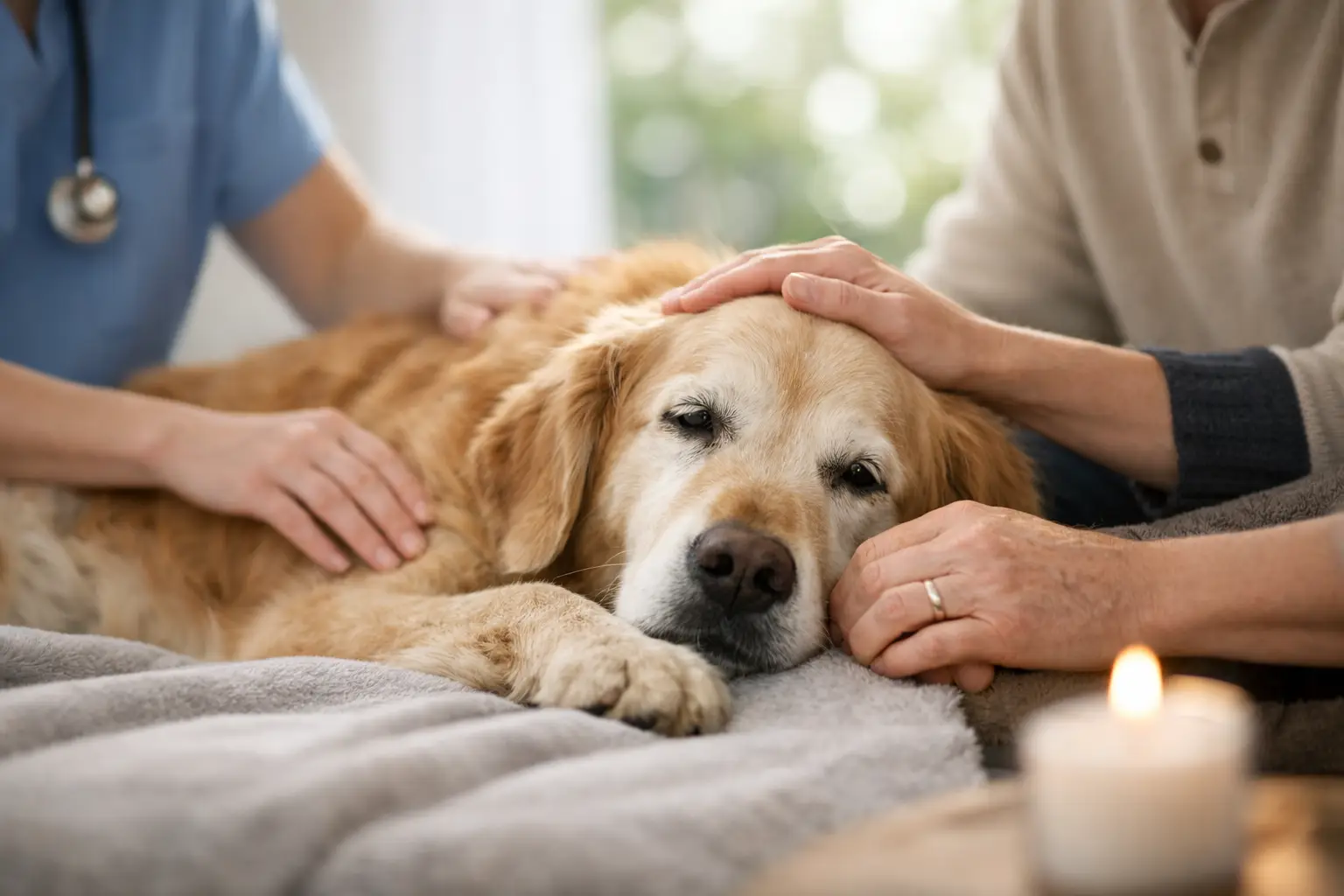
When euthanasia is the kindest option, it should not feel hurried. At home, the appointment can take place wherever your pet is most settled: on their bed, on the sofa, in a quiet room or, if appropriate, in the garden.
Usually, the first step is a sedative injection. This helps your pet become deeply relaxed and sleepy, and gives everyone time to sit with them, stroke them and say what they need to say. Once they are peaceful and fully settled, the final medication is given. It works quickly and painlessly, and your pet passes away without awareness.
There can occasionally be reflex movements, a final breath or changes to the eyes afterwards. These can be upsetting if you are not expecting them, but they do not mean your pet is suffering. A caring vet should explain this beforehand, move at your pet's pace and give you privacy afterwards. There should be time for tears, silence, a cuppa, or simply one more moment together.
Planning aftercare without pressure
Thinking about your pet's body can feel unbearable, but choosing an aftercare option in advance removes one decision from an already painful day. You may choose individual cremation and have ashes returned, communal cremation, or burial at home where this is lawful and suitable. Your vet can explain the practicalities and arrange collection if that is what you want.
Keep in mind that grief does not follow a schedule. You may feel relief that your pet is no longer struggling, then guilt about that relief. You may replay the last day, feel fine for a week and then cry when you find a hair on a blanket. None of this means you made the wrong choice. It means they mattered.
Children often cope better with honest, age-appropriate language than vague phrases such as “put to sleep”, which can be confusing or frightening. Explain that the pet was very poorly, their body stopped working and the vet helped them die peacefully. Let children decide whether they want to say goodbye, make a drawing or choose a photo for a memory box.
Choosing support you can trust
End-of-life care needs clinical judgement as well as compassion. Look for an RCVS-registered veterinary professional who will listen properly, explain the options in plain English and be open about fees before you commit. You should never feel pushed into treatment you do not understand, or made to feel awkward for asking what medication, visits or aftercare will cost .
For families across Essex, Hertfordshire and London, Vet on the Loose provides unhurried in-home consultations and gentle end-of-life care for dogs and cats. Having a minimum 30-minute appointment can matter enormously when there is no question that feels too small and no reason to rush goodbye.
If you are worried that your pet may be approaching this stage, you do not need to decide everything today. Start by noticing how they are coping, write down your concerns and ask for a calm conversation. Your pet does not need a perfect final chapter - they need comfort, familiar love and someone willing to put their wellbeing first.