Pet euthanasia support starts before the final appointment
A peaceful goodbye usually begins with a conversation, not a decision made in a panic. Pets do not have to be at death's door before you ask for help. In fact, speaking to a vet early can give you more choice and help prevent a crisis at an already emotional time.
Owners often worry that asking about euthanasia means they are giving up. It does not. It means you are looking carefully at your pet's quality of life and making sure their needs are not being lost beneath your understandable wish for more time.
A vet can talk through what is happening medically, whether pain relief or other treatment may still help, and what changes would suggest your pet is struggling. Sometimes there is a clear answer. Often, especially with older pets or long-term conditions, there is a grey area. That is normal.
Looking at quality of life without second-guessing yourself
No checklist can make this choice for you, but it can help you notice the pattern rather than focusing on one good afternoon or one bad morning. Consider whether your pet is comfortable at rest, able to eat and drink with enjoyment, interested in family life, and able to get where they need to go without distress.
For dogs, this may include whether they can rise, walk, toilet and settle comfortably. For cats, quieter signs can matter just as much: hiding away, stopping grooming, missing the tray, withdrawing from favourite places, or seeming unsettled and uncomfortable. Pain is not always obvious. A pet can still wag a tail, purr or greet you while having difficult moments too.
It can help to keep a simple diary for a week. Note appetite, mobility, sleep, toileting, breathing, enjoyment and difficult episodes. If the bad days are becoming more frequent, longer or harder to recover from, that information is useful for your discussion with a vet.
Try not to set an impossible standard for yourself. Most people do not get a flashing sign that says, “today is the day”. The aim is not to choose a perfect moment. It is to avoid waiting until comfort and dignity have gone because making the decision feels too painful.
Why saying goodbye at home can feel different 🏠
For some pets, especially anxious cats, elderly dogs with limited mobility, or animals who dislike the car and waiting room, home can be the gentlest place to be. They are surrounded by familiar smells, familiar people and their own bed, rather than dealing with a journey they do not understand.
It also gives families privacy. There is no reception desk, no other pets nearby and no pressure to leave a consulting room before you are ready. You can choose a favourite blanket, a sunny spot in the sitting room, or simply the place where your pet usually relaxes. Children and other household pets can be included in a way that feels right for your family.
An at-home visit is not automatically the best option in every circumstance. If your pet is in severe distress, struggling to breathe, having repeated seizures or needs urgent stabilisation, emergency veterinary treatment is the priority. In those situations, please contact an emergency vet straight away rather than waiting for a home visit.
Where there is time to plan, a mobile appointment can remove a great deal of stress. At Vet on the Loose, end-of-life appointments are handled slowly and with the same professional care as any other veterinary visit, but without asking a fragile pet to travel or asking you to hurry through the hardest conversation of all.
What happens during pet euthanasia?
Knowing the process can make it less frightening. Your vet should explain each stage in plain language and give you the chance to ask anything - even if you think it is a small question. There are no silly questions on this day.
Usually, the first step is sedation. This is an injection that helps your pet become sleepy, relaxed and unaware of their surroundings. It gives them time to settle comfortably, often on their own bed or in your arms. The pace will depend on the individual pet, their condition and how they respond, but there should be no rush.
Once your pet is deeply relaxed and unconscious, the final medication is given. It gently stops the heart. Your pet does not know this is happening and does not feel afraid. Some natural reflexes can occur afterwards, such as a final breath, a small movement or the eyes remaining open. These can be upsetting if unexpected, so a compassionate vet will prepare you beforehand and reassure you through the moment.
You can stay with your pet throughout, or step out if that is what you need. Some owners hold a paw; others sit nearby, talk softly, play a familiar song or offer a favourite treat before sedation. There is no correct script for goodbye. Being there does not have to look any particular way.
Giving children and other pets space to understand
If children are involved, simple and honest words are often kinder than confusing phrases such as “put to sleep” or “gone away”. Explain that their pet's body has stopped working properly, the vet is helping them to die without pain, and they will not wake up afterwards. Let children choose whether they want to be present, say goodbye beforehand, or make a drawing or note for their pet.
Other pets in the home may also notice the change. Some families find it helpful to allow them a quiet opportunity to see and sniff their companion afterwards. It may help them understand that their friend has died, although every animal responds differently. Keep routines gentle and expect a period of adjustment.
Aftercare is part of the care 🤍
Before the appointment, you can talk through what you would like to happen afterwards. It is easier to consider this while you still have space to think, though plans can be changed on the day if needed.
You may choose individual cremation, with ashes returned to you, or communal cremation. Some people have a garden burial, where this is appropriate and permitted. Your vet can explain the practical arrangements and costs clearly, so there are no unwelcome surprises when you are grieving.
You do not need to clear away beds, toys or bowls immediately. Equally, some people need to do so straight away because seeing them is too painful. Both reactions are normal. Grief after losing a pet can be intense, particularly when they have been part of everyday family life for years. It can arrive as sadness, guilt, relief after a long illness, anger, or all of those things in the same day.
Guilt is especially common. Owners replay the timing, the treatment choices, the last meal, or whether they should have noticed something sooner. A kind decision made to prevent suffering is not a betrayal. It is often the final responsibility we take on for an animal who trusted us completely.
Getting support when you are not ready to decide
You do not have to wait until you have made up your mind to speak with a vet. A quality-of-life discussion can be just that: a discussion. Ask what comfort measures are realistic, what deterioration may look like, what to do outside normal hours, and whether it is sensible to plan ahead.
If you are arranging a home euthanasia visit, practical preparation can be very simple. Choose a calm place, let family members know the likely time, and decide whether you would like privacy afterwards. Have a blanket ready if it brings comfort, but do not feel you need to create a perfect scene. Your presence and your pet's comfort matter far more than the setting looking a certain way.
For families across Essex, Hertfordshire and London , compassionate support should mean more than a final injection. It should mean being heard, being given straight answers, and being allowed the time to say goodbye without feeling like the next appointment is waiting at the door.
When the time comes, aim for kindness rather than certainty. Your pet will not measure your decision by the date on the calendar. They will know the familiar voice, the gentle hand and the love that brought them safely home.
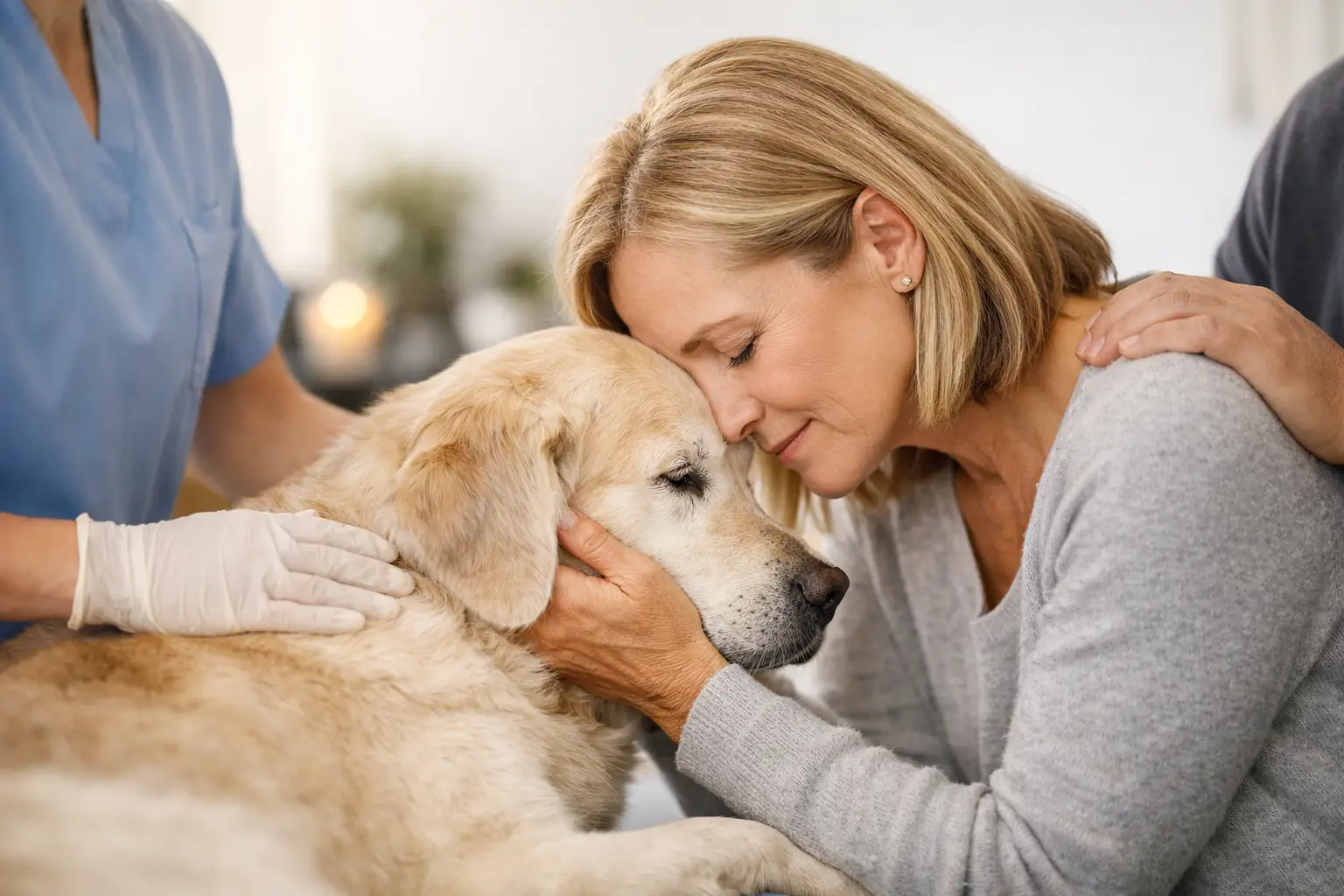
There is no neat or painless way to say goodbye to a much-loved dog or cat. What good pet euthanasia support can do is make an unbearably difficult day feel calmer, clearer and less lonely - for you and for the pet at the centre of it all.
For many families, the hardest part is not simply knowing that their pet is nearing the end of life. It is wondering whether the time is right, fearing a rushed clinical appointment, and trying to make decisions while already heartbroken. You deserve honest guidance, enough time to talk, and a plan that puts your pet's comfort first.
Pet euthanasia support starts before the final appointment
A peaceful goodbye usually begins with a conversation, not a decision made in a panic. Pets do not have to be at death's door before you ask for help. In fact, speaking to a vet early can give you more choice and help prevent a crisis at an already emotional time.
Owners often worry that asking about euthanasia means they are giving up. It does not. It means you are looking carefully at your pet's quality of life and making sure their needs are not being lost beneath your understandable wish for more time.
A vet can talk through what is happening medically, whether pain relief or other treatment may still help, and what changes would suggest your pet is struggling. Sometimes there is a clear answer. Often, especially with older pets or long-term conditions, there is a grey area. That is normal.
Looking at quality of life without second-guessing yourself
No checklist can make this choice for you, but it can help you notice the pattern rather than focusing on one good afternoon or one bad morning. Consider whether your pet is comfortable at rest, able to eat and drink with enjoyment, interested in family life, and able to get where they need to go without distress.
For dogs, this may include whether they can rise, walk, toilet and settle comfortably. For cats, quieter signs can matter just as much: hiding away, stopping grooming, missing the tray, withdrawing from favourite places, or seeming unsettled and uncomfortable. Pain is not always obvious. A pet can still wag a tail, purr or greet you while having difficult moments too.
It can help to keep a simple diary for a week. Note appetite, mobility, sleep, toileting, breathing, enjoyment and difficult episodes. If the bad days are becoming more frequent, longer or harder to recover from, that information is useful for your discussion with a vet.
Try not to set an impossible standard for yourself. Most people do not get a flashing sign that says, “today is the day”. The aim is not to choose a perfect moment. It is to avoid waiting until comfort and dignity have gone because making the decision feels too painful.
Why saying goodbye at home can feel different 🏠
For some pets, especially anxious cats, elderly dogs with limited mobility, or animals who dislike the car and waiting room, home can be the gentlest place to be. They are surrounded by familiar smells, familiar people and their own bed, rather than dealing with a journey they do not understand.
It also gives families privacy. There is no reception desk, no other pets nearby and no pressure to leave a consulting room before you are ready. You can choose a favourite blanket, a sunny spot in the sitting room, or simply the place where your pet usually relaxes. Children and other household pets can be included in a way that feels right for your family.
An at-home visit is not automatically the best option in every circumstance. If your pet is in severe distress, struggling to breathe, having repeated seizures or needs urgent stabilisation, emergency veterinary treatment is the priority. In those situations, please contact an emergency vet straight away rather than waiting for a home visit.
Where there is time to plan, a mobile appointment can remove a great deal of stress. At Vet on the Loose, end-of-life appointments are handled slowly and with the same professional care as any other veterinary visit, but without asking a fragile pet to travel or asking you to hurry through the hardest conversation of all.
What happens during pet euthanasia?
Knowing the process can make it less frightening. Your vet should explain each stage in plain language and give you the chance to ask anything - even if you think it is a small question. There are no silly questions on this day.
Usually, the first step is sedation. This is an injection that helps your pet become sleepy, relaxed and unaware of their surroundings. It gives them time to settle comfortably, often on their own bed or in your arms. The pace will depend on the individual pet, their condition and how they respond, but there should be no rush.
Once your pet is deeply relaxed and unconscious, the final medication is given. It gently stops the heart. Your pet does not know this is happening and does not feel afraid. Some natural reflexes can occur afterwards, such as a final breath, a small movement or the eyes remaining open. These can be upsetting if unexpected, so a compassionate vet will prepare you beforehand and reassure you through the moment.
You can stay with your pet throughout, or step out if that is what you need. Some owners hold a paw; others sit nearby, talk softly, play a familiar song or offer a favourite treat before sedation. There is no correct script for goodbye. Being there does not have to look any particular way.
Giving children and other pets space to understand
If children are involved, simple and honest words are often kinder than confusing phrases such as “put to sleep” or “gone away”. Explain that their pet's body has stopped working properly, the vet is helping them to die without pain, and they will not wake up afterwards. Let children choose whether they want to be present, say goodbye beforehand, or make a drawing or note for their pet.
Other pets in the home may also notice the change. Some families find it helpful to allow them a quiet opportunity to see and sniff their companion afterwards. It may help them understand that their friend has died, although every animal responds differently. Keep routines gentle and expect a period of adjustment.
Aftercare is part of the care 🤍
Before the appointment, you can talk through what you would like to happen afterwards. It is easier to consider this while you still have space to think, though plans can be changed on the day if needed.
You may choose individual cremation, with ashes returned to you, or communal cremation. Some people have a garden burial, where this is appropriate and permitted. Your vet can explain the practical arrangements and costs clearly, so there are no unwelcome surprises when you are grieving.
You do not need to clear away beds, toys or bowls immediately. Equally, some people need to do so straight away because seeing them is too painful. Both reactions are normal. Grief after losing a pet can be intense, particularly when they have been part of everyday family life for years. It can arrive as sadness, guilt, relief after a long illness, anger, or all of those things in the same day.
Guilt is especially common. Owners replay the timing, the treatment choices, the last meal, or whether they should have noticed something sooner. A kind decision made to prevent suffering is not a betrayal. It is often the final responsibility we take on for an animal who trusted us completely.
Getting support when you are not ready to decide
You do not have to wait until you have made up your mind to speak with a vet. A quality-of-life discussion can be just that: a discussion. Ask what comfort measures are realistic, what deterioration may look like, what to do outside normal hours, and whether it is sensible to plan ahead.
If you are arranging a home euthanasia visit, practical preparation can be very simple. Choose a calm place, let family members know the likely time, and decide whether you would like privacy afterwards. Have a blanket ready if it brings comfort, but do not feel you need to create a perfect scene. Your presence and your pet's comfort matter far more than the setting looking a certain way.
For families across Essex, Hertfordshire and London , compassionate support should mean more than a final injection. It should mean being heard, being given straight answers, and being allowed the time to say goodbye without feeling like the next appointment is waiting at the door.
When the time comes, aim for kindness rather than certainty. Your pet will not measure your decision by the date on the calendar. They will know the familiar voice, the gentle hand and the love that brought them safely home.