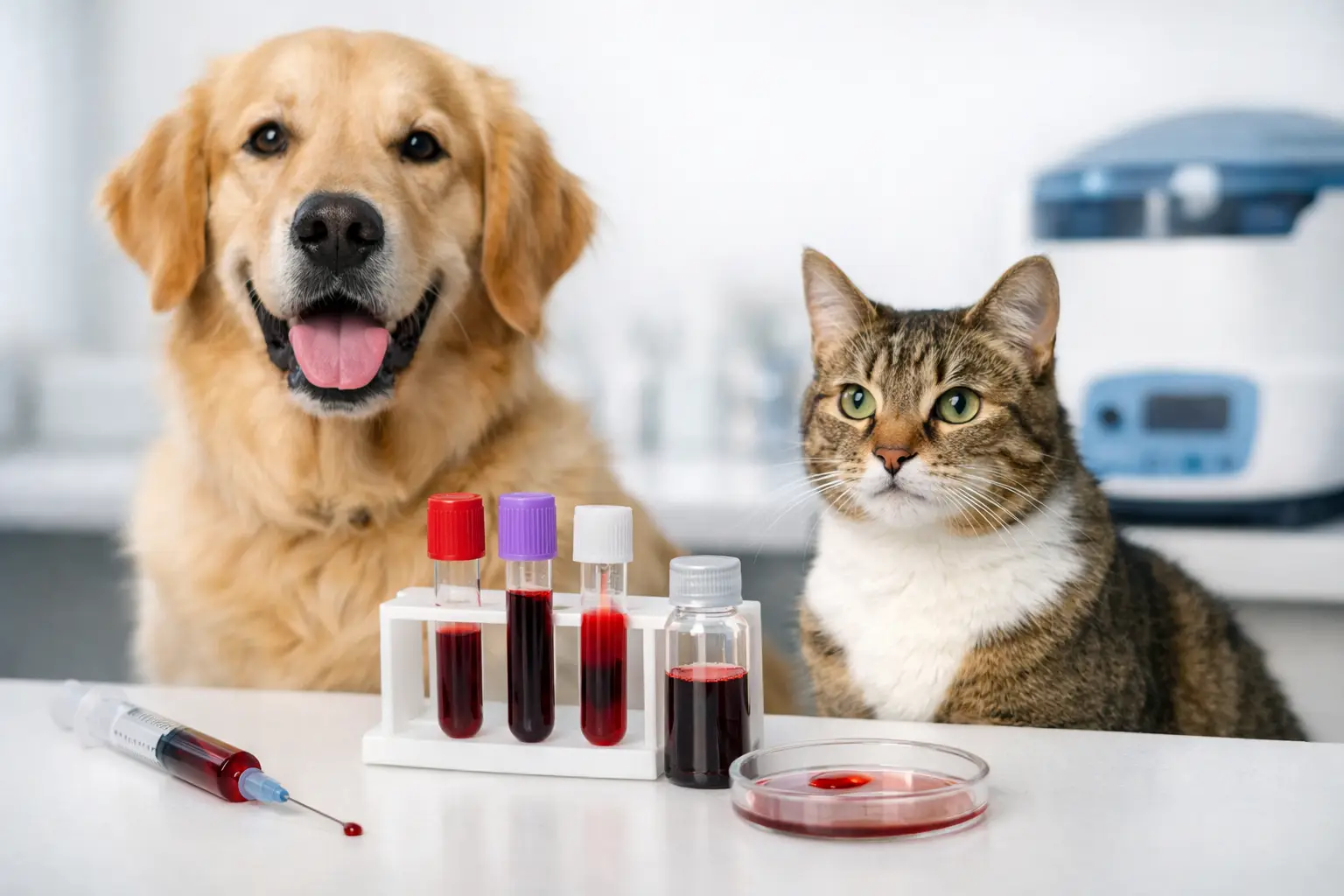
A blood sample can answer questions that even the most thorough nose-to-tail examination cannot. Your pet may be drinking more, losing weight, slowing down on walks or simply seeming a little unlike themselves. This pet blood test guide explains what happens next, what the results can tell us, and why a result is only useful when it is considered alongside the pet standing in front of us.
For many cats, the carrier and waiting room are the worst part of a vet visit. For dogs, it may be the car journey, unfamiliar smells or another dog barking nearby. A calm home appointment can make blood sampling far less of an ordeal - then you can put the kettle on while your pet settles back into their usual routine.
🩸 What does a pet blood test check?
Blood tests give us a snapshot of how the body is working internally. They do not replace a proper consultation, and they do not always produce one neat answer. But they can help identify a problem early, narrow down the likely causes of symptoms, monitor a known condition or check that a medicine is being tolerated safely.
The two common parts of a routine blood profile are haematology and biochemistry. Haematology looks at blood cells, including red cells that carry oxygen, white cells involved in inflammation and infection, and platelets that help blood clot. Biochemistry measures substances in the blood that offer clues about organs and body systems.
Depending on your pet’s age, symptoms and history, a vet may assess kidney and liver values, blood sugar, proteins, salts and minerals, cholesterol, pancreatic markers or thyroid hormone. There are also more specific tests for conditions such as diabetes, Cushing’s disease, Addison’s disease, infectious disease and clotting problems.
A result outside the reference range is not automatically bad news. Reference ranges describe results seen in many healthy animals, not a pass-or-fail line. A nervous cat, for example, may have temporarily raised blood glucose from stress. A value may also be mildly unusual yet entirely unimportant for that individual animal. Context matters.
A blood sample can answer questions that even the most thorough nose-to-tail examination cannot. Your pet may be drinking more, losing weight, slowing down on walks or simply seeming a little unlike themselves. This pet blood test guide explains what happens next, what the results can tell us, and why a result is only useful when it is considered alongside the pet standing in front of us.
For many cats, the carrier and waiting room are the worst part of a vet visit. For dogs, it may be the car journey, unfamiliar smells or another dog barking nearby. A calm home appointment can make blood sampling far less of an ordeal - then you can put the kettle on while your pet settles back into their usual routine.
🩸 What does a pet blood test check?
Blood tests give us a snapshot of how the body is working internally. They do not replace a proper consultation, and they do not always produce one neat answer. But they can help identify a problem early, narrow down the likely causes of symptoms, monitor a known condition or check that a medicine is being tolerated safely.
The two common parts of a routine blood profile are haematology and biochemistry. Haematology looks at blood cells, including red cells that carry oxygen, white cells involved in inflammation and infection, and platelets that help blood clot. Biochemistry measures substances in the blood that offer clues about organs and body systems.
Depending on your pet’s age, symptoms and history, a vet may assess kidney and liver values, blood sugar, proteins, salts and minerals, cholesterol, pancreatic markers or thyroid hormone. There are also more specific tests for conditions such as diabetes, Cushing’s disease, Addison’s disease, infectious disease and clotting problems.
A result outside the reference range is not automatically bad news. Reference ranges describe results seen in many healthy animals, not a pass-or-fail line. A nervous cat, for example, may have temporarily raised blood glucose from stress. A value may also be mildly unusual yet entirely unimportant for that individual animal. Context matters.
When might your dog or cat need blood tests?
Sometimes testing is recommended because a pet is unwell. Common reasons include vomiting or diarrhoea that is not settling, weight loss, a change in thirst or appetite, lethargy, pale gums, yellowing of the eyes or skin, coughing, unexplained bruising, seizures or changes in behaviour.
Blood tests are also valuable when nothing dramatic seems wrong. Senior pets can hide illness remarkably well, especially cats. Routine screening can occasionally spot changes in kidney function, liver values, blood sugar or blood cell counts before a pet appears poorly at home. Finding a condition early does not always mean more treatment - it may mean better monitoring, small changes to diet or medication, and more time to make sensible decisions.
Pre-anaesthetic blood tests are another common recommendation. Before a procedure such as dentistry or a lump removal, they can reveal concerns that may affect the safest anaesthetic plan. They cannot guarantee that every risk disappears, but they give the veterinary team useful information rather than asking them to work in the dark.
For pets already on long-term medication, repeat testing may be advised to monitor the condition itself and check for possible side effects. The frequency depends on the drug, the pet’s age and previous results. It is not a one-size-fits-all exercise.
Blood tests and urine tests often work better together
If a pet is drinking or weeing more than usual, a blood test is often only half the picture. A urine sample can show how well the kidneys concentrate urine, whether there is glucose, protein, blood or inflammation present, and whether infection needs investigating. Collecting a sample at home is often easier than trying to do it in a busy surgery, particularly for cats.
🐾 How blood is taken without making a fuss
Most blood samples are taken from a vein in the neck or leg. The fur may be parted or a small patch clipped, the skin cleaned, and a needle used to collect the sample into tiny tubes. The needle is similar to the one used for a vaccination, although sampling can take a little longer because several tubes may be needed.
Many pets cope better than their owners expect. Gentle, confident handling and a quiet environment go a long way. Some animals need a favourite treat, a lick mat, a cuddle from their person or a short pause before trying again. Others are too worried, sore or wriggly for it to be kind or safe to persist. In those cases, the plan may need adjusting. Sedation is occasionally the most compassionate option, not a failure.
At Vet on the Loose, appointments are not built around squeezing a worried animal through a rushed 15-minute slot. A minimum 30-minute consultation gives time to examine your pet, explain why a test is being suggested, and let everyone take a breath before sampling.
Preparing for your pet’s blood test
Always follow the instructions given for your pet and the specific test. Some tests require fasting, while others do not. Fasting is commonly requested for certain biochemistry tests because a recent meal can make a sample fatty and affect how some values are interpreted.
If fasting has been advised, food is usually withheld for the stated period while water remains available. Do not assume this is appropriate for every pet. Puppies, tiny dogs, diabetic pets and animals that are unwell may need a different plan. Ask before withholding food, particularly if your pet receives insulin or medication with meals.
Bring or have ready a list of every medicine, supplement and flea or worm treatment your pet receives. Mention recent changes too: a new diet, a scavenged takeaway, travel, a possible toxin exposure, vomiting, diarrhoea, or a tick found after a walk. These details can be as useful as a laboratory number.
Try to keep the day calm. A gentle walk for a dog before the appointment may help them settle, but avoid strenuous exercise if they are unwell or if the vet has advised otherwise. For cats, leaving them in their familiar room until the vet arrives is usually much kinder than an anxious car journey.
What happens after the sample is taken?
Some results may be available quickly if an in-house test is suitable. Others are sent to a laboratory, where the turnaround time depends on the tests requested. More specialised tests can take longer. If a result is urgent, the vet will explain the next steps and how quickly they need to happen.
When results return, a good conversation matters more than a sheet full of abbreviations. Ask what each meaningful finding could indicate, whether it fits your pet’s symptoms, what else could cause it, and whether a repeat sample or another test would clarify things. A single mildly raised value may simply need monitoring. A pattern of changes may point much more strongly towards a particular condition.
It is reasonable to ask about costs before testing goes ahead. You should know whether the quoted amount includes the consultation, sampling, laboratory fee and any follow-up discussion. If several tests are possible, ask which are essential now, which can wait, and what difference each result would make to treatment. Clear choices are part of good veterinary care, not an awkward question.
Results that need prompt attention
Do not wait for a routine blood test appointment if your pet is struggling to breathe, collapses, has repeated seizures, has a swollen abdomen, cannot pass urine, has eaten a known toxin, or is severely weak and unresponsive. These signs need urgent veterinary assessment.
Similarly, blood testing is not a reason to delay examining a pet who is clearly in pain, repeatedly vomiting, passing black stools, or becoming rapidly more lethargic. The priority is stabilising the pet and working out what they need now. Samples may be part of that process, but they are not the whole plan.
A blood test is not about hunting for problems in a happy pet or spending money for the sake of it. Used thoughtfully, it is a practical tool: one that can turn vague worries into useful information and help you make kinder, better-timed choices for the animal asleep beside you.