The cat carrier comes out and suddenly your friendly cat has vanished behind the washing machine. Your dog starts panting before you have reached the car. Then there is the packed waiting room, the rushed feeling and the bill you were not quite expecting. This mobile veterinary care guide explains how seeing a vet at home can change that experience - and when a clinic visit is still the better choice.
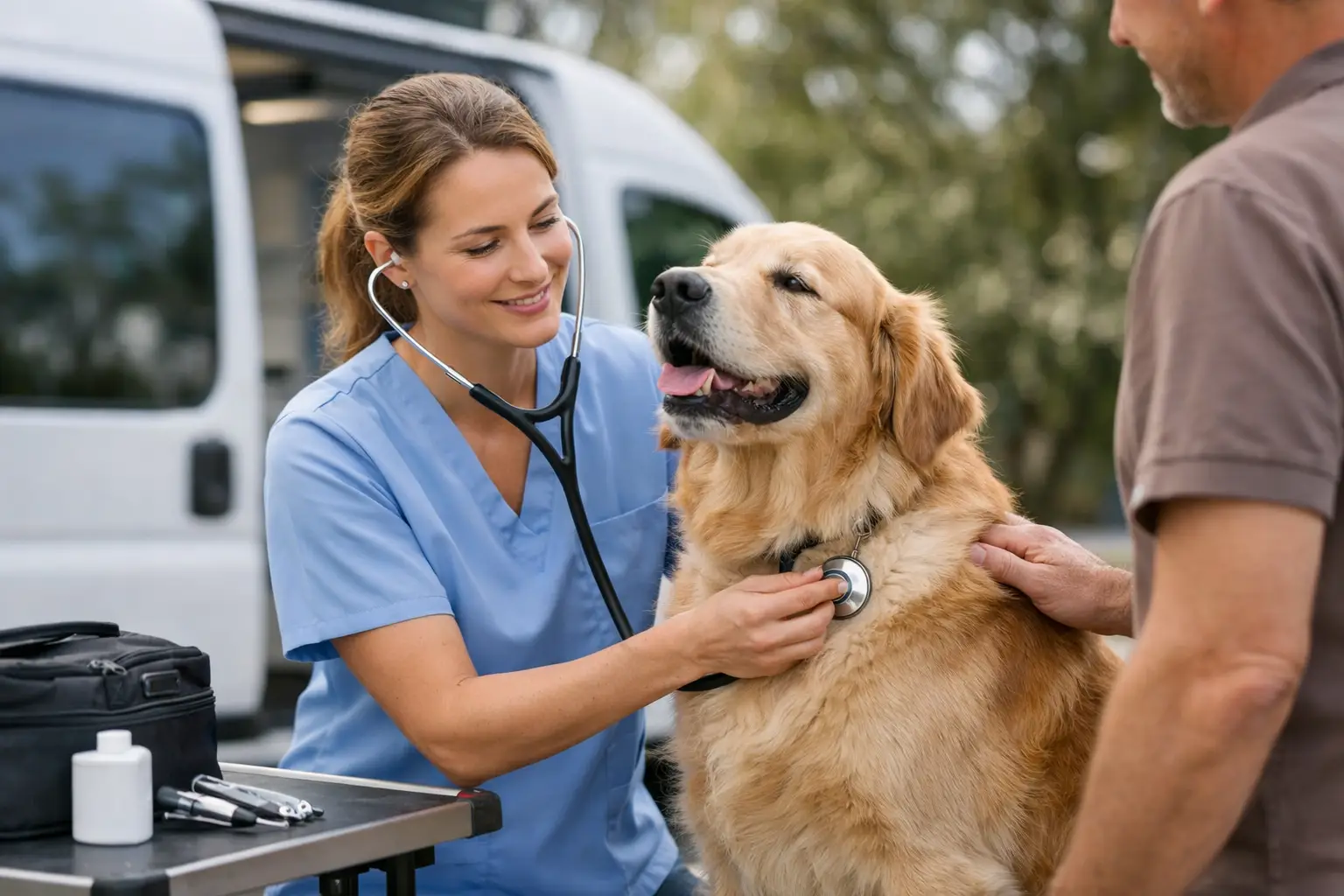
For many dogs and cats, home is the place where they feel safest. A mobile appointment brings professional veterinary care to that familiar space, with time to talk things through properly and without adding a car journey or a busy reception area to an already worrying day.
🏠 What mobile veterinary care can help with
A home visit is not just for pets who dislike the surgery. It can be a practical choice for busy families, older owners, households without easy transport and anyone juggling more than one pet. If you have two cats, for example, there is no need to negotiate two carriers, two disappearing acts and two separate appointments.
Many routine and non-emergency needs can be dealt with in your kitchen, living room or garden. This often includes health checks, vaccinations, parasite advice, nail clips where appropriate, ear and skin concerns, weight checks, medication reviews and discussions about changes in behaviour or mobility.
A vet can also collect blood and urine samples during a home consultation. These can help investigate issues such as drinking more, losing weight, vomiting, itchy skin, arthritis pain or changes in appetite. A proper consultation is still needed before testing, because a result only makes sense alongside a thorough history and examination.
Mobile care can be especially helpful for nervous pets. There is no promise that every animal will enjoy being examined - some cats are quite clear about their views wherever they are - but familiar smells, fewer strange animals and a calmer pace can make a real difference. A minimum 30-minute appointment gives everyone more breathing room than the standard dash in and out.
🚗 When home visits are not the right answer
Being honest about the limits matters. Mobile veterinary care is brilliant for many situations, but it cannot replace a fully equipped hospital.
If your pet has trouble breathing, collapses, is having repeated seizures, has been hit by a car, is straining to urinate, has uncontrolled bleeding or seems in severe pain, they need urgent emergency care. Call an emergency veterinary provider straight away. Do not wait for a home appointment.
Some cases also need facilities that are difficult to bring into a house, such as X-rays, ultrasound, oxygen support, surgery, hospitalisation or intensive monitoring. A mobile vet may examine your pet first, explain what is happening and arrange referral, but prompt transfer is sometimes the kindest and safest plan.
The right question is not, “Can everything be done at home?” It is, “What does my pet need today?” Good veterinary care means choosing the setting that gives them the best chance of feeling better.
💷 A mobile veterinary care guide to clear costs
Cost worries are real. They should not stop you asking for help, and you should never feel embarrassed for wanting to understand a quote before agreeing to treatment.
Ask what the consultation fee covers, whether a travel charge applies and whether it is charged per household or per pet. For multi-pet homes, one travel fee for the visit can make home care particularly sensible. It is also worth asking for an estimate before laboratory tests, medicines or additional procedures are arranged.
A clear plan should explain the likely next steps: what can be done now, what can wait, what monitoring at home involves and what the alternatives are. There are occasions when the best clinical option is more costly. There are also times when a sensible, staged approach is entirely appropriate. You deserve to understand the difference.
Medication is another area where choice matters. Ask whether a written prescription is available if you would prefer to obtain a medicine elsewhere. Your vet should make sure the treatment is safe and suitable for your pet, while respecting that family budgets are not unlimited.
🐾 How to get ready for a calmer home visit
You do not need to turn your home into a consulting room. A few small preparations can help the appointment run smoothly.
Choose a quiet area with reasonable light and enough space to examine your pet. For cats, closing internal doors before the vet arrives can prevent a last-minute game of hide-and-seek. Keep dogs on a lead if they are likely to rush to the front door, but try not to make a fuss - a relaxed welcome helps.
Have any current medicines, supplements and previous test results nearby. If you have noticed limping, coughing, itching, odd behaviour or a tummy upset that comes and goes, a short video taken before the visit can be genuinely useful. Pets have an uncanny ability to stop doing the very thing you need a vet to see.
It also helps to write down your questions. How long has this been happening? Is it getting worse? Are they eating, drinking, toileting and sleeping normally? Has anything changed at home? These details are often more valuable than owners realise.
Then give yourself permission to sit down and have a proper conversation. Home visits should not feel like a vet has popped in, poked your pet and disappeared. This is your time to ask about treatment, prevention, food, pain relief, travel or anything else playing on your mind. Consultation and chill, if you like.
✈️ Routine care, travel and remote advice
Planning ahead makes routine veterinary care far less stressful. Vaccinations, annual health checks and parasite prevention are easier to organise before a deadline is looming. If you are travelling abroad with your pet, leave plenty of time for the correct paperwork, including Animal Health Certificates and any country-specific requirements. Rules can change, and the exact documents depend on where you are going and when.
Remote consultations can also be useful for some follow-ups, behaviour discussions or minor concerns where a physical examination is not needed immediately. They are not a shortcut for emergencies or a substitute when your pet needs hands-on assessment, but they can save an unnecessary journey in the right circumstances.
For owners across Essex, Hertfordshire and London, Vet on the Loose combines in-home appointments with access to The Vet Room clinic in Ware when clinic equipment or a different setting is needed. That flexibility matters: care should fit the problem, not force every pet into the same route.
🌿 Saying goodbye at home
There is one reason people often seek mobile veterinary care that is never routine, even for those of us who provide it: euthanasia.
When a dog or cat reaches the point where comfort, dignity and quality of life are no longer there, being at home can offer a gentler farewell . Your pet can rest in their favourite bed, hear familiar voices and be surrounded by the people who love them. There is no need to leave immediately afterwards or hold back tears in a car park.
A compassionate home visit should be unhurried. Your vet can explain each stage, usually beginning with sedation so your pet becomes deeply relaxed and sleepy before the final medication is given. You can take the time you need to say goodbye, and discuss aftercare arrangements in advance if that feels easier.
There is no perfect decision or perfect day. There is only doing your best for a beloved animal with the information, support and love you have.
The value of mobile veterinary care is not simply that it saves a journey. It gives your pet care in the place where they know they are safe, and gives you the space to ask questions, weigh up choices and enjoy a cuppa while someone listens.