The cat carrier is out, the dog has clocked the word ‘vet’, and suddenly an ordinary appointment becomes a small household operation. A mobile vet changes that picture. Rather than asking an anxious pet, a busy parent, an older owner or a multi-pet household to travel to a surgery, the vet comes to you.
That is not simply a nice extra. For many dogs and cats, being examined in their own familiar space can make care calmer, clearer and far less of an ordeal. It also gives owners something conventional appointments often do not: time to talk properly, without feeling hurried out of the consulting room.
Why a mobile vet can feel so different 🐾
A veterinary waiting room can be a lot to take in. There may be unfamiliar smells, barking dogs, other cats, noise at reception and a long wait in a carrier. Some pets cope brilliantly. Others arrive already frightened, which can make a simple check-up harder for everyone.
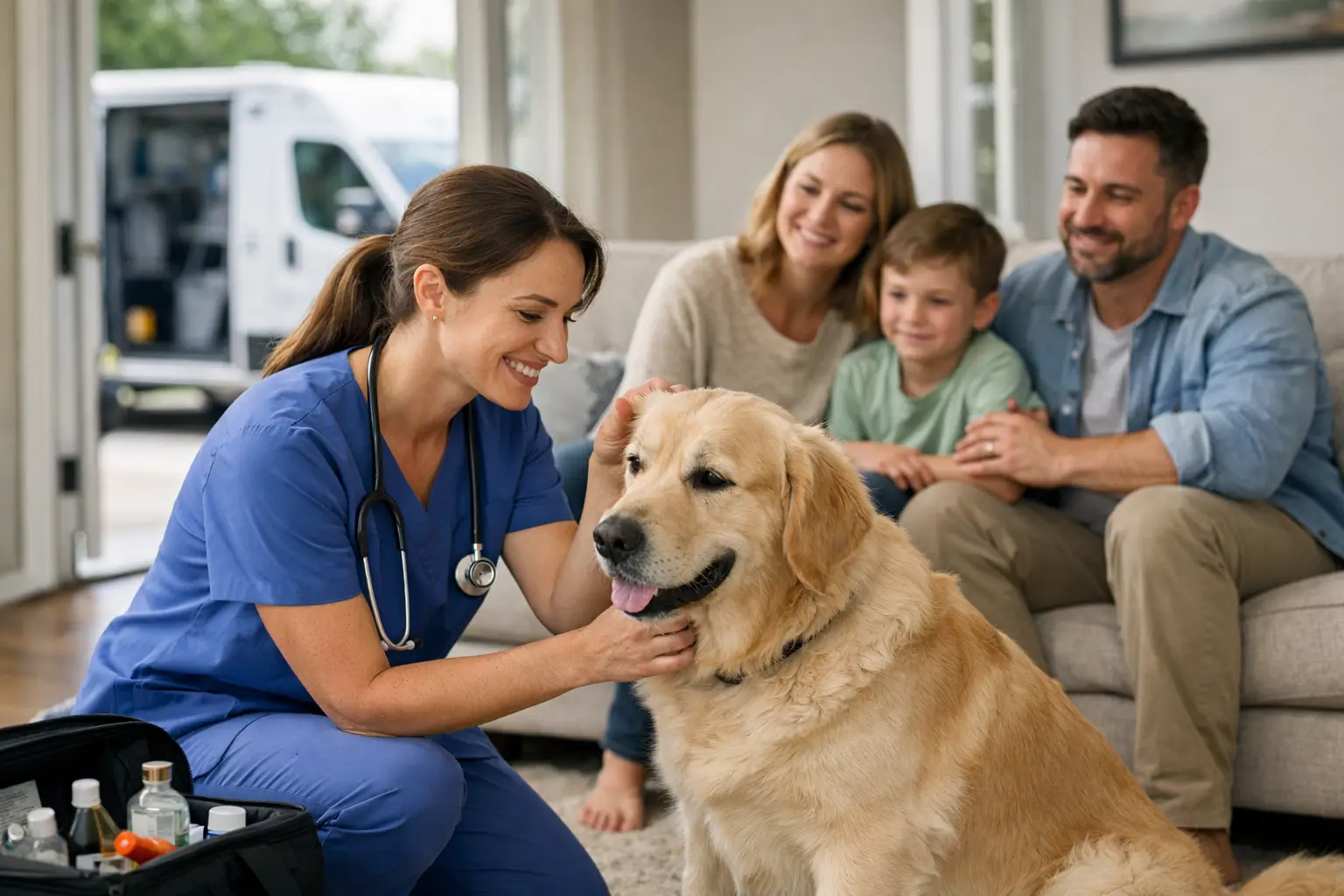
At home, your pet can settle in their favourite room, on their usual blanket or beside the person they trust most. That does not mean every animal will enjoy an examination or a vaccination - nobody is promising magic - but it removes several common triggers before the appointment has even begun.
There is a practical benefit for people too. No wrestling a reluctant cat into a carrier. No rearranging a whole afternoon around traffic, parking and a waiting room. No trying to bring three pets to a surgery at once. A home visit lets veterinary care fit around real life, rather than asking real life to stop for veterinary care.
The pace matters as much as the location. A proper consultation should leave room for questions about appetite, behaviour, medication, diet, skin changes or that odd cough you have noticed at night. When an appointment is not squeezed into a standard 15-minute slot, there is time to listen, examine carefully and explain the options in plain English. You can make a cuppa and talk it through while your pet relaxes.
The cat carrier is out, the dog has clocked the word ‘vet’, and suddenly an ordinary appointment becomes a small household operation. A mobile vet changes that picture. Rather than asking an anxious pet, a busy parent, an older owner or a multi-pet household to travel to a surgery, the vet comes to you.
That is not simply a nice extra. For many dogs and cats, being examined in their own familiar space can make care calmer, clearer and far less of an ordeal. It also gives owners something conventional appointments often do not: time to talk properly, without feeling hurried out of the consulting room.
Why a mobile vet can feel so different 🐾
A veterinary waiting room can be a lot to take in. There may be unfamiliar smells, barking dogs, other cats, noise at reception and a long wait in a carrier. Some pets cope brilliantly. Others arrive already frightened, which can make a simple check-up harder for everyone.
At home, your pet can settle in their favourite room, on their usual blanket or beside the person they trust most. That does not mean every animal will enjoy an examination or a vaccination - nobody is promising magic - but it removes several common triggers before the appointment has even begun.
There is a practical benefit for people too. No wrestling a reluctant cat into a carrier. No rearranging a whole afternoon around traffic, parking and a waiting room. No trying to bring three pets to a surgery at once. A home visit lets veterinary care fit around real life, rather than asking real life to stop for veterinary care.
The pace matters as much as the location. A proper consultation should leave room for questions about appetite, behaviour, medication, diet, skin changes or that odd cough you have noticed at night. When an appointment is not squeezed into a standard 15-minute slot, there is time to listen, examine carefully and explain the options in plain English. You can make a cuppa and talk it through while your pet relaxes.
What can a mobile vet help with?
Home visits are useful for much more than a quick vaccination. Routine checks, annual vaccinations, parasite advice, ear and skin concerns, minor illnesses, mobility changes and quality-of-life reviews can all be assessed at home.
Diagnostic testing is often possible too. Blood and urine samples can help investigate problems such as increased thirst, weight loss, vomiting, urinary changes or low energy. The vet can explain what a test is intended to show, what it cannot tell us on its own, and what the likely next steps might be. That matters, because a test should never feel like an unexplained addition to a bill.
For owners travelling abroad with their pet, a mobile appointment may also be a convenient way to arrange an Animal Health Certificate or fit-to-fly paperwork, provided the timing and travel requirements are right. These documents have specific rules, so it is worth planning ahead rather than leaving it to the week before departure.
Remote consultations can sometimes help with follow-up questions, minor concerns or deciding whether your pet needs to be seen in person. They are not a replacement for a hands-on examination when one is needed, but they can save an unnecessary journey and give you sensible next-step advice.
When home care is not the right answer
Being honest about limits is part of good care. A pet with a serious emergency may need hospital facilities, X-rays, surgery, oxygen, intensive monitoring or round-the-clock nursing. In that situation, getting to the right clinic quickly is more important than waiting for a home visit.
Seek urgent veterinary help if your pet is struggling to breathe, has collapsed, is having repeated seizures, has suffered a major injury, is unable to urinate, has a swollen painful abdomen, or is bleeding heavily. Trust your instincts too. If your pet seems profoundly unwell, do not wait to see whether they improve overnight.
A mobile vet can also recommend referral or a clinic appointment when further equipment or specialist input is the best option. Home-based care is not about pretending every problem can be solved on a sofa. It is about using the right setting for the right kind of care.
Clear costs should not be a guessing game
One of the biggest frustrations owners share is not necessarily the cost of treatment itself. It is the uncertainty. Nobody wants to agree to something because they feel pressured, only to be surprised by the bill afterwards.
A good mobile practice should publish prices clearly and talk through likely costs before tests or treatment go ahead. You should understand the consultation charge, any travel fee, the price of recommended tests and the cost of medicines. If there are alternatives, those should be discussed too.
This is especially helpful in multi-pet homes. If two cats are due their vaccinations or several animals need checking, seeing them in one visit can be kinder to the pets and simpler for the household. Vet on the Loose charges one travel fee regardless of how many pets are seen, so owners can plan with fewer nasty surprises.
Medication is another area where owners deserve choice. A written prescription lets you decide where to buy ongoing medication, rather than feeling tied to one source. There can be circumstances where a medicine needs to be supplied promptly by the vet, but transparent prescribing gives you control when there is time to compare options.
Affordable care does not mean cutting corners. It means being upfront, avoiding unnecessary add-ons and explaining why each recommendation has been made. Your pet is family, but your budget is real. A caring vet should respect both.
Gentle care for difficult goodbyes 🕊️
For many families, the most meaningful reason to choose a mobile vet is at-home-pet-euthanasia . Saying goodbye to a dog or cat is heartbreaking enough without adding a stressful car journey, a busy reception area or the feeling that you have to leave before you are ready.
At home, your pet can be in a familiar place, surrounded by their people. The process can be explained slowly, including sedation beforehand, so they become relaxed and sleepy before the final injection. You can ask questions, take your time and decide what feels right for your family.
There is no perfect way to say goodbye, and there is no ‘right’ reaction afterwards. Some people want quiet; others want every detail explained. Some choose individual cremation, while others have a special place at home or in the garden. The important thing is having space, privacy and compassionate support at a moment that should never be rushed.
Is a home visit right for your pet?
It depends on their needs, your circumstances and the type of care required. A confident dog who loves a trip to the surgery may be perfectly happy with a clinic appointment. A cat who vanishes at the sight of a carrier, an elderly dog with painful joints, or a family juggling work and children may benefit hugely from being seen at home.
Home visits are particularly worth considering if your pet becomes distressed in the car, reacts to other animals, has limited mobility, needs a longer conversation about an ongoing issue, or if bringing them to a clinic is physically difficult for you. They can also make routine preventive care much easier to keep on top of.
The best veterinary appointment is not the one that looks most convenient on paper. It is the one where your pet can be assessed properly, you feel heard, and the next decision is clear. Sometimes that will be in a well-equipped clinic. Sometimes it will be at home, with your dog curled up by the radiator or your cat watching cautiously from the stairs.
If a calmer setting would help your pet cope, choosing care that comes to them is not indulgent. It is a thoughtful way to make looking after them feel a little less stressful for everybody.