💛 Is pet euthanasia painful for dogs and cats?
For most pets, euthanasia itself is not painful. The final medication works very quickly once it is given into a vein. It causes unconsciousness first, so your pet is not aware when their heart and breathing stop.
Before that final injection, many vets recommend a sedative. This is particularly helpful for anxious pets, cats who dislike handling, or dogs who have been unwell for some time. The sedative is often given by a small injection under the skin or into a muscle. Like any injection, there can be a brief sharp sensation, but it is over in a moment. The medication then helps your pet become calm, sleepy and deeply relaxed.
Some pets settle beside their person. Others may become a little wobbly, seem unusually quiet, or take a few minutes to find a comfortable position. This is the medicine taking effect, not distress. Your vet will wait until your pet is properly sleepy before moving forward. There should be no rushing.
The final injection is usually given through a vein in a leg. A small area may be clipped so the vein can be seen clearly, and a catheter may be placed first. This means the medication can be given smoothly, with minimal handling at a very sensitive time.
What actually happens during euthanasia
The final medication is an overdose of an anaesthetic drug. At the correct dose, it rapidly switches off consciousness, then stops brain function, breathing and the heart. Your pet will not understand what is happening or feel themselves slipping away.
Often, a dog or cat becomes unconscious within seconds. Their heart may stop very soon afterwards, although your vet will listen carefully to confirm this. You can stroke them, talk to them and hold them throughout if you wish. Your voice and familiar touch can be reassuring right up until they are asleep.
Every pet is an individual, and illness can affect circulation. In an older animal with poor circulation, it can occasionally take a little longer for the final injection to work. That does not mean they are experiencing pain. Your vet will stay with them, monitor carefully and make sure they are peaceful.
Things that can look upsetting but are normal
There are a few physical changes that owners deserve to know about in advance. Knowing they are normal can prevent a frightening surprise at an already heartbreaking moment.
After death, a pet may take what looks like a final breath, twitch a leg, or make a small movement. These are reflexes from the body and do not mean they are awake or suffering. Their eyes may remain open, and they may pass urine or faeces as muscles relax. Occasionally, there may be a soft sigh or sound as air leaves the lungs.
Your vet should explain these possibilities before starting, not leave you to make sense of them in the moment. There is no right reaction if you see them. Some people want to remain close; others need to step back for a minute. Both are completely okay.
Why sedation can make such a difference
A peaceful euthanasia is about more than the final injection. It is about the whole experience: the journey, unfamiliar smells, restraint, needles and the people in the room.
For some pets, especially those already comfortable with veterinary visits, a sedative may not be necessary. For many others, it is a kind and sensible part of the plan. It allows them to drift into a relaxed sleep before the final medication is given, and it gives everyone time to breathe.
At-home euthanasia can be particularly gentle for pets who find car travel, waiting rooms or clinical environments stressful. Your dog can stay on their bed, on the sofa, or in a sunny patch of garden if conditions allow. Your cat does not have to be persuaded into a carrier. There is no hurried appointment slot and no need to leave immediately afterwards.
At Vet on the Loose, end-of-life appointments are given the time they need, with a calm plan discussed beforehand. The focus is on your pet’s comfort, your wishes and allowing a private goodbye in familiar surroundings.
Preparing for the day without making it feel clinical
You do not need to make the day perfect. There is no perfect way to say goodbye. Gentle, ordinary moments are often the ones families remember most: sitting together, sharing a favourite safe treat, taking a short sniff-filled walk, or simply enjoying a cuppa while your pet sleeps nearby.
It can help to choose a quiet place in advance, with a blanket or bed where your pet feels settled. If they have a favourite person, toy or familiar piece of clothing, keep it close. Try not to plan too much around a precise time. Sedation and the final injection are usually quick, but allowing a little emotional breathing room is kinder to everyone.
If children are involved, simple and truthful language is usually best. Explain that the vet will give medicine to stop the pet’s body working because they are very ill or very old, and that they will not feel pain. Let children decide whether they want to be present, say goodbye beforehand, or make a picture or letter instead. They should not be pressured either way.
Other household pets may also notice the loss. Where appropriate, allowing them a brief, calm opportunity to see their companion afterwards can help some animals understand that they have gone. It is not essential, and it may not be right for every pet or household, but it is something you can discuss with your vet.
Questions to ask your vet beforehand
When emotions are high, it is easy to forget what you meant to ask. A short conversation before the appointment can make the day feel more manageable. Ask whether sedation is recommended, where the injections will be given, how long the process is likely to take, and whether you can stay with your pet throughout.
It is also reasonable to ask about aftercare before the day arrives. You may prefer an individual cremation with ashes returned, a communal cremation, or to make arrangements yourself where this is permitted. There is no morally better choice. The right option is the one that feels manageable and meaningful for your family.
If cost is worrying you, ask for clear pricing early . Euthanasia is never a decision anyone should feel rushed into because they do not understand the likely bill. A caring veterinary team will explain the options plainly, including travel charges and aftercare costs where relevant.
When you are worried it may be time
The hardest question is often not whether euthanasia hurts, but whether it is too soon or too late. There is rarely a single, dramatic answer. Look at your pet’s whole quality of life: pain, appetite, mobility, toileting, sleep, breathing, anxiety and whether they still have more good days than bad.
A pet does not need to be at crisis point for euthanasia to be compassionate. Waiting for a natural death can sometimes mean waiting through avoidable distress, especially with progressive pain, severe breathlessness, repeated collapses or a loss of basic comfort. Equally, a diagnosis alone does not always mean it is time. Some pets continue to enjoy a good quality of life with the right support.
A vet can talk through what they are seeing clinically and help you make a plan. You do not have to carry the decision alone, and choosing a peaceful goodbye is not giving up on your pet. It can be the final act of care for an animal who has trusted you all their life.
When the time comes, try to let your pet’s last experience be familiar voices, gentle hands and the people who have loved them best. That matters far more than finding the perfect words.
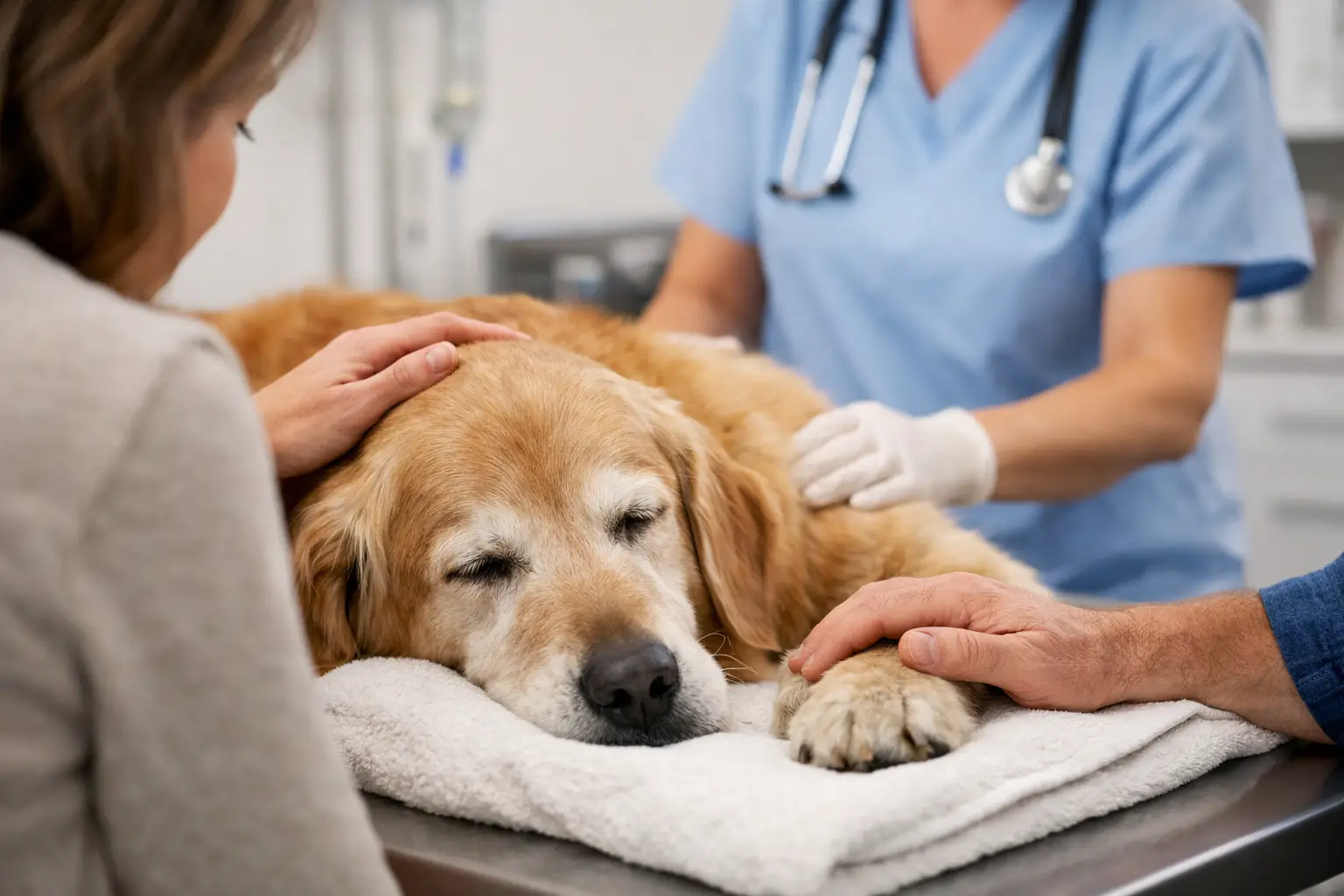
That question usually arrives in the quiet moments: when your dog is no longer enjoying their favourite things, or your cat is hiding more than they are living. Is pet euthanasia painful? In the hands of a veterinary professional, the aim is for it not to be. Euthanasia is designed to prevent suffering, using medication that brings deep sleep before the heart stops.
It is still an emotionally painful decision for the people who love them. But knowing exactly what will happen can take away some of the fear, help you advocate for your pet, and give you space to focus on being with them.
💛 Is pet euthanasia painful for dogs and cats?
For most pets, euthanasia itself is not painful. The final medication works very quickly once it is given into a vein. It causes unconsciousness first, so your pet is not aware when their heart and breathing stop.
Before that final injection, many vets recommend a sedative. This is particularly helpful for anxious pets, cats who dislike handling, or dogs who have been unwell for some time. The sedative is often given by a small injection under the skin or into a muscle. Like any injection, there can be a brief sharp sensation, but it is over in a moment. The medication then helps your pet become calm, sleepy and deeply relaxed.
Some pets settle beside their person. Others may become a little wobbly, seem unusually quiet, or take a few minutes to find a comfortable position. This is the medicine taking effect, not distress. Your vet will wait until your pet is properly sleepy before moving forward. There should be no rushing.
The final injection is usually given through a vein in a leg. A small area may be clipped so the vein can be seen clearly, and a catheter may be placed first. This means the medication can be given smoothly, with minimal handling at a very sensitive time.
What actually happens during euthanasia
The final medication is an overdose of an anaesthetic drug. At the correct dose, it rapidly switches off consciousness, then stops brain function, breathing and the heart. Your pet will not understand what is happening or feel themselves slipping away.
Often, a dog or cat becomes unconscious within seconds. Their heart may stop very soon afterwards, although your vet will listen carefully to confirm this. You can stroke them, talk to them and hold them throughout if you wish. Your voice and familiar touch can be reassuring right up until they are asleep.
Every pet is an individual, and illness can affect circulation. In an older animal with poor circulation, it can occasionally take a little longer for the final injection to work. That does not mean they are experiencing pain. Your vet will stay with them, monitor carefully and make sure they are peaceful.
Things that can look upsetting but are normal
There are a few physical changes that owners deserve to know about in advance. Knowing they are normal can prevent a frightening surprise at an already heartbreaking moment.
After death, a pet may take what looks like a final breath, twitch a leg, or make a small movement. These are reflexes from the body and do not mean they are awake or suffering. Their eyes may remain open, and they may pass urine or faeces as muscles relax. Occasionally, there may be a soft sigh or sound as air leaves the lungs.
Your vet should explain these possibilities before starting, not leave you to make sense of them in the moment. There is no right reaction if you see them. Some people want to remain close; others need to step back for a minute. Both are completely okay.
Why sedation can make such a difference
A peaceful euthanasia is about more than the final injection. It is about the whole experience: the journey, unfamiliar smells, restraint, needles and the people in the room.
For some pets, especially those already comfortable with veterinary visits, a sedative may not be necessary. For many others, it is a kind and sensible part of the plan. It allows them to drift into a relaxed sleep before the final medication is given, and it gives everyone time to breathe.
At-home euthanasia can be particularly gentle for pets who find car travel, waiting rooms or clinical environments stressful. Your dog can stay on their bed, on the sofa, or in a sunny patch of garden if conditions allow. Your cat does not have to be persuaded into a carrier. There is no hurried appointment slot and no need to leave immediately afterwards.
At Vet on the Loose, end-of-life appointments are given the time they need, with a calm plan discussed beforehand. The focus is on your pet’s comfort, your wishes and allowing a private goodbye in familiar surroundings.
Preparing for the day without making it feel clinical
You do not need to make the day perfect. There is no perfect way to say goodbye. Gentle, ordinary moments are often the ones families remember most: sitting together, sharing a favourite safe treat, taking a short sniff-filled walk, or simply enjoying a cuppa while your pet sleeps nearby.
It can help to choose a quiet place in advance, with a blanket or bed where your pet feels settled. If they have a favourite person, toy or familiar piece of clothing, keep it close. Try not to plan too much around a precise time. Sedation and the final injection are usually quick, but allowing a little emotional breathing room is kinder to everyone.
If children are involved, simple and truthful language is usually best. Explain that the vet will give medicine to stop the pet’s body working because they are very ill or very old, and that they will not feel pain. Let children decide whether they want to be present, say goodbye beforehand, or make a picture or letter instead. They should not be pressured either way.
Other household pets may also notice the loss. Where appropriate, allowing them a brief, calm opportunity to see their companion afterwards can help some animals understand that they have gone. It is not essential, and it may not be right for every pet or household, but it is something you can discuss with your vet.
Questions to ask your vet beforehand
When emotions are high, it is easy to forget what you meant to ask. A short conversation before the appointment can make the day feel more manageable. Ask whether sedation is recommended, where the injections will be given, how long the process is likely to take, and whether you can stay with your pet throughout.
It is also reasonable to ask about aftercare before the day arrives. You may prefer an individual cremation with ashes returned, a communal cremation, or to make arrangements yourself where this is permitted. There is no morally better choice. The right option is the one that feels manageable and meaningful for your family.
If cost is worrying you, ask for clear pricing early . Euthanasia is never a decision anyone should feel rushed into because they do not understand the likely bill. A caring veterinary team will explain the options plainly, including travel charges and aftercare costs where relevant.
When you are worried it may be time
The hardest question is often not whether euthanasia hurts, but whether it is too soon or too late. There is rarely a single, dramatic answer. Look at your pet’s whole quality of life: pain, appetite, mobility, toileting, sleep, breathing, anxiety and whether they still have more good days than bad.
A pet does not need to be at crisis point for euthanasia to be compassionate. Waiting for a natural death can sometimes mean waiting through avoidable distress, especially with progressive pain, severe breathlessness, repeated collapses or a loss of basic comfort. Equally, a diagnosis alone does not always mean it is time. Some pets continue to enjoy a good quality of life with the right support.
A vet can talk through what they are seeing clinically and help you make a plan. You do not have to carry the decision alone, and choosing a peaceful goodbye is not giving up on your pet. It can be the final act of care for an animal who has trusted you all their life.
When the time comes, try to let your pet’s last experience be familiar voices, gentle hands and the people who have loved them best. That matters far more than finding the perfect words.