The home vet versus clinic decision often starts with one familiar scene: you have found the cat, negotiated them into the carrier, endured the car journey, and arrived at a busy waiting room with a pet who is already feeling rather unimpressed. For some animals, a clinic visit is absolutely the right choice. For others, being examined in their own living room can make veterinary care calmer, kinder and far more practical.
Neither option is automatically better. The best fit depends on your pet’s needs, your circumstances and the type of care required. Here is an honest look at what changes when the vet comes to you.
🏠 Home vet versus clinic: the biggest differences
A traditional clinic has dedicated equipment, a team on site and the ability to respond quickly when a pet needs hospital-level care. That matters. If your dog has been hit by a car, your cat is struggling to breathe, or your pet needs an operation, a properly equipped clinic or veterinary hospital is the safest place to be.
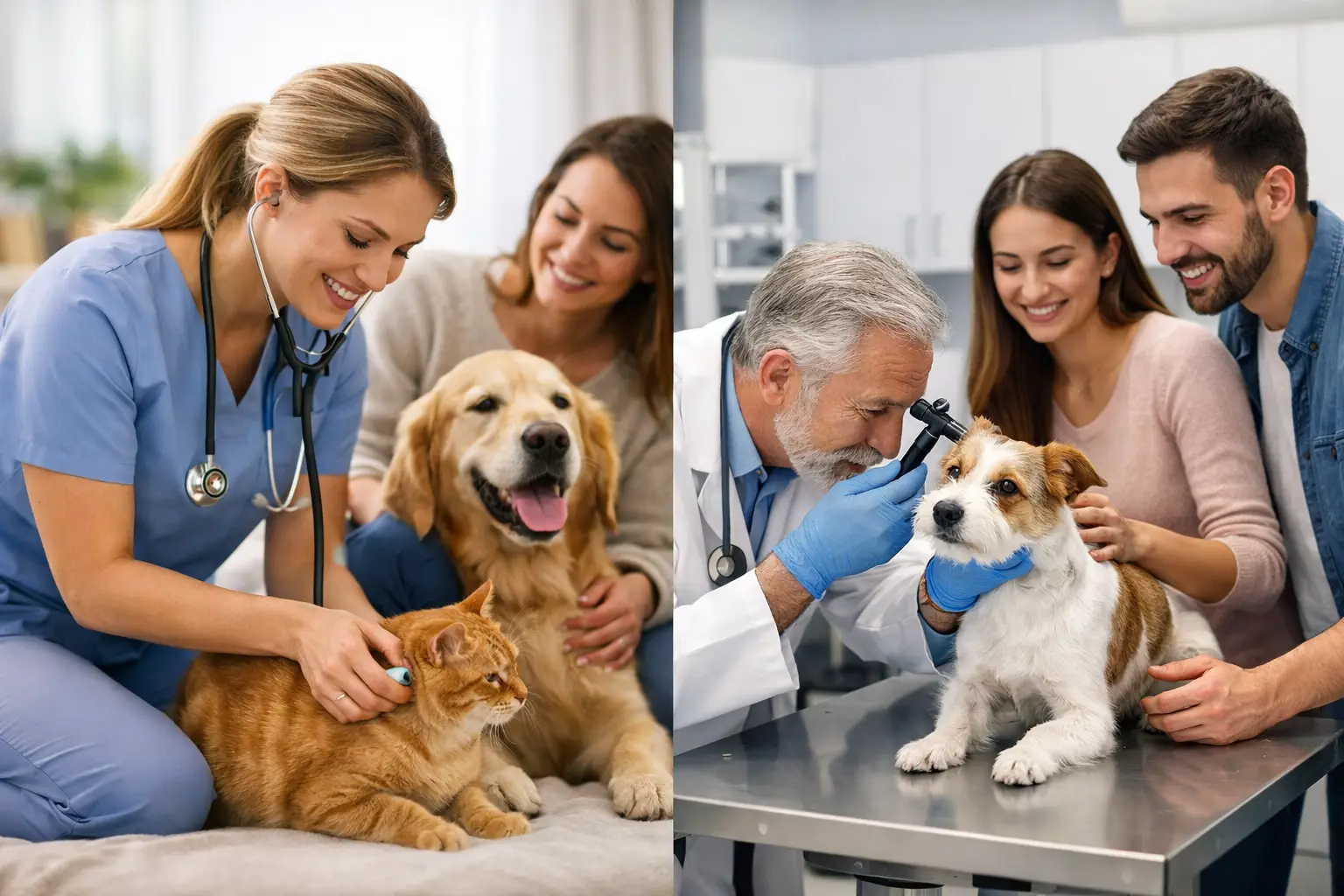
A home visit offers something different: care delivered where your pet feels most secure. There is no car journey, no unfamiliar smells, no dogs barking behind the next reception chair and no need to juggle children, work calls and a stressed pet in a waiting room. The appointment can be more settled from the start, particularly for cats, older dogs and animals who have learned that the carrier means trouble.
At Vet on the Loose, every home appointment lasts a minimum of 30 minutes. That extra breathing room can make a real difference. You have time to explain what you have noticed, ask the questions you kept forgetting during a rushed appointment, and let your pet come round in their own time. Consultation and chill is not a clinical term, admittedly, but it is often exactly what anxious animals need.
😺 When a home visit can be the kinder choice
Home veterinary care is particularly useful for routine and non-emergency needs. Think health checks, vaccinations, nail clips where appropriate, skin or ear concerns, minor tummy upsets, urine and blood tests, repeat medication discussions and quality-of-life assessments.
Cats are often the obvious candidates. Many cats find travelling, carriers and new environments more upsetting than the examination itself. At home, your vet can see their normal posture, breathing, movement and behaviour before the hiding-under-the-sofa negotiations begin. A cat may still object to a thermometer or an injection - no one is promising miracles - but removing the journey and waiting room can lower the overall stress considerably.
For senior pets, home visits can be easier physically as well as emotionally. A dog with arthritis may struggle to jump into the car. An older cat may become disorientated away from home. A longer appointment in familiar surroundings allows a more realistic conversation about mobility, appetite, sleep, medication and the small changes that matter to a family who knows their pet best.
Home visits also work well for multi-pet households. Rather than arranging several carrier journeys or separate appointments, all the pets can be seen in one visit where suitable. A single travel fee for the household can make this a more sensible option too, especially when more than one animal is due a check-up or vaccination.
🩺 When a clinic is the better place to be
A mobile vet can do a great deal, but honesty matters more than pretending every problem belongs at home. Clinics have facilities that cannot be packed into a car: operating theatres, hospitalisation areas, X-ray equipment, oxygen support, continuous monitoring and a larger team able to assist with complex or urgent cases.
If your pet needs surgery, dental treatment under general anaesthetic, an X-ray, an ultrasound scan, intensive fluid therapy or overnight observation, a clinic is usually the appropriate next step. The same goes for emergencies. Sudden collapse, difficulty breathing, uncontrolled bleeding, suspected poisoning, severe pain, repeated vomiting with lethargy, or trouble giving birth all need urgent veterinary attention in a fully equipped setting.
The reassuring bit is that choosing a home vet does not mean refusing clinic care. Good veterinary care is about recommending the right setting at the right time. A home consultation can sometimes establish what is happening, take samples and help you make a clear plan. If onward treatment is needed, your vet should tell you plainly rather than trying to stretch home care beyond what is safe.
⏰ The pressure of a standard appointment
Many owners have experienced the 10 or 15-minute appointment that feels over before it has properly begun. You are trying to hold an anxious dog, remember when the coughing started, understand the treatment options and ask about cost - all while watching the clock.
A longer home consultation changes the rhythm. Your vet can examine your pet without the pressure of a packed waiting room outside. You can show them the food your cat has stopped eating, the slippery patch of floor where your dog keeps falling, or the medication bottle you are not sure how to use. Those everyday details are often useful clinical information, not small talk.
That does not mean every home visit will be slow or that a clinic vet is uncaring. Plenty of clinic teams provide excellent, compassionate care under difficult pressure. But if your pet needs time to settle, or you need space to make a decision, the format of the appointment genuinely matters.
💷 Cost: look beyond the consultation fee
It is understandable to compare prices, especially when vet bills have a habit of arriving alongside everything else life throws at you. The fairest comparison is not simply the advertised consultation charge. Ask what is included, whether there is a separate travel fee, how much blood tests and medication cost, and whether you will be given options before treatment goes ahead.
Home visits may include a travel charge, often based on postcode. That is a real cost, but it should be transparent before you book. For a multi-pet household, one travel fee regardless of how many suitable pets are seen can compare favourably with multiple journeys and separate appointments.
Medication is another area worth discussing openly. You should understand what your pet needs, why it has been recommended and what it will cost. Where appropriate, a written prescription gives you choice about where to buy medication. Clear prices and clear choices are not a luxury - they help owners make good decisions without feeling cornered at the consult table.
🧪 What can actually be done at home?
A home appointment is more than a quick look and a sympathetic pat. Mobile vets can carry out thorough examinations, administer vaccinations, take blood and urine samples for laboratory testing, discuss parasite control, assess skin, ear, eye and mobility problems, and advise on many common illnesses. Remote consultations can also be helpful for selected follow-ups, depending on the problem and your pet’s condition.
Travel paperwork can often be handled at home too. If you are planning to take your pet abroad, Animal Health Certificates and fit-to-fly documentation need careful timing and accurate checks. Having this sorted without an extra trip to a surgery can remove one job from an already busy pre-holiday list.
There are practical limits. Some pets will still need a clinic for tests or treatment, and a nervous animal may not welcome an examination just because it is in their kitchen. Your vet may ask you to prepare a quiet room, keep other pets separate, have treats ready or avoid feeding before a particular test. A little preparation helps the appointment run smoothly.
❤️ The hardest appointment of all
For end-of-life care , home can offer something a clinic cannot replicate: privacy in the place your pet knows best. There is no final car journey, no waiting room and no need to leave quickly because another appointment is due.
Euthanasia is never an easy decision, and it should never be treated like a quick transaction. A compassionate home visit allows time to talk through your concerns, use sedation where appropriate so your pet is deeply relaxed, and give everyone space to say goodbye. Your vet can explain each step clearly and discuss aftercare before or during the visit, at your pace.
Some families prefer a clinic setting, perhaps because it feels more familiar or because they do not want to associate home with that day. That is valid too. There is no single right way to say goodbye. The right setting is the one that best protects your pet’s comfort and gives your family the support they need.
Choosing without guilt
You do not have to pick a side for life. Your pet might have vaccinations and a senior wellness check at home, then visit a clinic for dentistry or an X-ray. They may need urgent hospital care one day and a peaceful home consultation the next. Good care is not about loyalty to a format. It is about matching the care to the animal in front of you.
If the journey, waiting room and rushed feeling have become part of the problem, a home visit may be a gentle reset. Put the kettle on, keep your pet close, and give yourselves enough time to be heard.