There is no prize for choosing home euthanasia versus clinic care ‘correctly’. When a dog or cat is nearing the end of their life, the kindest option is the one that keeps their welfare at the centre while giving your family enough support to say goodbye. For some pets, that means a peaceful final rest on their favourite blanket. For others, a familiar veterinary team and the practical support of a clinic feels safer.
This is a deeply personal decision, often made while you are tired, worried and already grieving. It can help to put aside the idea that one setting is always better. Instead, consider your pet’s comfort, their medical needs, your household, and what will help you cope in the hours afterwards.
🏠 Home euthanasia versus clinic: the main difference
The medical process is the same whether it happens at home or in a clinic. A vet’s first responsibility is to make sure your pet is comfortable and that the procedure is gentle. In most cases, a sedative is given first so your pet becomes very sleepy and relaxed. Once they are settled, the final injection is administered. The vet will listen carefully to confirm that their heart has stopped, then give you the time and privacy you need.
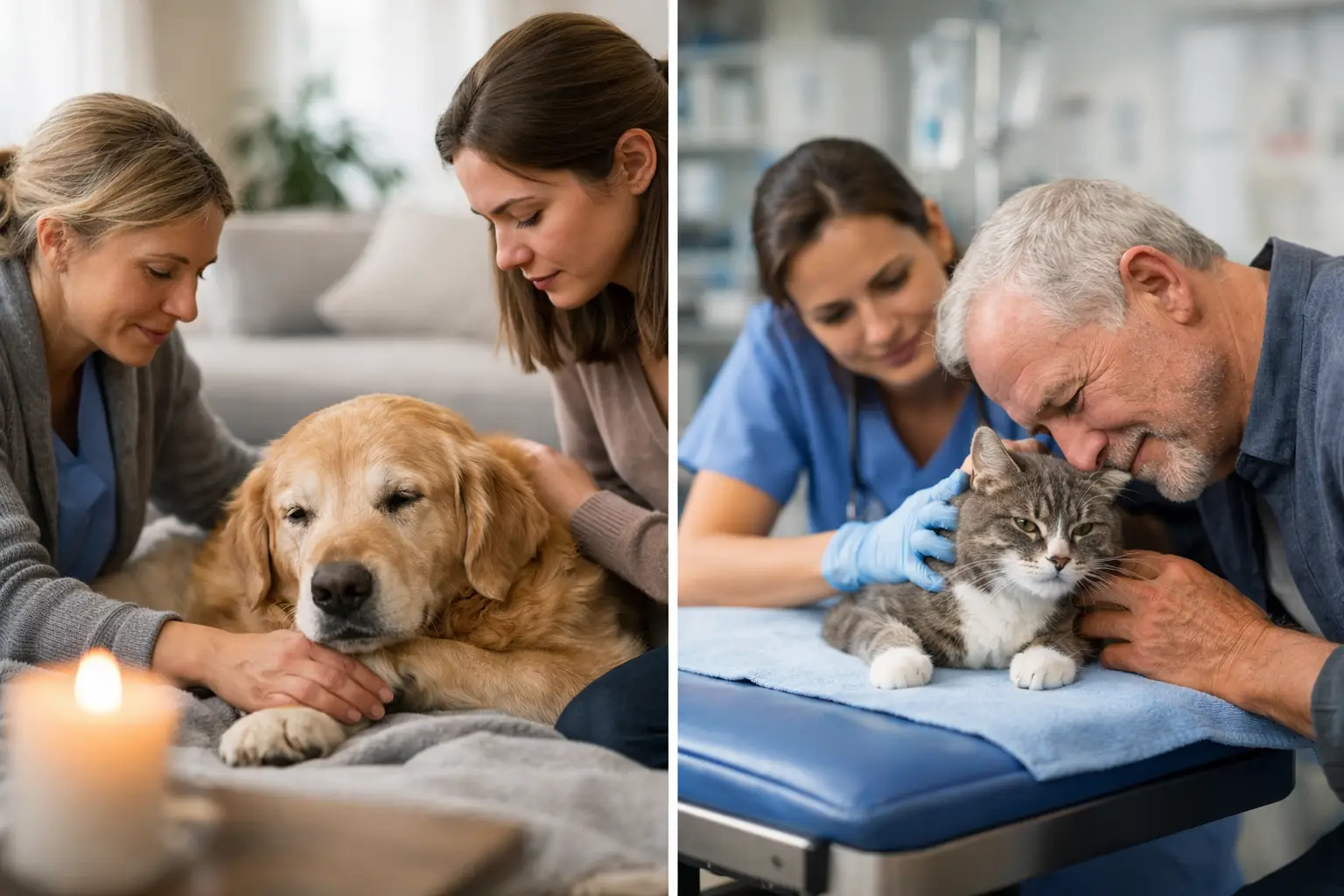
What changes is the environment around that care. At home, your pet can remain in their own bed, on the sofa, or in a quiet corner of the garden if conditions allow. There is no car journey, carrier, reception area or unfamiliar smell. At a clinic, there is a prepared clinical space, trained staff nearby and, depending on the practice, a separate quiet room where you can spend time together without being rushed.
Neither setting removes the sadness. But the right setting can remove avoidable stress.
When home euthanasia can feel gentler
Home visits are often particularly helpful for pets who find veterinary trips frightening. Cats may become distressed at the sight of the carrier. Dogs with arthritis, weakness or advanced illness may struggle to get into the car. Some pets panic in waiting rooms, even with the most considerate staff around them.
At home, they can stay somewhere familiar, surrounded by the people and scents they know. You can choose soft lighting, play a favourite piece of music, offer a little treat if they are still interested in food, and let other pets be nearby if that feels right for your family. There is no need to watch the clock or gather yourselves quickly to leave a consultation room.
For owners, the privacy can matter just as much. You may want to cry freely, sit on the floor with your pet, or have children, relatives and other pets present. Afterwards, you can make a cup of tea, take a breath and remain at home rather than driving while upset.
A mobile vet can also give more space for questions. At Vet on the Loose, end-of-life appointments are approached slowly and with time for sedation, goodbye and arrangements afterwards, rather than treating one of the hardest moments of pet ownership as another rushed slot in the diary.
That said, home euthanasia is not automatically the best choice for every household. A busy home, a very small flat, multiple anxious animals or a lack of privacy can make the experience harder. If your pet is in acute distress, waiting for a home visit may not be fair or medically appropriate either.
When a clinic may be the right place
A clinic can be the kindest and most practical setting when your pet’s condition is changing quickly. If they are struggling to breathe, having repeated seizures, collapsing, bleeding, in severe pain or unable to settle, urgent veterinary assessment matters more than the location. A clinic has equipment, medicines and a wider team immediately available to stabilise a pet, assess what is happening and relieve suffering.
It may also be the better option if your pet is already comfortable travelling and has a trusting relationship with the team. Some owners value knowing that everything needed is on site, including aftercare arrangements. If you have concerns about moving your pet after they have died, or do not want to have the final goodbye in your living space, the clinic can feel more manageable.
There is no shame in choosing the surgery because it is available sooner, costs less, or gives you a clearer sense of support. Financial reality is part of responsible decision-making. Ask for an estimate in advance and check what is included: the consultation, sedation, euthanasia, travel where relevant, and individual or communal cremation. Clear pricing will not make the decision easy, but it can prevent an unwelcome surprise at a vulnerable time.
Think about your pet’s day, not only the final moment
Owners sometimes focus so closely on where euthanasia should happen that they overlook the bigger question: when is the right time? Waiting for a ‘perfect’ sign can leave families feeling stuck. Pets do not always make the decision obvious.
Look at the whole pattern of their days. Are they eating enough to enjoy food? Can they rest without pain or breathlessness? Do they still seek affection, move around comfortably, toilet normally, or show interest in the things they used to enjoy? A pet can have a bright hour within an otherwise difficult week, so try to look for trends rather than one good afternoon.
Your vet can help you talk through quality of life honestly. That conversation is not a commitment to euthanasia. It is a chance to understand whether pain relief, nursing care or further treatment could still offer good days, and what signs would suggest that waiting is no longer kind.
Practical questions worth asking
Before deciding between home and clinic, it can help to have a straightforward conversation about the details. Ask how much time the appointment allows, whether your pet will receive sedation first, what you may see during and after the procedure, and whether children or other pets can be present.
You may also want to ask:
- How quickly can an appointment be arranged , including outside normal hours?
- What happens if my pet becomes distressed before the booked visit?
- What are the full costs, including travel and aftercare?
- Can I spend time with my pet afterwards, and what are my cremation or return-of-ashes options?
Refer a friend
Knowing the answers beforehand means you are less likely to make decisions under pressure. It also gives you permission to choose what feels realistic. Perhaps a home visit is right, but you would prefer a friend to take the children out. Perhaps the clinic is right, but you would like a longer final appointment and a quiet room. These are reasonable requests.
Preparing for a goodbye at home
If you decide on home euthanasia, there is no need to stage a perfect farewell. Your pet does not need a grand final day. Often the best preparation is simply to keep things quiet and normal.
Choose a comfortable place with enough room for the vet to work, ideally somewhere your pet already likes to rest. Have a towel or blanket ready, and think ahead about access if your pet is large or you live in an upstairs property. If there are other animals in the home, consider whether they are likely to be calming or disruptive. Some families allow them to see and smell their companion afterwards, which may help them understand the change; others prefer to keep them separate. Your vet can talk this through without judgement.
It is also sensible to decide about aftercare before the appointment. You might choose individual cremation with ashes returned, communal cremation, or, where legally and practically appropriate, burial at home. Making that decision in advance leaves more room to focus on your pet when the time comes.
Give yourself permission to choose kindness over certainty
Many people worry that euthanasia is either too soon or too late. That fear comes from love. But a peaceful, planned goodbye can be a final act of protection, particularly when a pet’s comfort and enjoyment of life are steadily fading.
Whether you choose your sitting room, a quiet garden, or a clinic room with a caring team, your pet will recognise the things that matter most: familiar voices, gentle hands and the people who have loved them throughout their life. When you are ready, ask the questions you need to ask, take the time you can, and let compassion - for your pet and for yourself - guide the next step.
Refer a friend
Knowing the answers beforehand means you are less likely to make decisions under pressure. It also gives you permission to choose what feels realistic. Perhaps a home visit is right, but you would prefer a friend to take the children out. Perhaps the clinic is right, but you would like a longer final appointment and a quiet room. These are reasonable requests.
Preparing for a goodbye at home
If you decide on home euthanasia, there is no need to stage a perfect farewell. Your pet does not need a grand final day. Often the best preparation is simply to keep things quiet and normal.
Choose a comfortable place with enough room for the vet to work, ideally somewhere your pet already likes to rest. Have a towel or blanket ready, and think ahead about access if your pet is large or you live in an upstairs property. If there are other animals in the home, consider whether they are likely to be calming or disruptive. Some families allow them to see and smell their companion afterwards, which may help them understand the change; others prefer to keep them separate. Your vet can talk this through without judgement.
It is also sensible to decide about aftercare before the appointment. You might choose individual cremation with ashes returned, communal cremation, or, where legally and practically appropriate, burial at home. Making that decision in advance leaves more room to focus on your pet when the time comes.
Give yourself permission to choose kindness over certainty
Many people worry that euthanasia is either too soon or too late. That fear comes from love. But a peaceful, planned goodbye can be a final act of protection, particularly when a pet’s comfort and enjoyment of life are steadily fading.
Whether you choose your sitting room, a quiet garden, or a clinic room with a caring team, your pet will recognise the things that matter most: familiar voices, gentle hands and the people who have loved them throughout their life. When you are ready, ask the questions you need to ask, take the time you can, and let compassion - for your pet and for yourself - guide the next step.