What home euthanasia stories tell us
There is no single version of a good goodbye. Some pets are still eating treats and enjoying brief happy moments, while their underlying illness has made the difficult decision clear. Others have had a sudden decline, and the family needs help quickly. What matters is not creating a picture-perfect final day. It is putting your pet's comfort first and making decisions with clear, compassionate veterinary advice.
The home euthanasia stories that stay with people are usually not about getting every detail right. They are about being present. A family might sit together on the floor. An older dog may rest in their usual bed while someone strokes their ears. A cat may stay tucked into a sunny spot rather than being coaxed into a carrier. These ordinary details can make an unbearable day feel a little gentler.
Home feels familiar to your pet
For many dogs and cats, travelling to a veterinary surgery is stressful even on a good day. There is the carrier, the car, unfamiliar smells and other animals nearby. When a pet is frail, painful or anxious, that journey can feel like an extra burden.
At home, your pet can stay where they feel safe. They can be on the bed, the rug or in your lap if that is comfortable for them. You can play quiet music, keep the room calm and have the people who matter nearby. Some families choose a peaceful garden on a warm day, although indoors is often kinder if a pet is tired, cold or unsettled.
This does not mean home is automatically right for every situation. If a pet is in severe distress and needs urgent treatment, the quickest appropriate veterinary care matters most. But where there is time to plan, an at-home visit can remove a great deal of pressure from an already difficult decision.
There is space for feelings, not just a procedure
One of the hardest parts of a rushed clinic appointment can be feeling that you need to hold yourself together, make a decision and leave before you have caught your breath. A compassionate home visit should feel different.
There should be time to talk through what is happening, ask the questions that have been circling in your mind and say goodbye at your own pace. You may want children, close friends or another pet present. Or you may want the room quiet, with only one person there. Both are completely valid.
People also respond differently in the moment. Some talk constantly to their pet. Some offer favourite food. Some cry, some go quiet, and some focus on practical questions because that is what gets them through. There is no correct way to love an animal at the end of their life.
What usually happens during euthanasia at home
Knowing what to expect can take away some of the fear. The vet will first spend time with you, assess your pet and confirm that euthanasia is the kindest option. You will be able to ask about the process before anything happens.
In most cases, the first step is sedation. This helps your dog or cat become relaxed and sleepy, usually while being gently held or resting somewhere familiar. The sedative needs a little time to work. Families can continue to stroke, speak to and reassure their pet throughout.
Once your pet is deeply asleep and unaware, the final medication is given. It works quickly and painlessly, stopping the heart. The vet will listen carefully to confirm that your pet has died, then give you private time with them.
Occasionally, a pet may take a reflex breath, twitch or pass urine after death. These are physical reflexes, not signs of awareness or suffering. Being told this beforehand can prevent a frightening surprise at a vulnerable time.
The decision is usually made long before the final day
Families often say the decision was the most difficult part, not because they did not love their pet enough, but because they loved them so much. We naturally look for one definite sign that tells us it is time. Sadly, it is more often a pattern than a single moment.
Think about your pet's whole day, not only the occasional good hour. Are they comfortable at rest? Can they get up, eat, drink and toilet without distress? Are pain, breathlessness, confusion or anxiety becoming more frequent? Do they still have things they genuinely enjoy?
A quality-of-life conversation with a vet can help you separate hope from fear and look at the situation honestly. Choosing euthanasia is not giving up when treatment is no longer restoring comfort. It can be the final act of care we are able to give.
It is okay to plan ahead
Planning does not make you disloyal, and it does not mean you are wishing your pet's life away. It means you are trying to prevent a crisis. You can discuss your pet's condition, likely changes to look out for, whether home euthanasia may be suitable and what aftercare choices are available.
Practical questions are allowed too. Ask about the total cost , including travel and aftercare, so there are no unwelcome surprises on the day. Ask how much time the appointment will allow. Ask whether you can be present throughout, and whether a family member can arrive late or join remotely if needed. Clear answers can give you back a little control.
For households across Essex, Hertfordshire and London , Vet on the Loose provides unhurried end-of-life care at home, with time to talk through sedation, the euthanasia process and the arrangements afterwards. The aim is never to hurry a family through a farewell.
The story continues after goodbye
Aftercare is a choice, not an afterthought. Some owners prefer individual cremation and the return of ashes. Others choose communal cremation. In some circumstances, burial at home may be possible, but it is sensible to check local rules and practical considerations first. A veterinary team can explain the options without pushing you towards one answer.
The days afterwards can feel strangely quiet. You may expect the grief, but still find yourself listening for paws on the floor or reaching for the food bowl out of habit. Children may ask the same questions repeatedly. Another pet may search for their companion or seem unsettled. Grief does not follow a tidy timetable.
It can help to keep one small ritual: light a candle, frame a photograph, plant something, write down a favourite memory or make a donation when the time feels right. Equally, it is fine to put things away quickly if seeing them is too painful. You do not have to grieve in a way that looks meaningful to anyone else.
A peaceful goodbye cannot remove the heartbreak of losing a much-loved dog or cat. But when the time comes, a familiar room, an unhurried vet and your hand resting on your pet can make the final memory one of safety, love and relief from suffering.
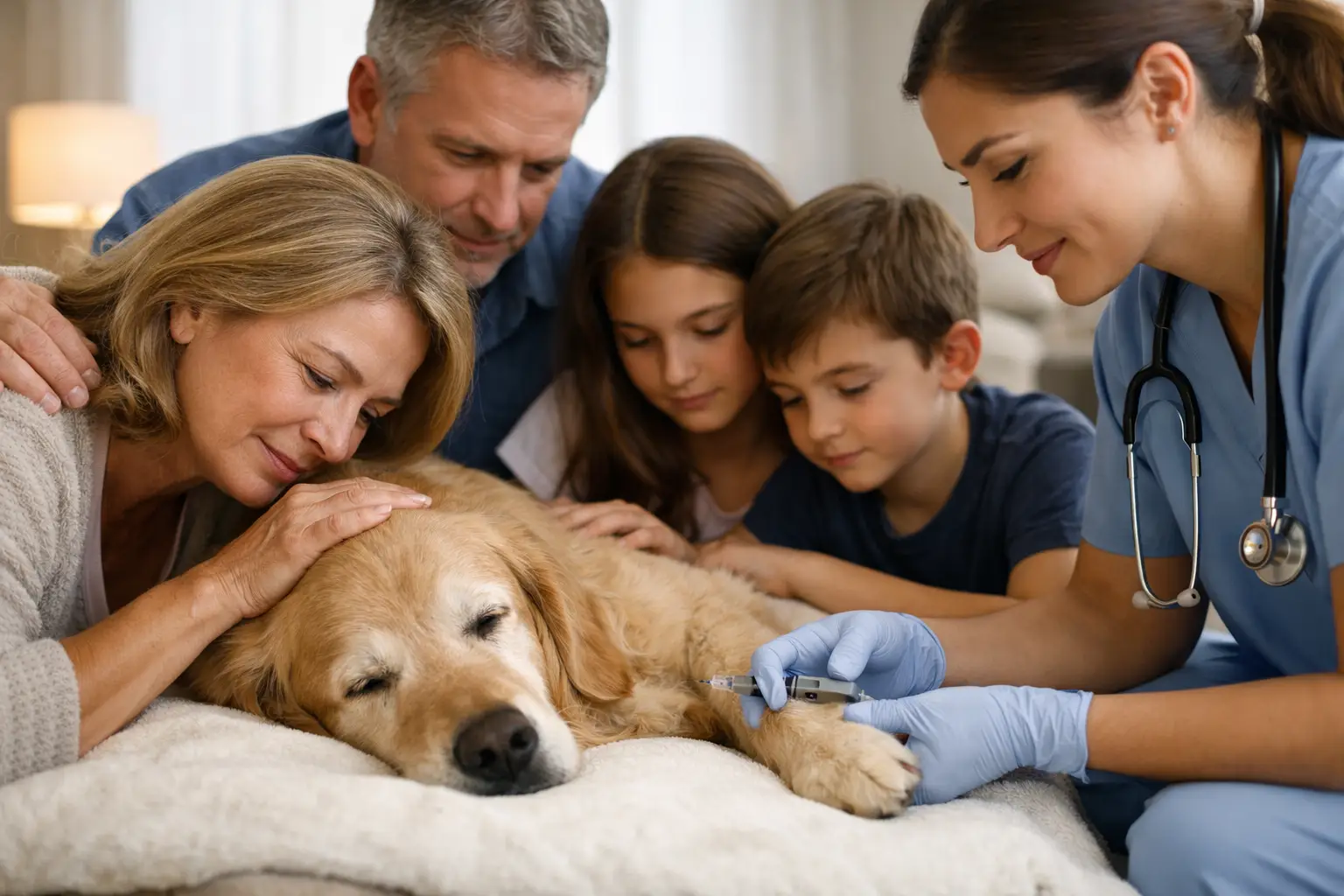
Home euthanasia stories rarely begin with the final injection. They begin with the small things: a dog no longer greeting the lead, a cat choosing the same quiet corner each day, a family wondering whether they are waiting too long or acting too soon. When a pet has been part of home life for years, saying goodbye is not a clinical appointment. It is a deeply personal moment, and it deserves time, privacy and kindness.
People often worry that an at-home goodbye will be too painful to remember. The stories families later share suggest something more nuanced. The sadness remains, of course. But many remember the familiar sofa, a favourite blanket, the absence of a car journey and the relief of knowing their pet was not frightened in a waiting room.
What home euthanasia stories tell us
There is no single version of a good goodbye. Some pets are still eating treats and enjoying brief happy moments, while their underlying illness has made the difficult decision clear. Others have had a sudden decline, and the family needs help quickly. What matters is not creating a picture-perfect final day. It is putting your pet's comfort first and making decisions with clear, compassionate veterinary advice.
The home euthanasia stories that stay with people are usually not about getting every detail right. They are about being present. A family might sit together on the floor. An older dog may rest in their usual bed while someone strokes their ears. A cat may stay tucked into a sunny spot rather than being coaxed into a carrier. These ordinary details can make an unbearable day feel a little gentler.
Home feels familiar to your pet
For many dogs and cats, travelling to a veterinary surgery is stressful even on a good day. There is the carrier, the car, unfamiliar smells and other animals nearby. When a pet is frail, painful or anxious, that journey can feel like an extra burden.
At home, your pet can stay where they feel safe. They can be on the bed, the rug or in your lap if that is comfortable for them. You can play quiet music, keep the room calm and have the people who matter nearby. Some families choose a peaceful garden on a warm day, although indoors is often kinder if a pet is tired, cold or unsettled.
This does not mean home is automatically right for every situation. If a pet is in severe distress and needs urgent treatment, the quickest appropriate veterinary care matters most. But where there is time to plan, an at-home visit can remove a great deal of pressure from an already difficult decision.
There is space for feelings, not just a procedure
One of the hardest parts of a rushed clinic appointment can be feeling that you need to hold yourself together, make a decision and leave before you have caught your breath. A compassionate home visit should feel different.
There should be time to talk through what is happening, ask the questions that have been circling in your mind and say goodbye at your own pace. You may want children, close friends or another pet present. Or you may want the room quiet, with only one person there. Both are completely valid.
People also respond differently in the moment. Some talk constantly to their pet. Some offer favourite food. Some cry, some go quiet, and some focus on practical questions because that is what gets them through. There is no correct way to love an animal at the end of their life.
What usually happens during euthanasia at home
Knowing what to expect can take away some of the fear. The vet will first spend time with you, assess your pet and confirm that euthanasia is the kindest option. You will be able to ask about the process before anything happens.
In most cases, the first step is sedation. This helps your dog or cat become relaxed and sleepy, usually while being gently held or resting somewhere familiar. The sedative needs a little time to work. Families can continue to stroke, speak to and reassure their pet throughout.
Once your pet is deeply asleep and unaware, the final medication is given. It works quickly and painlessly, stopping the heart. The vet will listen carefully to confirm that your pet has died, then give you private time with them.
Occasionally, a pet may take a reflex breath, twitch or pass urine after death. These are physical reflexes, not signs of awareness or suffering. Being told this beforehand can prevent a frightening surprise at a vulnerable time.
The decision is usually made long before the final day
Families often say the decision was the most difficult part, not because they did not love their pet enough, but because they loved them so much. We naturally look for one definite sign that tells us it is time. Sadly, it is more often a pattern than a single moment.
Think about your pet's whole day, not only the occasional good hour. Are they comfortable at rest? Can they get up, eat, drink and toilet without distress? Are pain, breathlessness, confusion or anxiety becoming more frequent? Do they still have things they genuinely enjoy?
A quality-of-life conversation with a vet can help you separate hope from fear and look at the situation honestly. Choosing euthanasia is not giving up when treatment is no longer restoring comfort. It can be the final act of care we are able to give.
It is okay to plan ahead
Planning does not make you disloyal, and it does not mean you are wishing your pet's life away. It means you are trying to prevent a crisis. You can discuss your pet's condition, likely changes to look out for, whether home euthanasia may be suitable and what aftercare choices are available.
Practical questions are allowed too. Ask about the total cost , including travel and aftercare, so there are no unwelcome surprises on the day. Ask how much time the appointment will allow. Ask whether you can be present throughout, and whether a family member can arrive late or join remotely if needed. Clear answers can give you back a little control.
For households across Essex, Hertfordshire and London , Vet on the Loose provides unhurried end-of-life care at home, with time to talk through sedation, the euthanasia process and the arrangements afterwards. The aim is never to hurry a family through a farewell.
The story continues after goodbye
Aftercare is a choice, not an afterthought. Some owners prefer individual cremation and the return of ashes. Others choose communal cremation. In some circumstances, burial at home may be possible, but it is sensible to check local rules and practical considerations first. A veterinary team can explain the options without pushing you towards one answer.
The days afterwards can feel strangely quiet. You may expect the grief, but still find yourself listening for paws on the floor or reaching for the food bowl out of habit. Children may ask the same questions repeatedly. Another pet may search for their companion or seem unsettled. Grief does not follow a tidy timetable.
It can help to keep one small ritual: light a candle, frame a photograph, plant something, write down a favourite memory or make a donation when the time feels right. Equally, it is fine to put things away quickly if seeing them is too painful. You do not have to grieve in a way that looks meaningful to anyone else.
A peaceful goodbye cannot remove the heartbreak of losing a much-loved dog or cat. But when the time comes, a familiar room, an unhurried vet and your hand resting on your pet can make the final memory one of safety, love and relief from suffering.