

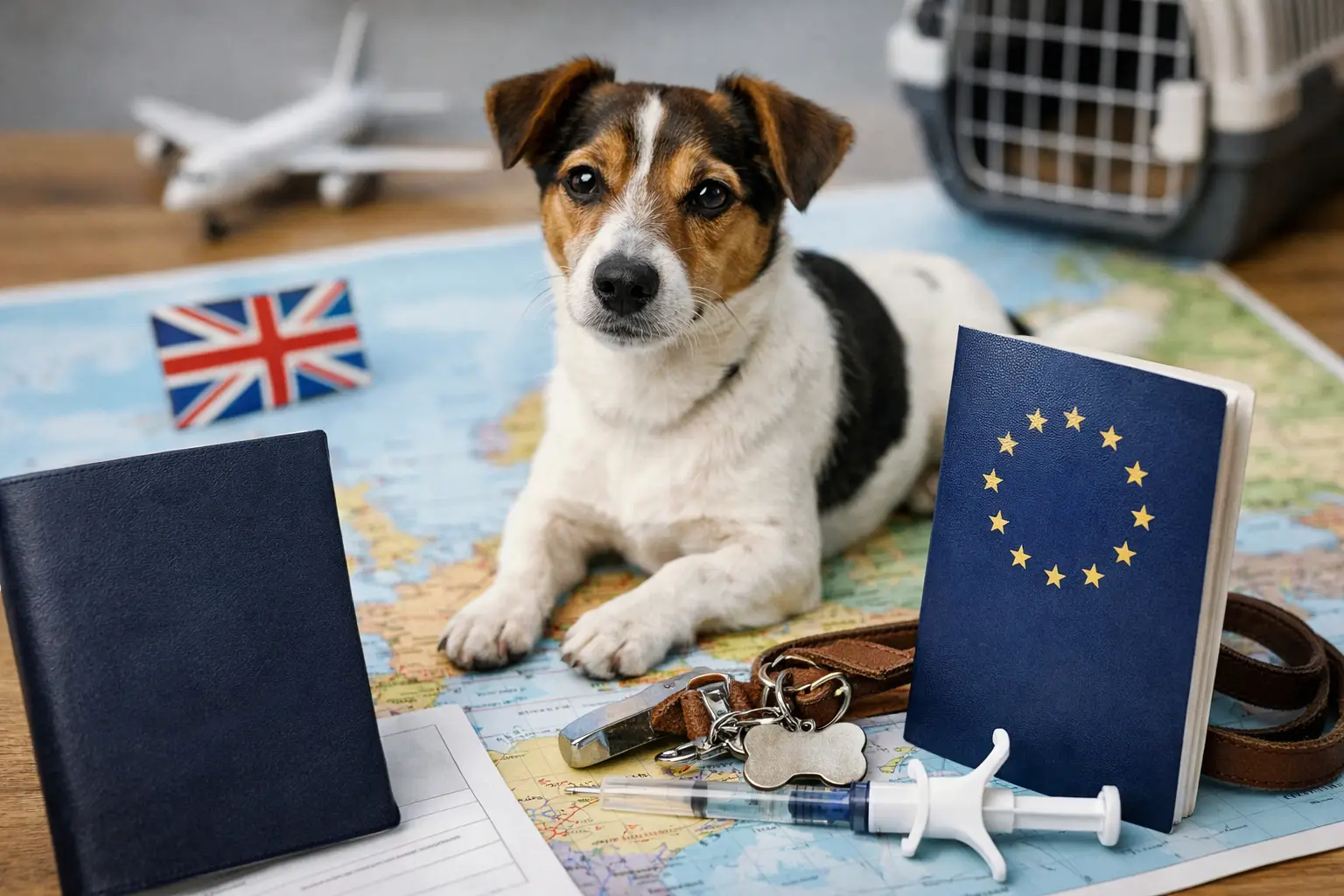
A missing pet passport can turn a much-needed holiday into a panic, particularly when the ferry, tunnel or flight is already booked. An EU pet passport replacement is not always as simple as asking your usual UK vet for a new blue booklet - and the right route depends on where the original passport was issued, your pet’s rabies history and where you are travelling from.
The good news is that there is usually a practical way forward. The key is not to leave it until the week before you travel. Travel paperwork has fixed rules, and even a perfectly healthy dog or cat may be unable to travel if the documents do not line up.
🐾 First, check what sort of passport was lost
Before Brexit, vets in Great Britain could issue EU pet passports. Those documents are no longer valid for travel from Great Britain into the EU, even if they were issued before 1 January 2021 and are still sitting safely in a kitchen drawer.
If your pet’s lost passport was issued in an EU country, however, it may still be valid travel documentation once replaced. This includes passports issued by a vet in France, Spain, Ireland, Italy or another EU member state. Northern Ireland has different arrangements, so it is worth checking the specific rules if that is where the passport was issued.
A vet in Great Britain cannot issue a brand-new EU pet passport. That catches many owners out. If you live in Essex, Hertfordshire or London and your pet needs to travel from Great Britain to the EU, the document you will normally need is an Animal Health Certificate , often called an AHC.
What to do when an EU pet passport is lost
If the missing document was issued by an EU-based vet, contact that practice first. They may have the microchip number, rabies vaccination record and passport details on file. In some cases, they can issue a replacement or tell you whether you need to attend in person. The process varies between countries, and a replacement may need to be completed by a vet in the country that issued the original passport.
Do not assume a photocopy or a phone photo of the old passport will be accepted at the border. It can be very useful evidence for the vet, especially if it shows the microchip number and rabies vaccination sticker, but it is not a substitute for the official document.
If you cannot get a replacement in time, or the original was a British-issued passport, an AHC is usually the sensible option for your outward journey from Great Britain. It is designed for non-commercial travel with your own pet and can cover travel to the EU and Northern Ireland, provided the rest of the requirements are met.
The rabies vaccination is the part that matters most
Your pet must be microchipped before, or at the same time as, their rabies vaccination. The microchip number on the vaccination record and travel paperwork must match the chip your vet scans. A digit wrong on a document is not a tiny admin issue at a border - it can stop the journey.
If your pet has an in-date rabies booster and there is reliable proof of it, an AHC may be straightforward. If the booster has lapsed, or the previous vaccination paperwork has disappeared with the passport, your pet may need to be vaccinated again. Following a primary rabies vaccination, there is normally a 21-day wait before travel to the EU is allowed.
That is why replacing lost paperwork early matters. Nobody wants to explain to children, a pet sitter or a hotel that the holiday has changed because a certificate could not be verified.
✈️ When an Animal Health Certificate is the better answer
An AHC is not a permanent replacement for an EU passport, but it is often exactly what a Great Britain-based owner needs. It must be issued no more than 10 days before you enter the EU, so timing is important. Once issued, it is generally valid for entry to the EU for 10 days, onward travel within the EU for up to four months, and return to Great Britain for up to four months.
This works well for a typical holiday: perhaps driving to France for two weeks, visiting family in the Netherlands, or taking your dog on a longer touring break. It is less convenient if you travel frequently, make regular weekend trips abroad or plan to move between countries repeatedly over a long period. In those situations, ask early about the documentation options available to you, especially if your pet will be examined by a vet in an EU country during your travels.
An AHC appointment should not feel rushed. Your vet needs to check the microchip, review the rabies evidence, confirm the destination and complete the paperwork accurately. This is one occasion where a last-minute five-minute scramble is not kind to you or your pet.
Vet on the Loose can provide Animal Health Certificates and fit-to-fly paperwork for suitable local clients, with the option of a calmer appointment at home where appropriate. It is particularly helpful for cats who consider the carrier a personal insult, or dogs who find a busy waiting room rather too much.
Don’t forget the return journey to Great Britain
Your travel plans need to cover getting home as well as getting away. Dogs travelling back to Great Britain from the EU usually need tapeworm treatment administered by a vet one to five days before arrival. The treatment must be recorded correctly in the relevant travel document.
This requirement does not normally apply to cats, and there are exceptions for travel from certain countries, but it is worth checking your exact route before you set off. If you are visiting several countries, plan the treatment around your return date rather than assuming any appointment abroad will do.
You should also check your carrier’s rules. Airlines, ferry operators and Eurotunnel have their own requirements for check-in times, approved carriers and pet presentation. Border paperwork can be correct while a carrier rule still creates an avoidable headache.
🧾 A quick pre-travel paperwork check
A few weeks before travel, gather your pet’s documents in one place and compare the details carefully. You want the microchip number to match across every record, the rabies vaccination to be valid for the travel dates, and the owner details to be current.
It is sensible to keep clear photographs or scans of the passport, AHC and vaccination records separately from the originals. They will not replace official paperwork, but they can make a lost-document conversation far easier. Store the originals somewhere dry and safe during the trip, rather than in a bag that is constantly being opened at service stations, cafés and hotel receptions.
If you are travelling with more than one pet, check every animal individually. One dog may have an up-to-date booster while another has a vaccination that expires two days before you return. Multi-pet households know how quickly the admin multiplies, so a simple written checklist can save a great deal of stress.
Common situations owners ask about
“My pet has a valid rabies vaccination but no passport”
That may be enough evidence for a vet to issue an AHC, provided the vaccination record is complete and the microchip details match. Bring every record you have, including previous certificates and any insurer or practice paperwork that helps establish the history.
“The passport was issued in the EU, but I live in England”
Start by contacting the issuing EU vet. They are best placed to advise on replacement. If travel is coming up and a replacement is not realistic, an AHC for travel from Great Britain may be the practical route instead.
“Can I get an EU passport while on holiday?”
Possibly, but this depends on the country, the vet and your pet’s existing documentation. Do not plan a trip on the assumption that an overseas vet will automatically issue one. Ask in advance and take your pet’s full vaccination history with you.
“We travel in a few days. What now?”
Call a vet promptly with your travel date, destination and all available rabies evidence. There may be a solution, but no responsible vet can bypass the microchip, rabies or certificate timing rules. Being honest about the dates from the outset gives everyone the best chance of helping.
A lost passport is frustrating, but it does not need to spoil the trip. Find out which document your pet actually needs, allow enough time for the rabies rules, and get the paperwork checked before you start packing the lead, treats and favourite blanket. Then you can get back to the important question: whether your pet will enjoy the holiday, or simply enjoy being allowed on the bed somewhere new.