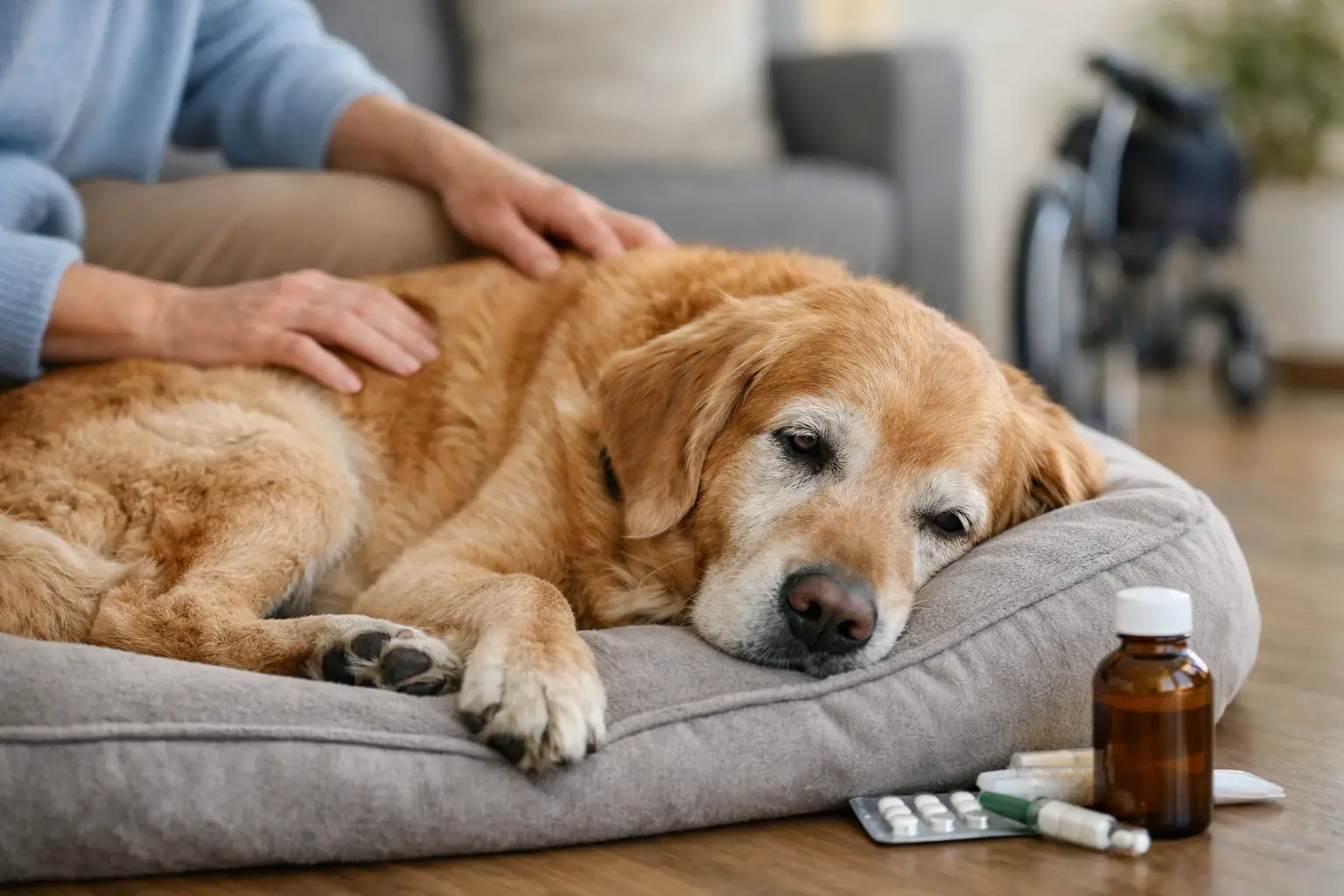
That moment when your dog pauses at the bottom of the stairs, takes longer to rise after a nap, or quietly stops jumping into the car can be easy to dismiss as “just getting older”. But dog arthritis is painful, and the earlier we spot it, the more we can do to keep life comfortable, mobile and enjoyable.
Arthritis does not have to mean that your dog can no longer enjoy walks, playtime or a good snooze on the sofa. It does mean we need to pay closer attention to what their body is telling us - and make a sensible, individual plan rather than expecting them to simply get on with it.
🐾 What is dog arthritis?
Arthritis is inflammation and deterioration within a joint. Healthy joints have smooth cartilage that helps bones move comfortably against each other. With arthritis, that cartilage becomes damaged and the joint changes over time. Movement can become stiff, sore and less reliable.
It is especially common in older dogs, but age is not the only factor. A previous injury, cruciate ligament problem, hip or elbow dysplasia, being overweight, repeated high-impact exercise and some joint conformations can all contribute. Large breeds are often affected, but small dogs can develop arthritis too.
The condition is usually progressive, meaning it tends to worsen without support. That sounds daunting, but it does not mean nothing can be done. There are many ways to reduce pain, support mobility and protect your dog’s quality of life.
The signs are often quieter than a limp
A clear limp is a reason to arrange a veterinary check, but arthritis is often much more subtle. Dogs are remarkably good at carrying on despite discomfort, particularly if they are naturally cheerful or keen to please.
You may notice that your dog is slower after rest but loosens up after a few minutes. They may hesitate before getting into the car, avoid stairs, lag behind on a walk, or no longer settle comfortably in their usual bed. Some dogs become less interested in games, seem grumpy when touched around the hips or back, or start licking at a sore joint.
Changes in behaviour matter too. A dog in pain may sleep more, appear anxious, become withdrawn or seem unexpectedly irritable with other pets or children. This is not “bad behaviour”. It may be their clearest available way of saying that something hurts.
When it needs prompt attention
Do not assume every limp is arthritis. Sudden severe lameness, crying out, a swollen or hot joint, inability to stand, dragging a leg, or obvious distress should be assessed promptly. The same goes for a dog who suddenly cannot use the stairs or refuses to put weight on a limb.
Even when changes have been gradual, it is worth booking an appointment rather than waiting for things to become unmanageable. A longer consultation gives us time to watch your dog move, feel the affected areas, discuss their routine and decide whether blood tests, X-rays or other investigations are appropriate.
🏠 Small home changes can make a big difference
Medication is often an important part of arthritis care, but it is not the whole story. The way your dog moves around the house every day can either ease pressure on sore joints or add to it.
Slippery floors are a common problem. Rugs, non-slip runners or grip socks can help a dog feel more secure, particularly around doorways and on routes to the garden. An orthopaedic bed in a warm, draught-free spot gives aching joints a kinder place to rest. If getting into the car has become difficult, a ramp may be preferable to lifting - although this depends on your dog’s size, confidence and your own safety.
It can also help to keep food, water and their bed on the same floor, limiting unnecessary trips up and down stairs. A garden step or ramp may make toileting easier for a dog who cannot manage a high threshold.
These adjustments are not about wrapping your dog in cotton wool. They are about removing the daily little struggles that can quietly add up.
Exercise: less boom and bust, more consistency
Many owners worry that walking an arthritic dog will make things worse. Usually, gentle regular movement is helpful because it keeps muscles working and joints from becoming too stiff. The key is consistency.
One long weekend walk followed by two days of painful recovery is rarely the best plan. Several shorter, calmer walks are often kinder. Let your dog set a sensible pace, avoid repetitive ball throwing and sharp turns, and choose softer, flatter ground where possible.
That said, every dog is different. A lively spaniel with early arthritis may need a very different plan from an elderly Labrador with painful hips. Swimming or controlled hydrotherapy can suit some dogs, while others find travelling to a centre stressful or simply do not enjoy water. There is no prize for following a fashionable exercise plan that does not suit the dog in front of you.
Keeping nails trimmed is another small but useful detail. Long nails change how a dog places their feet, which can affect balance and put extra strain on joints.
Weight is part of pain control, not a lecture
Extra weight makes sore joints work harder. For a dog with arthritis, even a modest weight reduction can improve comfort and mobility. This is one of the most effective changes we can make, but it needs to be approached kindly and realistically.
Crash diets are not the answer. We would look at portion sizes, treats, family members who may be topping up the bowl, activity levels and the type of food being fed. Sometimes the issue is not too much food at mealtimes but the unnoticed extras: cheese after dinner, biscuits from visitors, or a well-meaning child sharing toast.
A gradual, monitored plan is safer and more likely to last. If your dog has already lost muscle due to pain and reduced exercise, it is particularly important not to make assumptions. Their weight, body shape and overall health all matter.
How dog arthritis is treated
A proper arthritis plan is tailored to the individual dog. It may involve prescription pain relief, anti-inflammatory medication, joint support, weight management, controlled exercise and changes at home. Some dogs benefit from physiotherapy or rehabilitation work as well.
Prescription medication can make a dramatic difference, but it must be chosen safely. Your vet will consider your dog’s age, other conditions and any medicines they already take. Blood and urine testing may be recommended before starting certain drugs and at intervals afterwards, because kidneys, liver and overall health need to be monitored.
Please do not give human painkillers from the medicine cupboard. Common medications such as ibuprofen and paracetamol can be dangerous, even fatal, for dogs at the wrong dose or in the wrong circumstances. “Natural” supplements also deserve a proper conversation: some may be useful as part of a wider plan, but they are not automatically safe, effective or a replacement for pain relief when pain is significant.
The goal is not necessarily a completely symptom-free dog who behaves like a puppy again. The goal is a dog who can get up with less struggle, enjoy the things they love and rest without persistent discomfort. That is meaningful progress.
A calm assessment can reveal more
For dogs who find a busy waiting room difficult, an assessment at home can be particularly helpful. They can walk on their usual floors, use their own steps and settle in familiar surroundings, giving a more honest picture of daily life. It also means there is time for you to talk through the small changes you have noticed without feeling rushed.
At Vet on the Loose and The Vet Room we offer minimum 30-minute appointments , so we can look at mobility, discuss treatment choices and make a practical plan around your dog, your home and your budget . Arthritis usually needs ongoing management, not a one-off quick fix, so clear conversations and realistic follow-up matter.
Keeping a simple comfort diary
Arthritis can fluctuate, and gradual deterioration is surprisingly hard to spot when you see your dog every day. A short weekly note can be useful: how easily they rose from bed, how far they walked comfortably, whether they hesitated at the car, and how they seemed after exercise.
Short videos of your dog walking, turning or getting up can also help show changes that may not be obvious during an appointment. Record them safely and naturally - no need to encourage painful movements just to capture a clip.
If your dog has started slowing down, trust that observation. They do not need to be dramatically lame before they deserve help. With the right support, a few thoughtful changes at home and a pain plan that is reviewed properly, many arthritic dogs can keep enjoying the ordinary things that make up a very good dog life.