

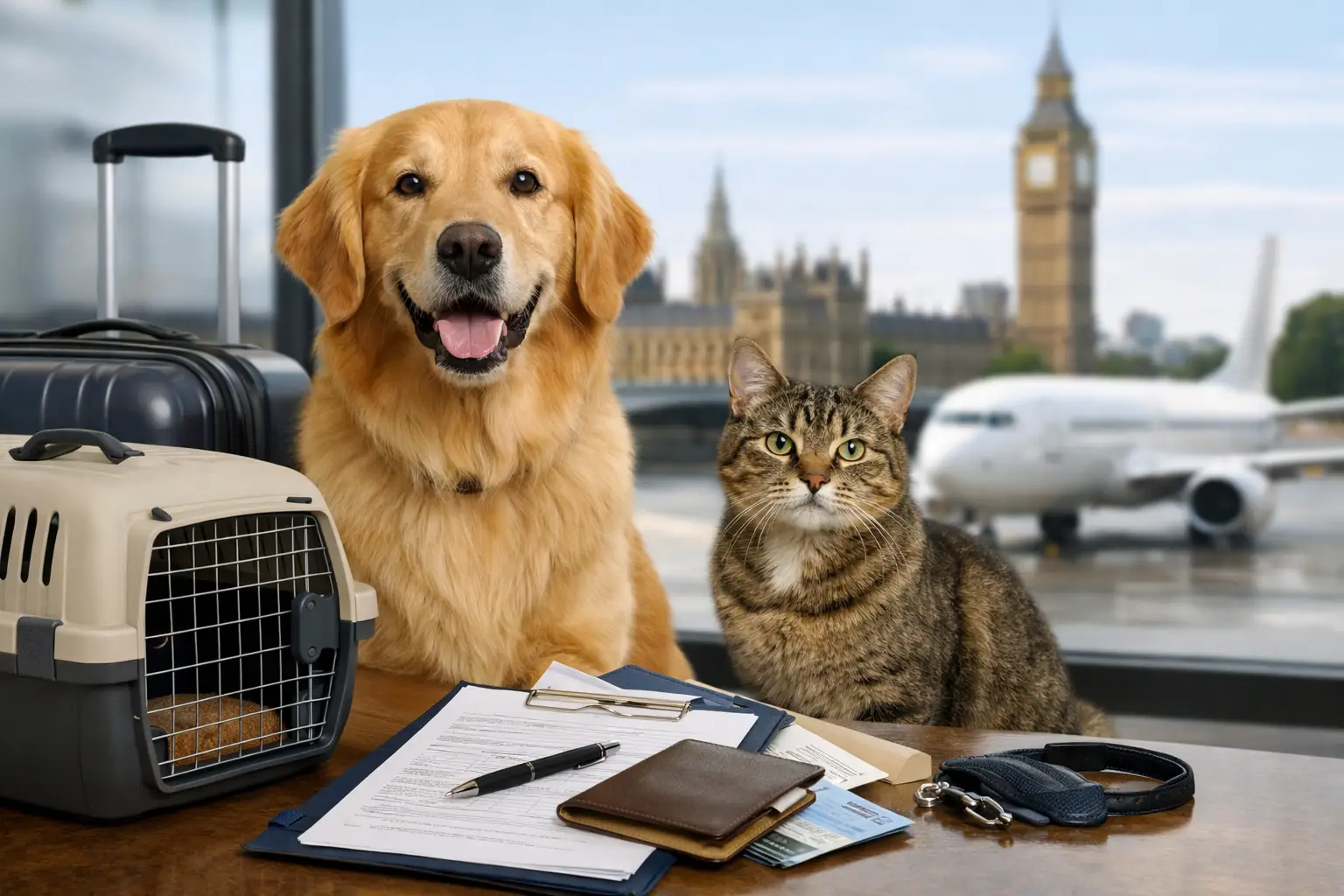
The short answer to ‘do pets need travel certificates?’ is: usually, if you are taking a dog, cat or ferret out of Great Britain. But the document you need depends on where you are going, how you are travelling and whether your pet has travelled before. Turning up at the airport with a carrier, a rabies vaccination card and crossed fingers is not a plan.
For many family holidays to Europe, an Animal Health Certificate (AHC) is the key document. For other destinations, the process may involve a country-specific export health certificate, extra vaccinations, blood tests or parasite treatment. Airlines can also have their own rules. It is worth starting early, particularly if your pet needs a first rabies vaccination.
🐾 When does a pet need travel paperwork?
If you are travelling within Great Britain - England, Scotland and Wales - your pet does not need a travel certificate. Sensible preparation still matters for a long journey, of course: water, regular breaks for dogs, secure carriers for cats and a check that any medication will last the whole trip.
Travel outside Great Britain is different. Dogs, cats and ferrets travelling to an EU country from Great Britain will generally need an Animal Health Certificate.
Northern Ireland, the Channel Islands and the Isle of Man have separate arrangements, so do not assume the rules are identical to those for mainland Europe. Travel to countries outside the EU can be more involved still. The destination country, the country you pass through and your route home can all affect what is required.
The rules also differ for pets other than dogs, cats and ferrets. Rabbits, birds and reptiles may need different certificates, permits or checks. Ask early rather than relying on advice meant for somebody else’s pet.
What an Animal Health Certificate does
An AHC is an official veterinary document for a specific journey. It confirms that your pet is identified correctly, has a valid rabies vaccination and meets the entry rules for the country or countries on your itinerary. It must be completed by an Official Veterinarian, not simply any veterinary practice.
For travel from Great Britain into the EU, the certificate is usually issued no more than 10 days before you enter the EU. Once issued, it can normally be used for onward travel within the EU for up to four months and for returning to Great Britain within that same period. It is not a forever document, though. For the next trip from Great Britain to the EU, your pet will need a new AHC.
This is where owners can get caught out. A certificate prepared for a French holiday may be valid for travelling on to Belgium or Italy during that trip, but it cannot be saved in the drawer for next summer.
Microchip first, then rabies vaccination
Your pet must be microchipped before, or at the same time as, their rabies vaccination. The microchip number on the vaccination record and certificate must match exactly. A tiny transcription error can create a very large problem at the border.
After a first rabies vaccination, there is normally a 21-day wait before your pet can travel. If your pet’s rabies booster has been kept continuously in date, you will not usually need to repeat that wait. If it has lapsed, however, it may be treated as a new vaccination. That is a frustrating discovery to make a fortnight before a ferry booking.
Bring any previous vaccination records to your appointment. They help the vet establish whether the rabies cover has remained valid and avoid unnecessary uncertainty.
🧳 Do pets need travel certificates for every type of trip?
Not always. The phrase ‘travel certificate’ is often used for several different documents, which is why online advice can feel confusing.
An Animal Health Certificate is mainly about meeting official pet travel rules, particularly for EU travel. A fit-to-fly certificate is different. It is a veterinary assessment or letter that an airline may request to show your pet is fit for the journey. It does not replace an AHC, and an AHC does not automatically satisfy an airline’s own conditions.
Some airlines will not carry pets in the cabin or hold at all. Others have restrictions around breed, age, carrier size, temperature and connecting flights. Flat-faced breeds may face additional restrictions because breathing can be more difficult under travel stress. Pregnant animals, very young pets and pets with existing medical problems may need especially careful consideration.
A good vet will be honest here: paperwork is not a guarantee that flying is the right choice for every animal. A confident dog who settles happily in a crate may cope very differently from an anxious cat who finds a car journey stressful. For some pets, staying with trusted carers can be kinder than a long international journey.
Before you book the certificate appointment
Give yourself enough time to check the practical details. For straightforward EU travel, booking an AHC appointment two to four weeks before departure is sensible, provided the rabies vaccination is already valid. For a first rabies vaccine, work backwards from the 21-day waiting period. For a non-EU trip, allow months rather than weeks where possible.
Before seeing the vet, confirm your destination, every country you will enter or transit through, your date and time of travel, the route home and the transport provider’s requirements. Take your pet’s vaccination history, microchip details and any existing EU pet passport. If another person will travel with the pet, say so, as the paperwork may need to reflect that arrangement.
For dogs returning to Great Britain from many countries, tapeworm treatment is another common requirement. It must be given by a vet within a specific window, usually between one and five days before arrival, and recorded correctly. There are exemptions for travel from certain places, so the route matters. Cats do not need this tapeworm treatment for return to Great Britain.
Travel to countries outside the EU
A holiday in the United States, Dubai, Australia or South Africa is not simply an AHC with a different heading. Each destination can set its own import conditions. These may include an export health certificate, an official veterinary examination close to departure, rabies titre blood testing, import permits, particular parasite treatments or quarantine arrangements.
Some requirements have long lead times. Rabies blood tests, where required, cannot be rushed, and certain countries require a waiting period after a successful result. A last-minute certificate cannot fix a missed vaccination, an expired vaccine or an absent import permit.
It is also vital to plan the return journey before you leave. The documents that get your pet into another country may not be enough to bring them back to Great Britain. Your vet can help explain the veterinary side, but destination authorities and your carrier set the final entry and transport rules, which can change.
A calmer way to get travel-ready
Travel paperwork involves forms, dates and official wording, but the appointment does not have to feel rushed. A proper check gives time to scan the microchip, review the vaccination history, discuss your itinerary and raise concerns about your pet’s health or temperament. That is particularly valuable when the pet involved is a nervous rescue dog, a senior cat or a household with more than one animal travelling.
At Vet on the Loose, Animal Health Certificate and fit-to-fly appointments can be arranged around home life across Essex, Hertfordshire and London, with the time to go through the details rather than trying to cram questions into a hurried consultation. Your pet can have a fuss in their own familiar surroundings while you enjoy a cuppa and get clear about what happens next.
Do not leave certificates until the final week, but do not panic months in advance either. Check the rules for your exact trip, make sure the rabies dates and microchip details stack up, and give your pet the same thoughtful preparation you would give any other member of the family.