

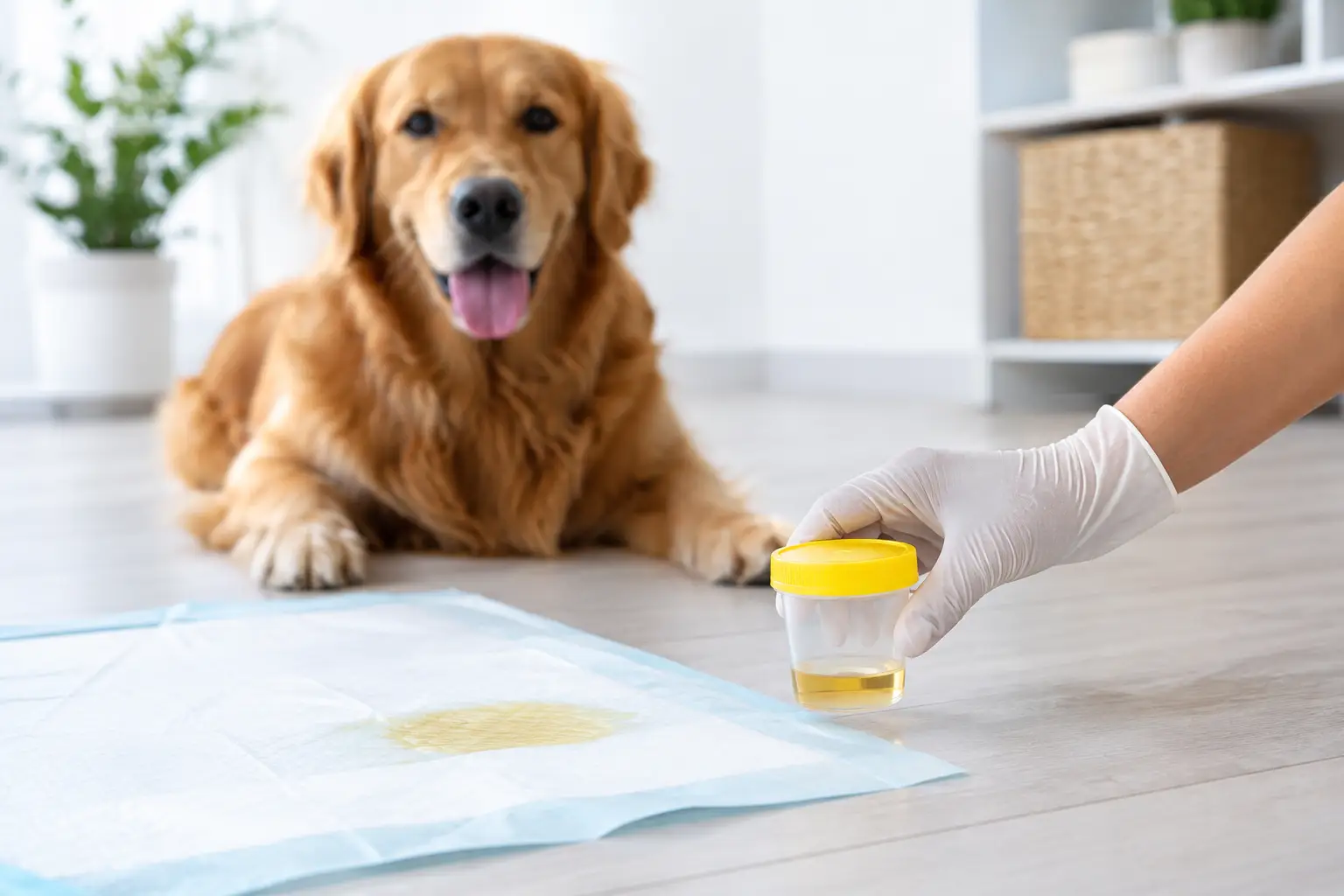
A urine sample can tell us a surprising amount about your pet’s health, from a bladder infection or crystals to diabetes and kidney concerns. But trying to collect pet urine samples can feel like an oddly impossible mission, particularly when your dog chooses that moment to wee behind a hedge or your cat refuses to use the tray while you are watching.
The good news is that, for many routine tests, a clean sample collected at home is genuinely helpful. You do not need to turn it into a stressful event for you or your pet. A little preparation, good timing and a clean pot usually do the job.
Why your vet may ask for a urine sample 🐾
Urine testing is often recommended when a pet is drinking more, weeing more frequently, having accidents indoors, straining, licking around their back end, losing weight or seeming uncomfortable. It may also be part of monitoring an existing condition, such as diabetes or kidney disease.
The test can check how concentrated the urine is, whether there is blood, protein, glucose or inflammation present, and whether crystals may be forming. These clues help us decide what needs investigating next rather than guessing or reaching straight for medication.
A home-collected sample is useful for an initial urine test. If we are specifically concerned about a bacterial infection and need to grow bacteria in a laboratory, we may recommend collecting a sterile sample directly from the bladder at the appointment instead. That is not because you have done anything wrong - it is simply the best way to avoid contamination and get a result we can trust.
What you will need before you start
Ideally, use a sterile sample pot supplied by your vet. They are inexpensive, clean and have a secure lid. If you do not have one, call before using a household container. A thoroughly clean, dry container may be suitable for a basic screen, but it is not the first choice for every test.
For dogs, a shallow plastic tub, clean takeaway-style container or long-handled ladle can make collection easier. Choose something you can slide under them without getting too close to their legs. For cats, you may need a freshly washed, empty litter tray and non-absorbent litter supplied by the practice.
Have the sample pot ready and labelled with your pet’s name, the date and the time it was collected. It sounds small, but timing matters: urine changes once it is sitting around, particularly at room temperature.
How to collect a dog’s urine sample
The aim is to catch a small amount of urine in a clean container while your dog wees normally. You only need a little - a teaspoonful may be enough for some tests, although more is useful where possible. Ask the practice how much they need if you are unsure.
Take your dog out as usual, ideally on a lead in a familiar, quiet spot. Let them sniff and settle first. Hovering anxiously with a pot can make even the most relaxed dog suddenly decide they do not need a wee after all.
Once they begin to urinate, calmly slide your container underneath the stream. A mid-stream sample is preferable, meaning you catch it after the first second or two rather than right at the start. This can reduce debris or bacteria picked up around the skin and fur.
For male dogs, approach from the side or behind rather than reaching beneath their body from the front. A long-handled ladle is often a real help for smaller dogs or dogs who are wary of hands near them. For female dogs, a low, shallow container is usually easiest.
Do not worry if the first attempt is unsuccessful. A brisk walk, a bit of privacy and another chance later are often more productive than turning the whole outing into a standoff.
A few dog-sample pitfalls to avoid
Try not to collect urine from the pavement, grass, a puddle or a puppy pad. Those samples can contain dirt, cleaning chemicals or bacteria that muddy the result. Avoid a container that has held food, washing-up liquid or disinfectant unless your vet has said it is appropriate.
Please do not try to squeeze your dog’s bladder. This can be uncomfortable and, in some circumstances, unsafe. If your dog cannot pass urine despite repeatedly trying, that is an urgent veterinary concern, not a home-sampling problem.
How to collect a cat’s urine sample 🐱
Cats understandably make this trickier. Many prefer privacy, and some will hold on if their normal routine changes. The calmest approach is usually to prepare the tray, then leave your cat to it.
Start with a very clean, dry litter tray. If your cat will tolerate an empty tray, that can work for a short period. More commonly, use non-absorbent litter, which looks a little like smooth plastic grains and allows urine to pool rather than soak in. Your vet may be able to provide it along with a pipette or syringe for transferring the sample into the pot.
Keep your cat indoors until you have collected the sample, with access to water as normal. Once they have used the tray, gently draw up the pooled urine using the supplied pipette and transfer it to the labelled pot. If you have more than one cat, separate the cat you need to sample in a comfortable room with their tray, water and somewhere cosy to rest. This avoids the frustrating question of whose urine you have just collected.
Never use litter soaked with urine, and avoid collecting from a tray that has been cleaned with strongly scented products or disinfectant. These can affect the test result. If your cat refuses the unfamiliar litter, stop and ask for advice rather than withholding their normal tray for too long. Cats should not be encouraged to hold urine for extended periods.
Keeping the sample fresh matters
Fresh is best. Aim to get the urine to your vet as soon as you can, preferably within two hours of collection. If that is not possible, seal the pot tightly, place it in a clean bag and store it in the fridge - away from food - until you can bring it in. Let the practice know the collection time and that it has been refrigerated.
Do not freeze it. Freezing can damage cells and alter the sample. Equally, do not leave it in a warm car, on a sunny windowsill or by the radiator while you finish the day’s jobs. A sample that is old or warm may still be tested, but the findings can be less reliable and we may need to repeat it.
First-morning urine is sometimes requested because it is often more concentrated. That can be particularly useful when we are assessing kidney function or looking for subtle changes. However, if your pet is showing worrying signs, do not delay contacting a vet just to wait for tomorrow morning’s sample.
When collecting a sample can wait - and when it cannot
A sample is useful, but your pet’s comfort comes first. Call a vet promptly if your dog or cat is straining to wee, producing only drops, crying when urinating, has obvious blood in their urine, seems very unwell, is vomiting, or has a painful or swollen tummy.
A male cat who is repeatedly going to the tray but cannot pass urine needs emergency attention. Urinary blockage can become life-threatening quickly. Do not wait for a sample and do not assume it is constipation.
For less urgent changes - perhaps more frequent wees, a new indoor accident or increased thirst - collect a sample if you can, then arrange an appointment . Bring notes on when the signs started, any change in appetite or drinking, and any medication or supplements your pet has had. Those everyday observations are often as valuable as the pot itself.
A calmer way to get answers
There is no prize for collecting the perfect sample on the first try. A small, fresh, clearly labelled sample and an honest note about how it was collected are usually far more useful than a stressful battle in the garden or beside the litter tray.
At Vet on the Loose, urine testing can be discussed during an unhurried home consultation , where your pet can stay in their familiar surroundings and you can ask the practical questions that tend to get lost in a rushed appointment. Pop the pot in the fridge, put the kettle on, and focus on keeping your pet comfortable while we work out what their symptoms are trying to tell us.