Your cat has spotted the carrier. Your dog is already pacing because the lead has appeared at an unusual time. By the time you reach the waiting room, everyone is a little frazzled - including you. So, can vets visit homes instead? Yes. For many everyday veterinary needs, a qualified mobile vet can examine and treat your pet where they feel safest: at home.
Home visits are not simply a luxury for busy households. They can make veterinary care more practical, calmer and more personal for pets that hate car journeys, struggle around other animals or need a little longer to settle. They are also a real help for families with several pets, older owners and anyone managing a packed week.
🐾 What can vets do during a home visit?
A mobile vet can provide a great deal of the care that people usually associate with a veterinary surgery. Routine health checks, vaccinations, microchipping, nail clips, skin and ear concerns, tummy upsets, mobility worries and medication reviews can often be handled in your living room, kitchen or garden.
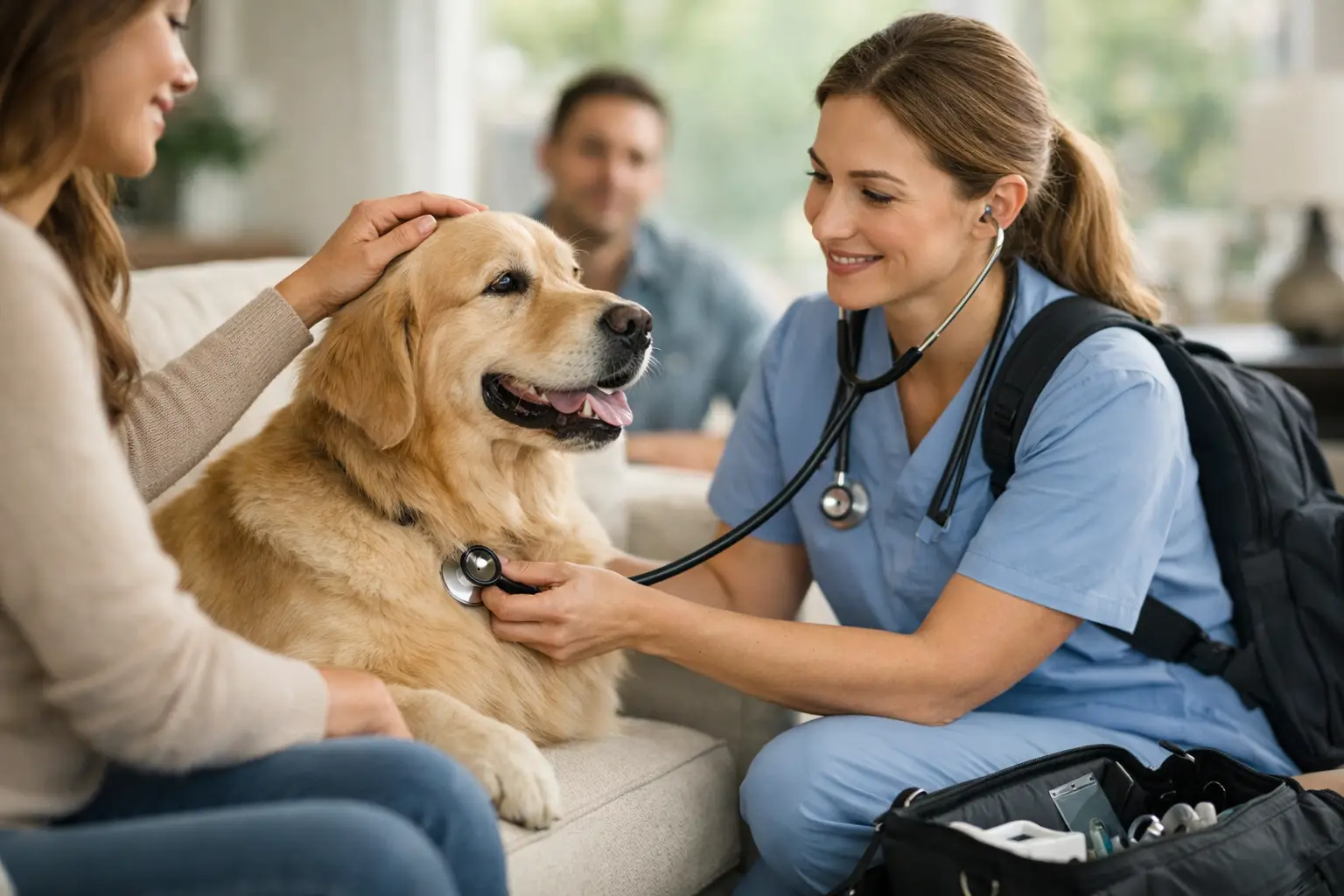
A proper consultation still involves proper clinical thinking. Your vet will ask about changes in appetite, drinking, toileting, behaviour and activity, then examine your pet from nose to tail. Being at home can actually add useful context. A stiff dog may move differently on their own stairs. A nervous cat may be more willing to show their normal behaviour without the stress of a carrier and unfamiliar smells.
Many mobile vets can also take blood samples and urine samples, arrange laboratory testing, discuss parasite prevention and provide written prescriptions where appropriate. That means you can make an informed choice about where to buy ongoing medication, rather than feeling rushed into a decision at the reception desk.
Travel documentation may also be possible at home. If you are planning a trip with your pet, ask early about Animal Health Certificates and fit-to-fly paperwork. These appointments have specific timing and document requirements, so leaving it until the week before your holiday is rarely relaxing.
Consultation and chill, without cutting corners
The biggest benefit of a home appointment is not just avoiding the journey. It is having time.
At a busy surgery, a 15-minute appointment can feel like a race: get through the door, settle an anxious pet, explain the problem, allow an examination and make decisions before the next patient arrives. A mobile appointment can slow the whole experience down. There is space for your vet to listen, explain the options and answer the questions you remembered only once the carrier was back in the cupboard.
For nervous pets, that extra breathing room matters. Your dog can be examined beside you on their own bed. Your cat may prefer to watch from a familiar windowsill before deciding that the vet is not quite as alarming as expected. Some pets still need gentle restraint or a treat-based distraction, but home is often the least stressful place to start.
It is not magic, though. A pet can still be frightened, painful or unwilling to be handled at home. Good veterinary care means working at the animal’s pace where possible, and knowing when further support, sedation or a clinic setting would be kinder and safer.
Your cat has spotted the carrier. Your dog is already pacing because the lead has appeared at an unusual time. By the time you reach the waiting room, everyone is a little frazzled - including you. So, can vets visit homes instead? Yes. For many everyday veterinary needs, a qualified mobile vet can examine and treat your pet where they feel safest: at home.
Home visits are not simply a luxury for busy households. They can make veterinary care more practical, calmer and more personal for pets that hate car journeys, struggle around other animals or need a little longer to settle. They are also a real help for families with several pets, older owners and anyone managing a packed week.
🐾 What can vets do during a home visit?
A mobile vet can provide a great deal of the care that people usually associate with a veterinary surgery. Routine health checks, vaccinations, microchipping, nail clips, skin and ear concerns, tummy upsets, mobility worries and medication reviews can often be handled in your living room, kitchen or garden.
A proper consultation still involves proper clinical thinking. Your vet will ask about changes in appetite, drinking, toileting, behaviour and activity, then examine your pet from nose to tail. Being at home can actually add useful context. A stiff dog may move differently on their own stairs. A nervous cat may be more willing to show their normal behaviour without the stress of a carrier and unfamiliar smells.
Many mobile vets can also take blood samples and urine samples, arrange laboratory testing, discuss parasite prevention and provide written prescriptions where appropriate. That means you can make an informed choice about where to buy ongoing medication, rather than feeling rushed into a decision at the reception desk.
Travel documentation may also be possible at home. If you are planning a trip with your pet, ask early about Animal Health Certificates and fit-to-fly paperwork. These appointments have specific timing and document requirements, so leaving it until the week before your holiday is rarely relaxing.
Consultation and chill, without cutting corners
The biggest benefit of a home appointment is not just avoiding the journey. It is having time.
At a busy surgery, a 15-minute appointment can feel like a race: get through the door, settle an anxious pet, explain the problem, allow an examination and make decisions before the next patient arrives. A mobile appointment can slow the whole experience down. There is space for your vet to listen, explain the options and answer the questions you remembered only once the carrier was back in the cupboard.
For nervous pets, that extra breathing room matters. Your dog can be examined beside you on their own bed. Your cat may prefer to watch from a familiar windowsill before deciding that the vet is not quite as alarming as expected. Some pets still need gentle restraint or a treat-based distraction, but home is often the least stressful place to start.
It is not magic, though. A pet can still be frightened, painful or unwilling to be handled at home. Good veterinary care means working at the animal’s pace where possible, and knowing when further support, sedation or a clinic setting would be kinder and safer.
When is a clinic the better choice?
Home visits are ideal for lots of non-urgent care, but they cannot replace every type of veterinary facility. If your pet needs an X-ray, ultrasound, surgery, dentistry, hospitalisation, oxygen therapy or intensive monitoring, a well-equipped clinic is usually the right place.
Urgent problems need particular care. Severe breathing difficulty, collapse, repeated seizures, heavy bleeding, suspected poisoning, being unable to pass urine, major trauma or a sudden swollen abdomen are not situations to wait on for a routine home appointment. Contact an emergency veterinary service straight away.
Sometimes the answer is a combination of both. A mobile vet can assess your pet at home, take samples, give initial treatment and help you understand whether referral is needed. That can be especially reassuring when you are unsure if something is serious, but it is never a substitute for emergency care when minutes matter.
🏡 Can vets visit homes for more than one pet?
Absolutely - and this is one of the most sensible reasons to choose a mobile service. Households with two cats, a dog and a rabbit know that arranging separate surgery trips is not a small task. It can mean multiple carriers, time off work and a fair amount of negotiation with animals who have no intention of co-operating.
A home visit allows each pet to be seen in familiar surroundings, often within the same appointment. It also gives the vet a fuller picture of the household. Are all the cats sharing bowls? Has one dog started guarding the sofa? Is a new puppy bringing home a new set of sniffles? These details can be useful, and they are much easier to discuss over a cuppa than in a crowded waiting room.
Before booking, check how travel charges work. A fair mobile practice should be clear about its postcode-based travel fee, consultation costs and whether one journey charge covers all pets seen during the visit. Transparent pricing helps you decide what is right for your family before anyone arrives.
How to prepare for a home vet appointment
You do not need to turn your house into a surgery. A quiet, reasonably well-lit room is usually enough. For cats, it helps to close doors and windows before the vet arrives, especially if they are likely to vanish behind the washing machine. Keep any medication, previous test results and your pet’s vaccination record nearby if you have them.
Try not to give a very nervous pet a dramatic build-up. There is no need for whispered warnings or an unexpected bath just before the appointment. Keep the routine as normal as possible. Dogs can have a short toilet walk beforehand, while cats are often happiest if they can choose a familiar hiding spot in the same room.
Write down what you have noticed, including when it started and whether it is getting better, worse or staying the same. A quick video of an intermittent limp, cough or odd behaviour can be extremely helpful if your pet decides to perform perfectly when the vet arrives.
Gentle care when goodbye is close
One of the most meaningful reasons for a vet home visit is end-of-life care . When a dog or cat is approaching the end, a journey to a clinic can feel overwhelming for them and heartbreaking for the people who love them.
At home, there is privacy and time. Your pet can stay in their favourite place, surrounded by familiar voices, scents and people. A compassionate vet will talk you through what will happen, answer difficult questions honestly and make sure your pet is peaceful and comfortable. Sedation can be given first so they are deeply relaxed before the final injection.
There is no right timeline and no perfect decision. The kindest choice is usually based on your pet’s comfort, dignity and ability to enjoy the things that once made them themselves. Being able to say goodbye without a waiting room, a hurried farewell or a drive home afterwards can bring a little softness to an impossibly hard day.
Is a mobile vet right for your pet?
For routine care, ongoing worries and sensitive moments, home veterinary visits can be a brilliant fit. They are particularly useful for anxious cats, older dogs, multi-pet homes and owners who want clear explanations without being rushed. Vet on the Loose provides RCVS-registered home visits across Essex, Hertfordshire and London, with appointments lasting at least 30 minutes.
The best choice depends on what your pet needs that day. Sometimes that will be a calm examination on the rug. Sometimes it will be a clinic with specialist equipment. Either way, you deserve straightforward advice, clear costs and a vet who treats your pet like the family member they are.