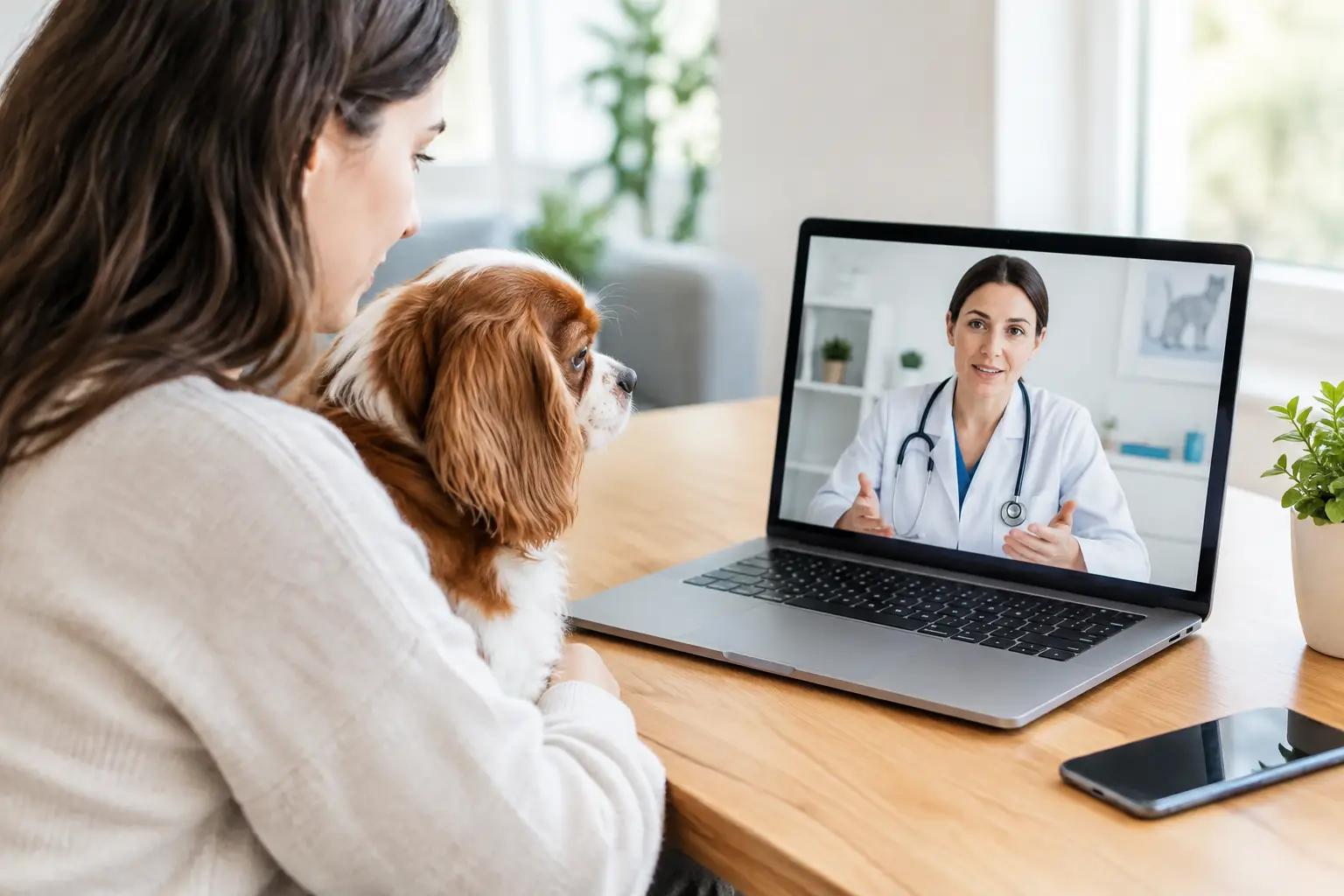
The cat carrier is still under the stairs, your dog is settled on the sofa, and you are wondering whether a quick video call could save everyone a stressful trip. So, can vets prescribe remotely? Sometimes, yes - but it is never as simple as sending a photo and choosing a medicine.
A remote consultation can be a very useful part of veterinary care, particularly for follow-ups, minor concerns and deciding what should happen next. But a vet must be satisfied that they know enough about your pet, their condition and the risks before prescribing. If an examination, test or hands-on treatment is needed, a video call should not become a shortcut.
Can vets prescribe remotely in the UK?
UK vets may prescribe certain medicines following a remote consultation when it is clinically appropriate and they have enough information to do so safely. They are regulated professionals, not online retailers of medication. The decision rests with the vet looking after your pet, and it must follow current Royal College of Veterinary Surgeons guidance.
That usually means the vet needs a clear understanding of your pet's history, current signs, weight, other medication, allergies and general health. A good-quality video consultation can help with some of this. Seeing how a dog walks, watching a cat breathe at rest, looking at a healing wound or discussing a familiar recurring issue can all be genuinely helpful.
However, some conditions cannot be safely assessed through a screen. A vet cannot listen to a heart or lungs over a phone, feel a painful abdomen, check hydration properly, examine inside an ear or take a temperature remotely. Nor can they run urine or blood tests through a video call. If those things could change the diagnosis or treatment, your pet needs to be seen.
The aim is not to make life awkward. It is to avoid treating the wrong problem, missing a serious illness or giving medication that could cause harm.
When a remote prescription may be appropriate 🐾
Remote prescribing is more likely to be suitable where there is an established clinical history and the problem is straightforward to assess from what the owner can report and show. For example, a vet may be able to help with a repeat medication request, a monitored long-term condition, a minor follow-up after an examination, or advice about a familiar issue where your pet has already been assessed.
A remote appointment can also be a sensible first step when you are unsure whether your pet needs an urgent visit. It gives you time to explain what has changed, show the vet the area you are worried about and receive clear advice without wrestling a nervous cat into a carrier just to be told to monitor them at home.
That said, a prescription is not guaranteed simply because you have booked a remote consultation. Sometimes the most useful outcome is reassurance, home-care advice, a plan to monitor specific signs, or a recommendation to arrange an in-person visit. That is still valuable care - and often saves money compared with trying a medicine that does not address the cause.
When your pet needs to be examined
A caring vet will be candid when a remote consultation has reached its limit. This is especially true with new or worsening symptoms, very young or elderly pets, and animals with several health problems or medications already in the mix.
An in-person examination is commonly needed for painful ears, skin problems that may require samples, lameness, eye conditions, dental pain, vomiting or diarrhoea that is persistent or severe, urinary problems, lumps, unexplained weight loss and changes in drinking or appetite. These are not conditions to diagnose by guesswork.
Some medicines also carry more risk than others. Antibiotics, parasite treatments, strong pain relief, sedatives and medicines for ongoing conditions must be chosen carefully. The vet may need a physical examination, laboratory testing or a discussion of alternatives before deciding whether a prescription is appropriate.
For a pet who is struggling to breathe, has collapsed, is having a seizure, cannot pass urine, has severe bleeding, may have eaten something toxic, or seems in significant pain, please do not wait for a routine video slot. Contact a veterinary practice or emergency provider straight away.
A video call works best when you prepare a little
You do not need to turn your sitting room into a veterinary consulting room. A few small details can make the appointment far more useful, though. Have your pet nearby if possible, in good light and somewhere they feel calm. Keep any current medication, packaging and recent test results to hand.
Before the call, make a note of when the problem started, whether it is getting better or worse, what your pet is eating and drinking, and whether their toileting, energy or behaviour has changed. Short videos are often more helpful than trying to recreate a limp, cough, itch or odd behaviour while the vet is watching.
Be honest about what you can and cannot manage at home. If your cat will not let you look at their mouth or your dog becomes distressed when touched near a sore leg, say so. That information helps the vet make a realistic plan, rather than asking you to persist with something that could frighten or hurt your pet.
Remote care should not mean rushed care
The best remote consultations have the same purpose as a good home or clinic appointment: to listen properly, ask sensible questions and make a plan you understand. A five-minute call that ends with a mystery charge or a medicine you did not discuss is not the standard pet owners should have to accept.
Ask what the vet thinks is most likely, what else they are considering, what warning signs mean you should seek help sooner, and whether the medicine is essential now or one option among several. You are allowed to ask about costs too. Clear prices and a clear explanation of treatment choices are part of respectful veterinary care.
If a prescription is appropriate, you may be offered medication directly by the practice. You can also ask about a written prescription if you would prefer to obtain the medicine elsewhere. There may be a prescription fee, and it is worth comparing the total cost rather than just the medicine price. A cheaper product is not always cheaper once dispensing, delivery or repeat-prescription charges are added.
The benefit of having a vet who knows your pet
Remote prescribing is safest and most useful when it sits within an ongoing relationship, not a one-off transaction. A vet who has examined your dog or cat before, knows their baseline health and can access their records is in a much stronger position to judge whether a remote follow-up makes sense.
For busy households across Essex, Hertfordshire and London , this can be a real relief. A remote consultation may avoid travel and waiting-room stress when it is genuinely suitable, while an in-home visit can provide the hands-on assessment your pet needs without the usual surgery ordeal. At Vet on the Loose, appointments are never treated as a conveyor belt - there is time to talk through the options and decide what is kindest, safest and proportionate for your pet.
Remote consultations are one tool, not a replacement for care
Technology can make veterinary support more convenient, but it cannot replace a proper examination when one is needed. The most responsible answer to “can vets prescribe remotely?” is therefore: yes, in the right circumstances, after proper clinical judgement - and no, when doing so would leave too much uncertainty.
If you are worried, trust that feeling. Take a clear video, write down the changes you have noticed and ask for advice. Your pet does not need an unnecessary journey, but they do deserve more than a guess from the other side of a screen.