

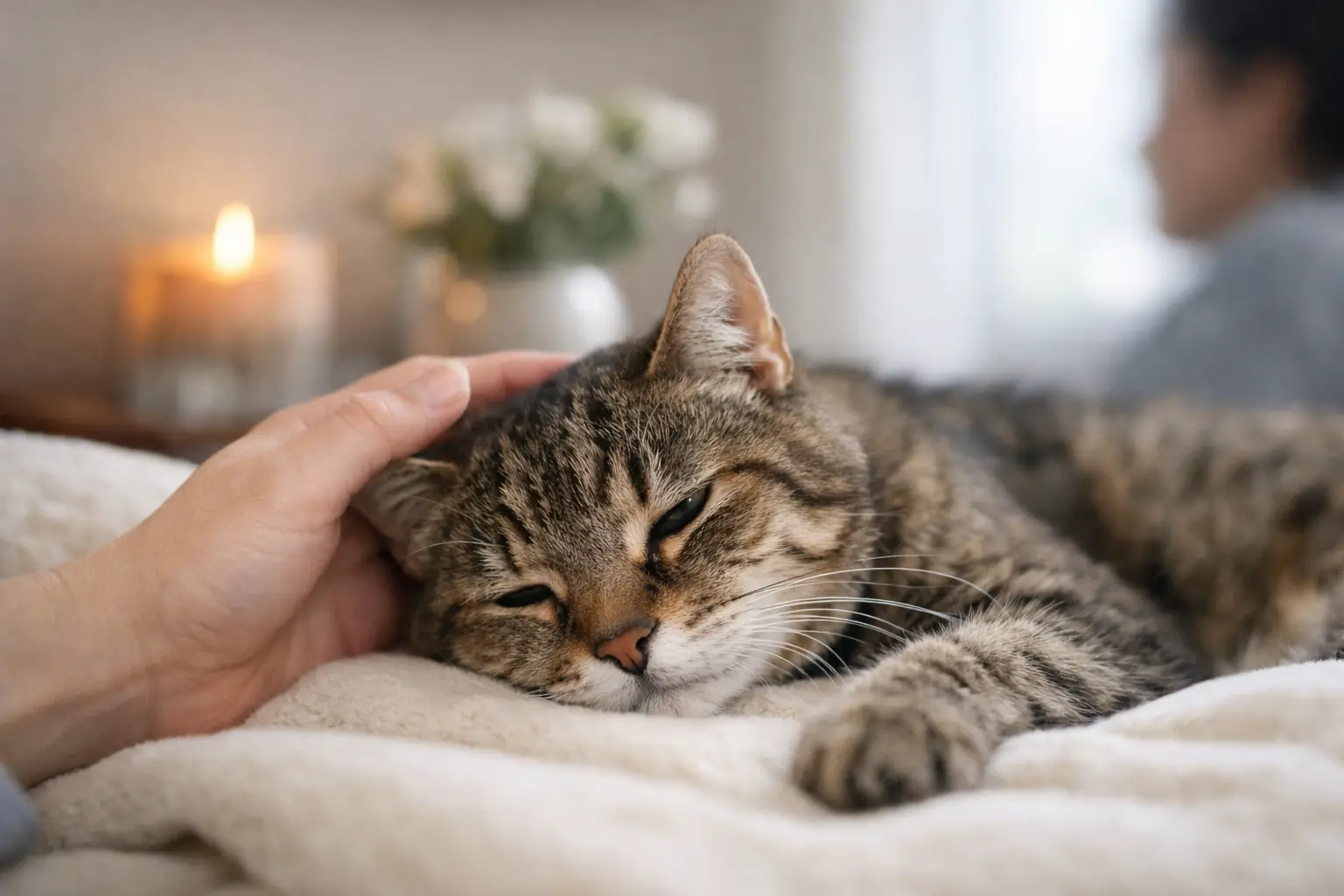
When your cat is declining, another trip in the carrier, another bright waiting room and another rushed conversation can feel like too much for everyone. Looking at the best cat hospice options is not about giving up on them. It is about choosing comfort, dignity and the right level of care for the time they have left.
Cat hospice can sound daunting, but it is usually a gentle, practical form of support. It helps you understand what your cat needs day to day, what changes to expect and when it may be kinder to let them go peacefully.
What cat hospice care really means 🐾
Hospice care is palliative care for a cat with a life-limiting illness, severe frailty or progressive decline. The goal is no longer to cure the underlying problem at any cost. The focus shifts to keeping your cat comfortable and helping your family make informed, compassionate choices.
That may include pain relief, anti-sickness medication, appetite support, help with hydration, managing constipation or diarrhoea, and practical advice on bedding, litter trays and food. It also includes honest conversations. Some cats have a good quality of life for weeks or months with the right support; others change quickly, especially with conditions such as cancer, kidney disease or heart disease.
Hospice does not mean every treatment stops. It means each treatment is considered through one simple question: is this likely to make your cat feel better, or place more stress on them than benefit?
Best cat hospice options: home visits or clinic care?
There is no single right answer. The best setting depends on your cat’s temperament, their medical needs, your household and what feels manageable for you.
In-home hospice visits
For many cats, home is the kindest place to be. They can remain in their favourite warm spot, keep familiar smells around them and avoid the stress of travelling. This is especially helpful for cats who become frightened in a carrier, dislike handling or are too weak to move comfortably.
A home visit gives you more time to talk. You can show the vet where your cat sleeps, how they are moving around the house and what has changed at mealtimes or with the litter tray. Small details matter. A cat who still purrs may be content, but a cat who has stopped grooming, hides constantly or struggles to reach the tray may need extra support.
Home hospice can also make the final goodbye calmer. If euthanasia becomes the kindest choice, your cat can be gently sedated first, usually while settled in a familiar place. There is no need to hurry off a consultation table or leave a busy reception area while you are in shock. You can sit with them, cry, talk to them or simply be quiet.
Vet on the Loose provides in-home end-of-life care across parts of Essex, Hertfordshire and London, with longer appointments designed to give families space rather than rushing a deeply personal decision.
Hospice support through a veterinary clinic
A clinic may be the better choice if your cat needs procedures, imaging, oxygen support, repeated blood tests or nursing care that cannot safely be provided at home. Some owners also prefer a clinic setting because it creates a clear boundary around an emotionally difficult day.
The trade-off is travel and unfamiliar surroundings. Ask whether the practice can book a quieter time of day, let you wait in the car until the room is ready or take you straight into a consultation room. A cat-friendly clinic should understand why this matters.
A combined approach
Often, the most practical plan is a mixture of both. A clinic may handle initial diagnostics or a treatment that needs specialist equipment, while home visits focus on comfort checks, medication reviews and end-of-life care. You do not have to choose one route forever.
How to tell whether hospice is helping
People often worry they will miss the signs or make the decision too soon. There is rarely one perfect moment, and quality of life can wobble from day to day. A written record can make patterns clearer when emotions are running high.
Look at the whole cat, not just one good afternoon. Are they eating enough to enjoy food? Can they rest without obvious pain or breathlessness? Are they using the litter tray, keeping clean and seeking some of the things they have always liked - a sunny windowsill, a brush, your lap or a favourite treat?
It can help to give each day a simple mark: good, mixed or difficult. If difficult days are becoming more frequent, or if your cat cannot comfortably do the things that make them themselves, ask your vet for an honest assessment. This is not a test you can fail. It is a way to make sure comfort remains at the centre of the plan.
Practical ways to make home easier 🏡
Small changes can make a real difference to an older or poorly cat. Keep food, water, a soft bed and a low-sided litter tray close together, ideally on the same floor. If they have arthritis or weakness, avoid making them climb stairs for essentials.
Offer food little and often. Warm, strongly scented food can be more tempting, but do not force-feed a cat who is nauseous or distressed. Keep them warm without overheating them, and use washable bedding in their chosen resting place. If their coat is becoming untidy, a gentle wipe with a warm damp cloth may feel better than a full groom.
Pain in cats is not always dramatic. Watch for hiding, irritability, a hunched posture, reluctance to jump, changes in sleep, faster breathing or avoiding touch. Never use human painkillers. Many are dangerous for cats, even in very small amounts.
Planning a peaceful goodbye
It is okay to discuss euthanasia before it becomes an emergency. In fact, having the conversation early can reduce the risk of a frightening late-night crisis, when your cat is distressed and you are forced to make decisions under pressure.
Ask your vet to explain what will happen, step by step. A compassionate process should include time for questions, an opportunity to say goodbye and clear choices around aftercare. You may want your cat’s favourite blanket nearby, a quiet playlist on, or another family member present. Equally, you may prefer privacy. There is no correct way to love them through this.
Children can be included in an age-appropriate way if that feels right for your family. Simple, truthful words are usually kinder than confusing phrases. Explain that the vet is helping the cat die because their body is no longer able to keep them comfortable, and that the cat will not feel pain afterwards.
Questions worth asking before choosing hospice care
A good hospice provider should be comfortable answering direct questions. Ask how long appointments are, what happens if your cat’s condition changes between visits, whether medication costs are explained clearly and how they assess pain and quality of life.
You can also ask whether euthanasia at home is available, how much notice is usually needed, what aftercare choices are offered and whether you can have written information to read when you are not feeling overwhelmed. Transparency matters here. You should know what care involves and what it will cost, without being made to feel guilty for asking.
It is also sensible to ask who will see your cat. Continuity can be a huge comfort. A vet who knows your cat’s history, personality and favourite hiding spot can give more tailored advice than someone meeting them for the first time in a crisis.
The kindest choice is rarely a perfect one
A peaceful final day may still be heartbreaking. You may question whether you chose the date too early or waited too long. That is grief talking, and it comes from how deeply you cared.
For now, focus on the small kindnesses your cat can still feel: a warm blanket, a familiar voice, gentle medication when needed and the safety of being close to their people. That is what hospice is there to protect.