The cat carrier comes out, your cat disappears behind the sofa, and suddenly a routine vaccination feels like a military operation. For plenty of dogs, the car journey and busy waiting room are no better. The benefits of home veterinary care start before the vet has even arrived: your pet stays in the place where they feel safest, and you avoid turning a health check into a stressful morning for everyone.
For owners across Essex, Hertfordshire and London, home visits can make routine care, ongoing health concerns and difficult decisions feel more manageable. They are not right for every situation, but for many dogs and cats, seeing a vet at home is a kinder, calmer and surprisingly practical option.
😺 1. Your pet avoids the carrier, car and waiting room
A trip to the surgery can be unsettling for even the most chilled pet. Cats in particular often find carriers, unfamiliar smells and other animals deeply stressful. Some dogs become anxious in the car, react to other dogs in reception or arrive at their appointment already overwhelmed.
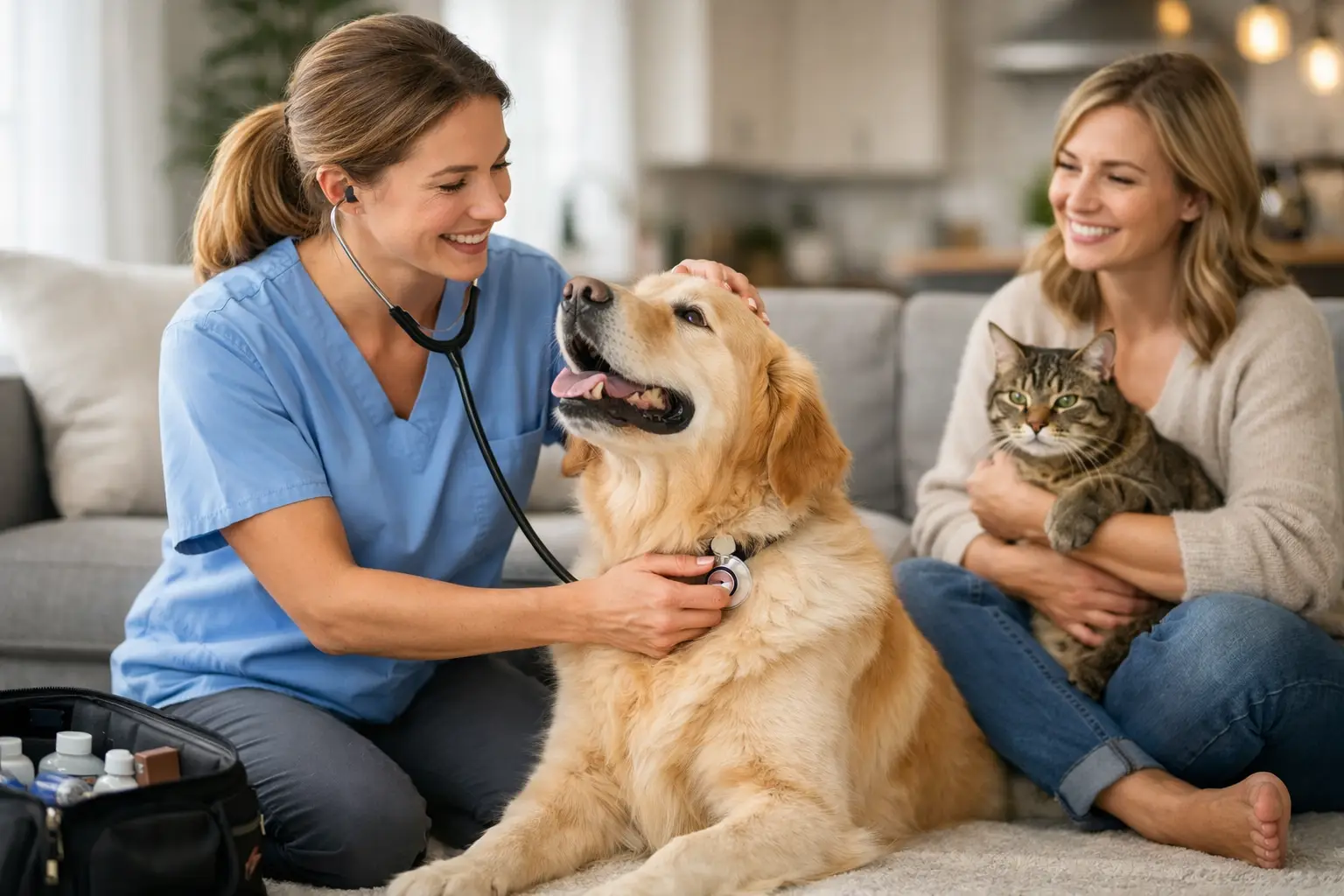
At home, there is no carrier battle, no parking hunt and no waiting beside a barking dog. Your cat can be examined on their favourite blanket, their bed or a familiar table. Your dog can have a quick fuss in the living room before the clinical bit begins. That does not mean every pet will be thrilled about an injection or having their ears checked, of course, but they usually begin from a much calmer place.
Lower stress is not simply a nice extra. An anxious pet may hide pain, struggle to settle or have a raised heart rate that makes assessment less straightforward. Seeing them in their normal environment gives the vet a more representative picture.
🕰 2. There is time to talk, not just tick boxes
One of the biggest benefits of home veterinary care is having an appointment that does not feel rushed. A standard surgery consultation can be over before you have remembered the second thing you wanted to ask. Then you leave with questions about food, medication, blood tests or whether that cough really needs watching.
A minimum 30-minute home consultation creates room for a proper conversation. You can explain what has changed, show a video of the odd behaviour you noticed last night, and talk through the options without feeling as though there is a queue of people outside the door.
This matters especially for ongoing problems. An older dog drinking more than usual, a cat losing weight, repeated itchy ears or a pet who seems a little less like themselves may not have one simple answer. A careful history is often as valuable as the hands-on examination. You deserve time to discuss it properly.
🩺 3. Your vet can see your pet's real day-to-day life
Pets do not always behave at the clinic as they do at home. A stiff dog may walk differently on their usual flooring. A cat who has stopped using the litter tray may reveal useful clues when their tray, feeding area and household routine can be discussed in context. A nervous pet may be far more relaxed with their own people nearby.
Home visits allow everyday details to come into the conversation naturally. Where does your pet sleep? Has their appetite changed? Are they jumping on the sofa less often? Is there a new baby, another animal or a change in routine? These things can help build a fuller clinical picture.
It is also handy when a problem is difficult to describe. You can show where your pet has been scratching, the stairs they avoid, the medication you have been trying to give, or the food they are suddenly refusing. No need to remember it all in the moment.
💷 4. Costs can be clearer and easier to control
Vet bills are a real worry for many loving owners, and pretending otherwise does nobody any favours. Home care should not mean a mystery bill at the end of the appointment. Clear consultation charges , a postcode-based travel fee and upfront discussion about likely tests or treatment help you make decisions with your eyes open.
For multi-pet households, a home visit can be particularly good value. If more than one pet needs a check-up, vaccination or claw trim, it is far easier than arranging separate car journeys and carrier dramas. A single travel fee for the household, rather than per pet, can make a noticeable difference too.
You should also be able to ask about treatment choices. Sometimes a medicine supplied directly is the most convenient route. In other cases, a written prescription gives you the freedom to compare prices and decide what works for your budget. Good veterinary care is about informed consent, not pressure.
🐾 5. It works around busy households
Getting to a surgery is not equally easy for everyone. You may be juggling school runs, work calls, mobility issues, a baby who has just fallen asleep, or several pets who all seem to know when the carrier is coming out. A home appointment removes much of that logistical effort.
It can be especially helpful for older owners, people without easy access to a car and families with anxious pets. Instead of spending an hour travelling and waiting for a ten-minute encounter, you can have the appointment at home and get on with your day afterwards. Consultation and chill, as it should be.
Home veterinary care can cover much more than a quick once-over. Depending on your pet's needs, this may include health checks, vaccinations, microchipping, blood and urine testing, skin and ear problems, repeat medication discussions and remote consultations where suitable. Animal Health Certificates and fit-to-fly paperwork can also be far less of a faff when the appointment comes to you.
❤️ 6. End-of-life care can be gentler at home
When the time comes to say goodbye, a journey to a clinic can feel unbearable. Pets may be frail, in pain or frightened, while owners are trying to hold themselves together in a busy environment. Being at home gives your dog or cat the comfort of familiar smells, familiar people and their favourite resting place.
A compassionate home euthanasia appointment should never feel hurried. There is time to talk through what will happen, time for sedation where appropriate, and time to sit with your pet afterwards. You can choose a quiet spot, invite the people who need to be there and say goodbye privately.
There is no easy version of this decision. But there can be a peaceful one. For many families, being able to let a beloved pet go in the place they knew best is a profound comfort.
🧪 7. You still receive professional veterinary care
A home visit is not a lesser version of veterinary care. A properly equipped mobile vet can examine your pet, administer vaccines, collect blood or urine samples, discuss results and make a treatment plan. Vet on the Loose is an RCVS-registered practice, so owners can expect the same professional standards alongside a more personal setting.
That said, home visits do have limits, and honesty matters here. Emergencies such as breathing difficulties, collapse, severe bleeding, suspected poisoning, a blocked cat, major trauma or a complicated labour need urgent hospital-level facilities. Your pet may need X-rays, ultrasound, surgery, oxygen, intensive monitoring or a team of clinicians on hand.
For these cases, the fastest route to an emergency practice is usually the safest choice. Home care also may not suit every animal - some pets are easier to examine with clinic equipment, while others need referral to a specialist. The right setting depends on the problem, not on a one-size-fits-all promise.
A calmer way to keep on top of their health
Home veterinary care is often at its best when it helps you act early. Rather than putting off a check-up because your cat hates the car or your week is already packed, you can deal with that niggle before it becomes a bigger worry. Whether it is a routine vaccination, a new lump, a senior-pet review or simply a question that has been playing on your mind, a calm conversation at home can be a very good place to start.