🐾 When might euthanasia be the kindest choice?
There is no single test that tells you precisely when it is time. Age alone is not a reason to euthanise, and neither is one difficult diagnosis. The question is whether your pet can still enjoy enough of the things that make life feel like theirs.
For a dog, that might be eating with interest, resting comfortably, enjoying affection, getting outside safely and having more good days than bad. For a cat, it may be grooming, eating, moving around the home, using the litter tray without distress and choosing to spend time near you. A pet can be stoic, so changes in behaviour often matter as much as obvious signs of pain.
Keep a simple note on the fridge or your phone for a week or two. Mark good days, difficult days and what made each one that way. This is not about scoring your pet out of ten. It can, however, make a foggy and emotional situation clearer, especially when everyone in the household is seeing things differently.
Speak to a vet if you notice persistent pain, breathlessness, repeated collapse, distress, inability to eat or drink enough, confusion, loss of mobility, or a clear loss of enjoyment. Sometimes symptoms can be improved with treatment, pain relief or practical adjustments at home. Sometimes they cannot. A compassionate vet should talk honestly through both possibilities, without pushing you towards treatment you do not want or a decision you are not ready to make.
What at home pet euthanasia involves
Knowing what will happen can remove some of the fear. A home visit should be calm, unhurried and led by your pet's needs. You do not need to make your house look perfect, and you do not need to know the right words. Your only job is to be with them in whatever way feels right.
First, there is time to talk
The vet will usually begin by talking through your concerns, confirming your decision and answering any last questions. If there is any uncertainty, say so. It is okay to pause. It is also okay to ask the vet to explain each step before it happens, or to keep explanations to a minimum if that is what you need.
Choose the place where your pet is most settled. That could be their bed, the sofa, a favourite blanket, the garden on a warm day, or simply beside you. Cats often prefer a quiet room with the door closed. Dogs may be happiest wherever their people are gathered. There is no perfect setting, only one that feels safe and familiar for them.
Sedation comes before the final injection
In most cases, the first medication is a sedative. This is given as a small injection, often under the skin or into a muscle. It helps your pet become very relaxed and sleepy, usually over several minutes. They may settle on their bed, close their eyes and drift into a deep sleep.
Some pets are more anxious or uncomfortable than others, so the timing and approach can vary. The aim is always to avoid distress. Your vet will wait until your pet is fully settled before moving on. This is one reason a home appointment should never feel like a 15-minute slot with the clock ticking.
Once your pet is deeply asleep, the final medication is given, usually into a vein. It is an overdose of anaesthetic, so they are unconscious and do not feel what happens next. Their heart then stops peacefully. The vet will listen carefully to confirm this and will tell you when they have gone.
There can occasionally be natural reflexes afterwards, such as a final breath, a small twitch or the release of urine. These can be upsetting if they come as a surprise, but they do not mean your pet is aware or suffering. A good vet will explain this beforehand in gentle, plain language.
💛 Giving yourself permission to make it personal
There is no rule that says everyone needs to be in the room. Some owners want to hold their pet throughout; others prefer to say goodbye after the sedation, when their pet is asleep. Children can be involved when they have been prepared in an age-appropriate way, but they should never be forced to stay.
You may want a favourite toy nearby, familiar music playing quietly or a final snack if your pet can safely enjoy it. Many dogs are delighted by a little bit of chicken, cheese or another favourite treat before they become sleepy. For some families, a quiet cuppa afterwards and time to sit with their pet is more meaningful than any ceremony.
Other pets in the household may also need consideration. If it feels right, allowing another dog or cat to see and sniff their companion afterwards can help them understand the change. Not every animal reacts visibly, but some do search, vocalise or become clingier in the days that follow. Keep routines steady and give them extra reassurance.
Planning aftercare before the day
This is the practical part nobody wants to discuss, but deciding it in advance means you do not have to make arrangements while you are in shock. Your vet can explain the available options , which commonly include individual cremation with ashes returned, communal cremation, or taking your pet home for burial where this is lawful and suitable.
If you choose cremation, ask what is included, whether ashes will be returned, the expected timeframe and what keepsakes may be available. There is no right choice. Some people need ashes at home; others find comfort in knowing their pet has been cared for respectfully without having to make further decisions.
It can help to think about the practicalities too. Who will be there? Is there someone who can take the children out afterwards, make dinner or simply sit with you? If you live alone, arranging a friend to call can make a hard evening feel less isolating. Grief can arrive as sadness, relief, guilt, exhaustion or all four at once. Relief does not mean you loved them less. It often means you have been carrying their discomfort for a long time.
Questions worth asking your vet
Before booking, ask whether the visit includes sedation, how long the vet can allow for the appointment, what aftercare choices are available and what the full cost will be. Clear prices matter at this point. You should not be worrying about surprise additions while trying to make a loving decision.
It is also reasonable to ask what happens if your pet becomes unsettled, whether the vet can help with urgent timing, and how payment is handled. A direct, compassionate answer is a good sign. You deserve clinical expertise, but also someone who understands that this is not just another appointment.
For families across Essex, Hertfordshire and London , Vet on the Loose provides unhurried end-of-life visits for dogs and cats, with time for sedation, goodbyes and clear discussion of aftercare. If the moment is approaching, it is often kinder to have the conversation early rather than waiting for a crisis at the weekend or in the middle of the night.
When you look back, you are unlikely to remember whether every detail was perfectly planned. You will remember the warmth of your pet beside you, the ordinary room that held your life together, and the fact that they were loved enough to be put first.
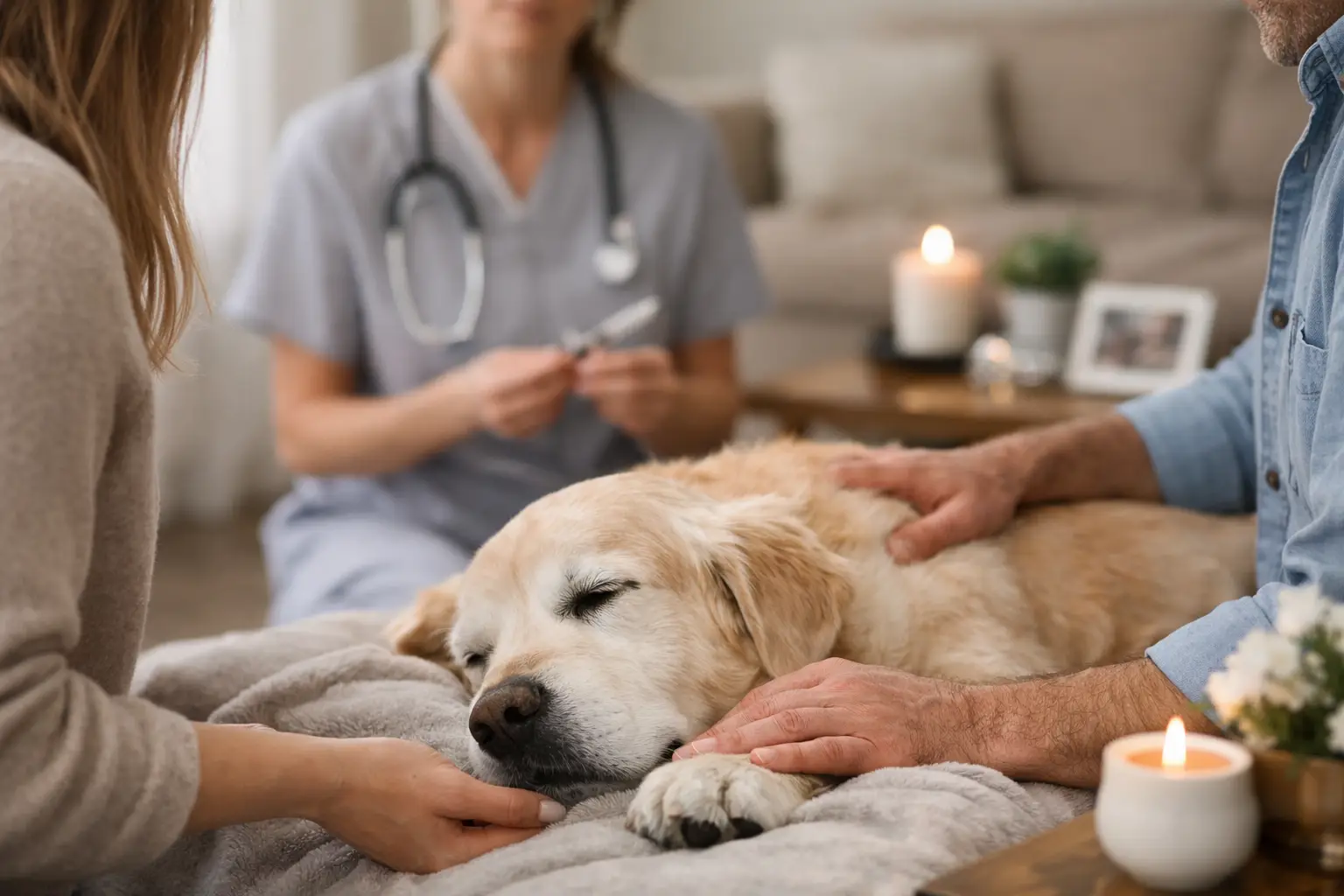
The decision rarely arrives as one clear, dramatic moment. More often, it is a collection of small changes: your dog no longer greets you at the door, your cat has stopped finding their favourite sunny spot, or a good day is followed by several difficult ones. At home pet euthanasia gives families the chance to say goodbye in familiar surroundings, without a stressful car journey, a waiting room or a rushed final appointment.
For many owners, home is not about making the decision easier. Nothing can do that. It is about making the final hours gentler for the pet they love and giving the family enough privacy and time to be present.
🐾 When might euthanasia be the kindest choice?
There is no single test that tells you precisely when it is time. Age alone is not a reason to euthanise, and neither is one difficult diagnosis. The question is whether your pet can still enjoy enough of the things that make life feel like theirs.
For a dog, that might be eating with interest, resting comfortably, enjoying affection, getting outside safely and having more good days than bad. For a cat, it may be grooming, eating, moving around the home, using the litter tray without distress and choosing to spend time near you. A pet can be stoic, so changes in behaviour often matter as much as obvious signs of pain.
Keep a simple note on the fridge or your phone for a week or two. Mark good days, difficult days and what made each one that way. This is not about scoring your pet out of ten. It can, however, make a foggy and emotional situation clearer, especially when everyone in the household is seeing things differently.
Speak to a vet if you notice persistent pain, breathlessness, repeated collapse, distress, inability to eat or drink enough, confusion, loss of mobility, or a clear loss of enjoyment. Sometimes symptoms can be improved with treatment, pain relief or practical adjustments at home. Sometimes they cannot. A compassionate vet should talk honestly through both possibilities, without pushing you towards treatment you do not want or a decision you are not ready to make.
What at home pet euthanasia involves
Knowing what will happen can remove some of the fear. A home visit should be calm, unhurried and led by your pet's needs. You do not need to make your house look perfect, and you do not need to know the right words. Your only job is to be with them in whatever way feels right.
First, there is time to talk
The vet will usually begin by talking through your concerns, confirming your decision and answering any last questions. If there is any uncertainty, say so. It is okay to pause. It is also okay to ask the vet to explain each step before it happens, or to keep explanations to a minimum if that is what you need.
Choose the place where your pet is most settled. That could be their bed, the sofa, a favourite blanket, the garden on a warm day, or simply beside you. Cats often prefer a quiet room with the door closed. Dogs may be happiest wherever their people are gathered. There is no perfect setting, only one that feels safe and familiar for them.
Sedation comes before the final injection
In most cases, the first medication is a sedative. This is given as a small injection, often under the skin or into a muscle. It helps your pet become very relaxed and sleepy, usually over several minutes. They may settle on their bed, close their eyes and drift into a deep sleep.
Some pets are more anxious or uncomfortable than others, so the timing and approach can vary. The aim is always to avoid distress. Your vet will wait until your pet is fully settled before moving on. This is one reason a home appointment should never feel like a 15-minute slot with the clock ticking.
Once your pet is deeply asleep, the final medication is given, usually into a vein. It is an overdose of anaesthetic, so they are unconscious and do not feel what happens next. Their heart then stops peacefully. The vet will listen carefully to confirm this and will tell you when they have gone.
There can occasionally be natural reflexes afterwards, such as a final breath, a small twitch or the release of urine. These can be upsetting if they come as a surprise, but they do not mean your pet is aware or suffering. A good vet will explain this beforehand in gentle, plain language.
💛 Giving yourself permission to make it personal
There is no rule that says everyone needs to be in the room. Some owners want to hold their pet throughout; others prefer to say goodbye after the sedation, when their pet is asleep. Children can be involved when they have been prepared in an age-appropriate way, but they should never be forced to stay.
You may want a favourite toy nearby, familiar music playing quietly or a final snack if your pet can safely enjoy it. Many dogs are delighted by a little bit of chicken, cheese or another favourite treat before they become sleepy. For some families, a quiet cuppa afterwards and time to sit with their pet is more meaningful than any ceremony.
Other pets in the household may also need consideration. If it feels right, allowing another dog or cat to see and sniff their companion afterwards can help them understand the change. Not every animal reacts visibly, but some do search, vocalise or become clingier in the days that follow. Keep routines steady and give them extra reassurance.
Planning aftercare before the day
This is the practical part nobody wants to discuss, but deciding it in advance means you do not have to make arrangements while you are in shock. Your vet can explain the available options , which commonly include individual cremation with ashes returned, communal cremation, or taking your pet home for burial where this is lawful and suitable.
If you choose cremation, ask what is included, whether ashes will be returned, the expected timeframe and what keepsakes may be available. There is no right choice. Some people need ashes at home; others find comfort in knowing their pet has been cared for respectfully without having to make further decisions.
It can help to think about the practicalities too. Who will be there? Is there someone who can take the children out afterwards, make dinner or simply sit with you? If you live alone, arranging a friend to call can make a hard evening feel less isolating. Grief can arrive as sadness, relief, guilt, exhaustion or all four at once. Relief does not mean you loved them less. It often means you have been carrying their discomfort for a long time.
Questions worth asking your vet
Before booking, ask whether the visit includes sedation, how long the vet can allow for the appointment, what aftercare choices are available and what the full cost will be. Clear prices matter at this point. You should not be worrying about surprise additions while trying to make a loving decision.
It is also reasonable to ask what happens if your pet becomes unsettled, whether the vet can help with urgent timing, and how payment is handled. A direct, compassionate answer is a good sign. You deserve clinical expertise, but also someone who understands that this is not just another appointment.
For families across Essex, Hertfordshire and London , Vet on the Loose provides unhurried end-of-life visits for dogs and cats, with time for sedation, goodbyes and clear discussion of aftercare. If the moment is approaching, it is often kinder to have the conversation early rather than waiting for a crisis at the weekend or in the middle of the night.
When you look back, you are unlikely to remember whether every detail was perfectly planned. You will remember the warmth of your pet beside you, the ordinary room that held your life together, and the fact that they were loved enough to be put first.