At home dog vaccinations: what actually happens
A proper home vaccination visit starts with a conversation, not a needle. Your vet will ask about your dog’s general health, lifestyle, previous vaccination history, diet, medication and any concerns you have noticed. That might be an occasional cough, stiff mornings, itchy skin or simply a change in appetite that has been niggling at you.
Your dog should then have a clinical examination before vaccination. This usually includes listening to their heart and lungs, checking their eyes, ears, teeth and skin, feeling their abdomen, assessing their weight and checking for lumps, soreness or signs of discomfort. Vaccines are given to dogs that are well enough to receive them, not simply because a date in the diary has arrived.
Once your vet is happy to proceed, the vaccine is usually given as a small injection under the skin. Kennel cough vaccination is commonly administered into the nose instead, depending on the product used. Your dog’s record is updated so you have clear evidence of what was given and when the next dose is due.
At Vet on the Loose, home appointments are never built around a rushed 15-minute slot. There is time to let a cautious dog say hello, have a sniff and settle before anything clinical happens. For many households, that means fewer treats needed, fewer fraught car journeys and a much more positive experience all round.
🐾 Why a home visit can suit your dog
The biggest benefit is often not convenience, although avoiding traffic, parking and a packed reception area certainly helps. It is the calmer starting point. Dogs do not have to cope with unfamiliar smells, other anxious animals or the sense that something strange is about to happen the moment they walk through a surgery door.
This can be especially helpful for older dogs with mobility problems, puppies who are still learning about the world, rescue dogs with a difficult background, and dogs who become distressed around other animals. It also makes life simpler for families with children, people who do not drive, and multi-pet households. One visit can be arranged around home life rather than turning into an afternoon of logistics.
That said, being at home is not a magic fix. Some dogs are protective of their space or are just as wary of veterinary handling in their own kitchen as they are in a clinic. A good vet will work with the dog in front of them, rather than forcing a textbook approach. Sometimes that means giving the dog space, using food, taking a break or arranging a plan for a future visit.
Which vaccinations does a dog need?
There is no one-size-fits-all answer, and that is a good thing. Your dog’s age, previous records, local disease risk and day-to-day life all matter.
In the UK, core vaccination commonly protects against diseases such as parvovirus, distemper and infectious canine hepatitis. These illnesses can be severe, and in some cases life-threatening. Leptospirosis vaccination is also often recommended, particularly for dogs that walk near standing water, encounter rats or other wildlife, or live an active outdoor life. The exact vaccine schedule depends on the product used and your dog’s history.
Kennel cough vaccination may be worth considering for dogs that mix closely with others at day care, training classes, boarding kennels, groomers or busy parks. It does not prevent every cough, because several organisms can be involved, but it can reduce the risk from important causes of infectious respiratory disease.
Your vet should talk through the practical reality of your dog’s life. A dog who spends weekends splashing through streams and attends day care has different exposure from a quiet older dog who mainly potters around the garden. The aim is appropriate protection, not automatically adding treatments without a reason.
Puppies, boosters and missed dates
Puppies usually need an initial course of vaccinations, with the timing based on their age, the vaccine manufacturer’s guidance and the protection passed on from their mother. Until the course is complete, it is wise to follow your vet’s advice about socialisation and where your puppy can safely go. This does not mean keeping them isolated from the world. Safe, sensible exposure to people, household sounds, visitors and low-risk environments is still valuable.
Adult dogs need booster vaccinations, but the interval is not always identical for every component. Some parts of a vaccine programme may be required annually, while others may be given less frequently. If your dog’s booster is overdue, do not assume the answer is always to start everything again. The right plan depends on how late it is, what they received before and the vaccine used.
If you have lost your dog’s vaccination card, tell your vet what you can. Previous practice details, old emails or boarding paperwork may help trace the history. Where records genuinely cannot be found, your vet can explain the safest route forward without making you feel told off.
When vaccination should wait
Vaccination is best done when your dog is feeling well. Mild uncertainty does not always mean an appointment must be cancelled, but it does mean your vet needs to assess the situation first.
It is particularly worth getting in touch before the visit if your dog has:
- vomiting, diarrhoea or a reduced appetite;
- a cough, nasal discharge or unusual breathing;
- marked tiredness, pain or a feverish feel;
- had a previous suspected vaccine reaction.
A dog on long-term medication can often still be vaccinated, but the details matter. The same applies to pregnant dogs, dogs receiving immune-suppressing treatment and those with ongoing medical conditions. A thoughtful conversation is far more useful than trying to make a decision from a reminder text alone.
Clear costs matter as much as convenience
A home visit should not leave you guessing what will appear on the bill. Ask what is included in the consultation, vaccination and travel fee, and whether there are separate charges for each pet. For multi-dog families, a single travel charge rather than one per animal can make home care much more realistic.
It is also reasonable to ask about the cost of any extra treatment before it is given. If your dog has itchy ears or a new lump during their vaccination check, you should understand the options: whether it needs treatment today, monitoring, a sample or a further appointment. Good veterinary care includes clear choices, not pressure.
Home care has limits, and that is okay
A mobile veterinary visit is ideal for routine vaccinations , health checks and many everyday concerns. It is not a replacement for a fully equipped clinic when a dog needs an X-ray, surgery, intensive monitoring or emergency treatment. If your dog is struggling to breathe, has collapsed, is having repeated seizures, has severe bleeding or may have eaten something toxic, seek urgent emergency veterinary help rather than waiting for a home appointment.
For less urgent cases, a home consultation can help decide what happens next. Sometimes the best outcome is reassurance and a simple plan. Sometimes diagnostics such as blood or urine testing are appropriate. And sometimes a clinic examination is the safer next step. Being candid about that is part of looking after your dog properly.
If your dog needs a vaccine but dreads the whole trip to the surgery, a quiet appointment at home may be a kinder way to keep their protection up to date. Put the kettle on, have a few high-value treats ready, and let the visit happen at your dog’s pace. Calm care is not about making every dog love a vaccination - it is about making sure they are listened to, handled gently and cared for without unnecessary fuss.
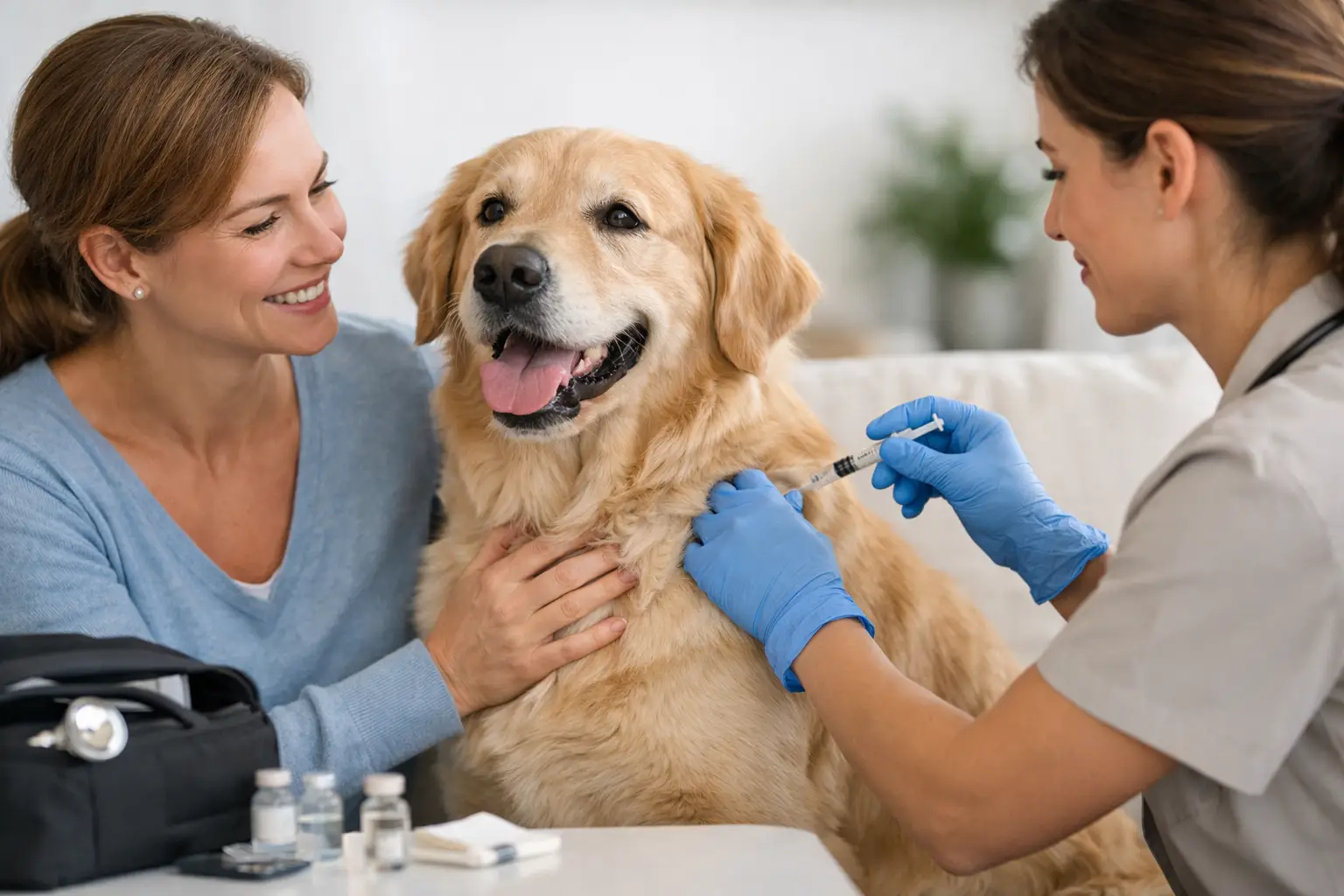
The moment the lead comes out, some dogs bounce with excitement. Others disappear behind the sofa, shake in the car or spend the whole waiting-room visit scanning for the next barking dog. At home dog vaccinations can take that stressful journey out of the equation, while still giving your dog the proper veterinary check they deserve.
A vaccination appointment should never be just a quick injection. It is a chance to check how your dog is doing, discuss anything that has changed and make sensible decisions about preventive care. In a familiar room, with their own bed nearby and a few treats on hand, many dogs find that much easier.
At home dog vaccinations: what actually happens
A proper home vaccination visit starts with a conversation, not a needle. Your vet will ask about your dog’s general health, lifestyle, previous vaccination history, diet, medication and any concerns you have noticed. That might be an occasional cough, stiff mornings, itchy skin or simply a change in appetite that has been niggling at you.
Your dog should then have a clinical examination before vaccination. This usually includes listening to their heart and lungs, checking their eyes, ears, teeth and skin, feeling their abdomen, assessing their weight and checking for lumps, soreness or signs of discomfort. Vaccines are given to dogs that are well enough to receive them, not simply because a date in the diary has arrived.
Once your vet is happy to proceed, the vaccine is usually given as a small injection under the skin. Kennel cough vaccination is commonly administered into the nose instead, depending on the product used. Your dog’s record is updated so you have clear evidence of what was given and when the next dose is due.
At Vet on the Loose, home appointments are never built around a rushed 15-minute slot. There is time to let a cautious dog say hello, have a sniff and settle before anything clinical happens. For many households, that means fewer treats needed, fewer fraught car journeys and a much more positive experience all round.
🐾 Why a home visit can suit your dog
The biggest benefit is often not convenience, although avoiding traffic, parking and a packed reception area certainly helps. It is the calmer starting point. Dogs do not have to cope with unfamiliar smells, other anxious animals or the sense that something strange is about to happen the moment they walk through a surgery door.
This can be especially helpful for older dogs with mobility problems, puppies who are still learning about the world, rescue dogs with a difficult background, and dogs who become distressed around other animals. It also makes life simpler for families with children, people who do not drive, and multi-pet households. One visit can be arranged around home life rather than turning into an afternoon of logistics.
That said, being at home is not a magic fix. Some dogs are protective of their space or are just as wary of veterinary handling in their own kitchen as they are in a clinic. A good vet will work with the dog in front of them, rather than forcing a textbook approach. Sometimes that means giving the dog space, using food, taking a break or arranging a plan for a future visit.
Which vaccinations does a dog need?
There is no one-size-fits-all answer, and that is a good thing. Your dog’s age, previous records, local disease risk and day-to-day life all matter.
In the UK, core vaccination commonly protects against diseases such as parvovirus, distemper and infectious canine hepatitis. These illnesses can be severe, and in some cases life-threatening. Leptospirosis vaccination is also often recommended, particularly for dogs that walk near standing water, encounter rats or other wildlife, or live an active outdoor life. The exact vaccine schedule depends on the product used and your dog’s history.
Kennel cough vaccination may be worth considering for dogs that mix closely with others at day care, training classes, boarding kennels, groomers or busy parks. It does not prevent every cough, because several organisms can be involved, but it can reduce the risk from important causes of infectious respiratory disease.
Your vet should talk through the practical reality of your dog’s life. A dog who spends weekends splashing through streams and attends day care has different exposure from a quiet older dog who mainly potters around the garden. The aim is appropriate protection, not automatically adding treatments without a reason.
Puppies, boosters and missed dates
Puppies usually need an initial course of vaccinations, with the timing based on their age, the vaccine manufacturer’s guidance and the protection passed on from their mother. Until the course is complete, it is wise to follow your vet’s advice about socialisation and where your puppy can safely go. This does not mean keeping them isolated from the world. Safe, sensible exposure to people, household sounds, visitors and low-risk environments is still valuable.
Adult dogs need booster vaccinations, but the interval is not always identical for every component. Some parts of a vaccine programme may be required annually, while others may be given less frequently. If your dog’s booster is overdue, do not assume the answer is always to start everything again. The right plan depends on how late it is, what they received before and the vaccine used.
If you have lost your dog’s vaccination card, tell your vet what you can. Previous practice details, old emails or boarding paperwork may help trace the history. Where records genuinely cannot be found, your vet can explain the safest route forward without making you feel told off.
When vaccination should wait
Vaccination is best done when your dog is feeling well. Mild uncertainty does not always mean an appointment must be cancelled, but it does mean your vet needs to assess the situation first.
It is particularly worth getting in touch before the visit if your dog has:
- vomiting, diarrhoea or a reduced appetite;
- a cough, nasal discharge or unusual breathing;
- marked tiredness, pain or a feverish feel;
- had a previous suspected vaccine reaction.
A dog on long-term medication can often still be vaccinated, but the details matter. The same applies to pregnant dogs, dogs receiving immune-suppressing treatment and those with ongoing medical conditions. A thoughtful conversation is far more useful than trying to make a decision from a reminder text alone.
Clear costs matter as much as convenience
A home visit should not leave you guessing what will appear on the bill. Ask what is included in the consultation, vaccination and travel fee, and whether there are separate charges for each pet. For multi-dog families, a single travel charge rather than one per animal can make home care much more realistic.
It is also reasonable to ask about the cost of any extra treatment before it is given. If your dog has itchy ears or a new lump during their vaccination check, you should understand the options: whether it needs treatment today, monitoring, a sample or a further appointment. Good veterinary care includes clear choices, not pressure.
Home care has limits, and that is okay
A mobile veterinary visit is ideal for routine vaccinations , health checks and many everyday concerns. It is not a replacement for a fully equipped clinic when a dog needs an X-ray, surgery, intensive monitoring or emergency treatment. If your dog is struggling to breathe, has collapsed, is having repeated seizures, has severe bleeding or may have eaten something toxic, seek urgent emergency veterinary help rather than waiting for a home appointment.
For less urgent cases, a home consultation can help decide what happens next. Sometimes the best outcome is reassurance and a simple plan. Sometimes diagnostics such as blood or urine testing are appropriate. And sometimes a clinic examination is the safer next step. Being candid about that is part of looking after your dog properly.
If your dog needs a vaccine but dreads the whole trip to the surgery, a quiet appointment at home may be a kinder way to keep their protection up to date. Put the kettle on, have a few high-value treats ready, and let the visit happen at your dog’s pace. Calm care is not about making every dog love a vaccination - it is about making sure they are listened to, handled gently and cared for without unnecessary fuss.