🩺 Are home vaccinations safe when done properly?
Yes, for most dogs and cats, vaccinations at home are safe when administered by an RCVS-registered vet or an appropriately trained veterinary professional working under the right veterinary direction. The vaccine itself is the same type of product used in a clinic. What matters is the standard of care around it.
A good home vaccination appointment starts with a conversation. Has your pet been eating normally? Have they had vomiting, diarrhoea, coughing, sneezing or a change in energy? Are they on medication? Have they reacted to a vaccine before? These details help the vet decide whether today is the right day to vaccinate.
Your pet should then have a proper examination. That may include listening to their heart and lungs, checking their eyes, ears, teeth, skin, coat and body condition, feeling their abdomen where appropriate, and discussing anything that has been worrying you. At Vet on the Loose , appointments are a minimum of 30 minutes, so there is time for more than a quick jab and a dash out of the door.
The home setting can make that examination easier in its own way. Many pets show their normal behaviour at home. A nervous cat may stay on their favourite chair rather than shutting down in a carrier. A worried dog can have a sniff around, sit beside their person and take treats without the pressure of a busy waiting room.
The safety checks that should happen behind the scenes
Vaccines are temperature-sensitive medicines. They need correct handling and storage from the supplier to the point they are given, usually within a controlled cold chain. A mobile vet should transport vaccines in suitable temperature-controlled equipment and follow the manufacturer’s instructions. A vaccine that has been left in a warm car or stored incorrectly is not something anyone should be using.
There is also record keeping. Your vet should check which vaccination your pet is due, confirm the product is suitable for their age and circumstances, and update their vaccination record. For puppies, kittens and pets restarting a lapsed course, the timing of each dose matters. It is not a one-size-fits-all diary reminder.
An established vet will also know when not to vaccinate. If a pet has a fever, is clearly unwell, is undergoing particular treatments, or has had a significant previous reaction, postponing or adapting the plan may be safer. That can feel frustrating when you have booked time off work, but a responsible “not today” is part of good care.
Calm does not mean casual
One of the biggest benefits of home vaccination is reduced stress. Stress does not make a vaccine dangerous in itself, but it can make the experience much harder for everyone. Cats in particular can find car journeys, unfamiliar smells and dogs in a waiting room overwhelming. Some dogs become anxious before they have even reached the practice car park.
At home, your pet has familiar smells, familiar people and no queue of other animals. There is often time to let a shy cat approach at their own pace or to give a food-motivated dog a few treats first. It can feel more like consultation and chill than an ordeal.
That said, not every pet will welcome an injection in their own kitchen. Some animals are still frightened of handling, needles or strangers. A good vet will not force the issue simply because the appointment is at home. They may suggest gentle handling techniques, a quieter room, a follow-up plan, or in some cases a clinic visit where extra support or equipment is available.
What about vaccine reactions?
Most pets have no major problems after routine vaccination. Some are a little sleepy, quieter than usual, or tender where the injection was given for a day or two. A small temporary lump at the injection site can also occur. Your vet should explain what is expected and when you should get in touch.
Serious reactions are uncommon, but they can happen. Signs such as facial swelling, hives, repeated vomiting, breathing difficulty, collapse, marked weakness or extreme distress need urgent veterinary attention. This is one reason vaccinations should be given by a veterinary professional, not bought online and administered at home by an owner.
For a mobile vet, safe practice includes having appropriate emergency medicines and clear arrangements for urgent escalation. In the rare event that a pet needs more intensive treatment, the fastest and safest next step may be referral to a nearby veterinary hospital or clinic. That is not a failure of home care. It is sensible medicine: most routine care can happen beautifully at home, while some emergencies need the facilities of a hospital.
If your pet has reacted to a previous vaccine, tell the vet before the appointment. The plan may involve selecting a different product where appropriate, giving vaccinations separately rather than together, monitoring more closely, or weighing the benefit of vaccination against the individual risk. There is no benefit in pretending every pet fits the same template.
When a clinic may be the better choice
Home vaccination is ideal for many healthy dogs and cats, particularly anxious pets, multi-pet households, busy families and owners who find travelling difficult. One travel fee for several pets can also make a home visit feel far more manageable than organising separate stressful journeys.
However, a clinic may be more suitable if your pet is very poorly, needs imaging or extensive diagnostics, requires sedation, has a complicated medical history, or has had a severe vaccine reaction before. Some pets also need more than routine preventive care at the same time, such as treatment for a painful condition or investigation of weight loss.
The key is not to treat a home visit as automatically better, or a clinic visit as automatically safer. The right setting depends on your pet’s needs that day. A candid vet should be happy to say so.
How to choose a safe home vaccination service
Before booking , ask who will attend and whether they are RCVS-registered. You can ask how vaccines are transported and stored, what happens if your pet is found to be unwell on examination, and what the emergency plan is if there is a reaction. These are normal questions, not awkward ones.
It is also worth asking what is included in the appointment. A lower headline price can be tempting, but a vaccination should include a meaningful clinical check, not just a syringe at the doorstep. Clear pricing matters too. You should know the consultation cost, vaccination cost and any travel fee before the vet arrives, rather than being left guessing at the bill while holding a worried cat.
Have your pet’s previous vaccination record available, along with a list of medications and any concerns you have noticed. On the day, choose a quiet room if possible. For cats, do not spend an hour trying to catch them beforehand unless advised - a relaxed cat who is settled in a room is often easier to assess than one who has already had a full-scale chase around the house.
A gentler way to keep protection up to date
Vaccinations protect individual pets and help reduce the spread of serious infectious disease. Keeping them up to date should not have to mean a stressful car journey, a rushed appointment or a battle with the cat carrier.
For the right pet, with a qualified veterinary professional and proper clinical standards, a home vaccination can be both safe and kinder. Put the kettle on, keep their favourite treats nearby, and let your vet bring the care to where your dog or cat feels most like themselves.
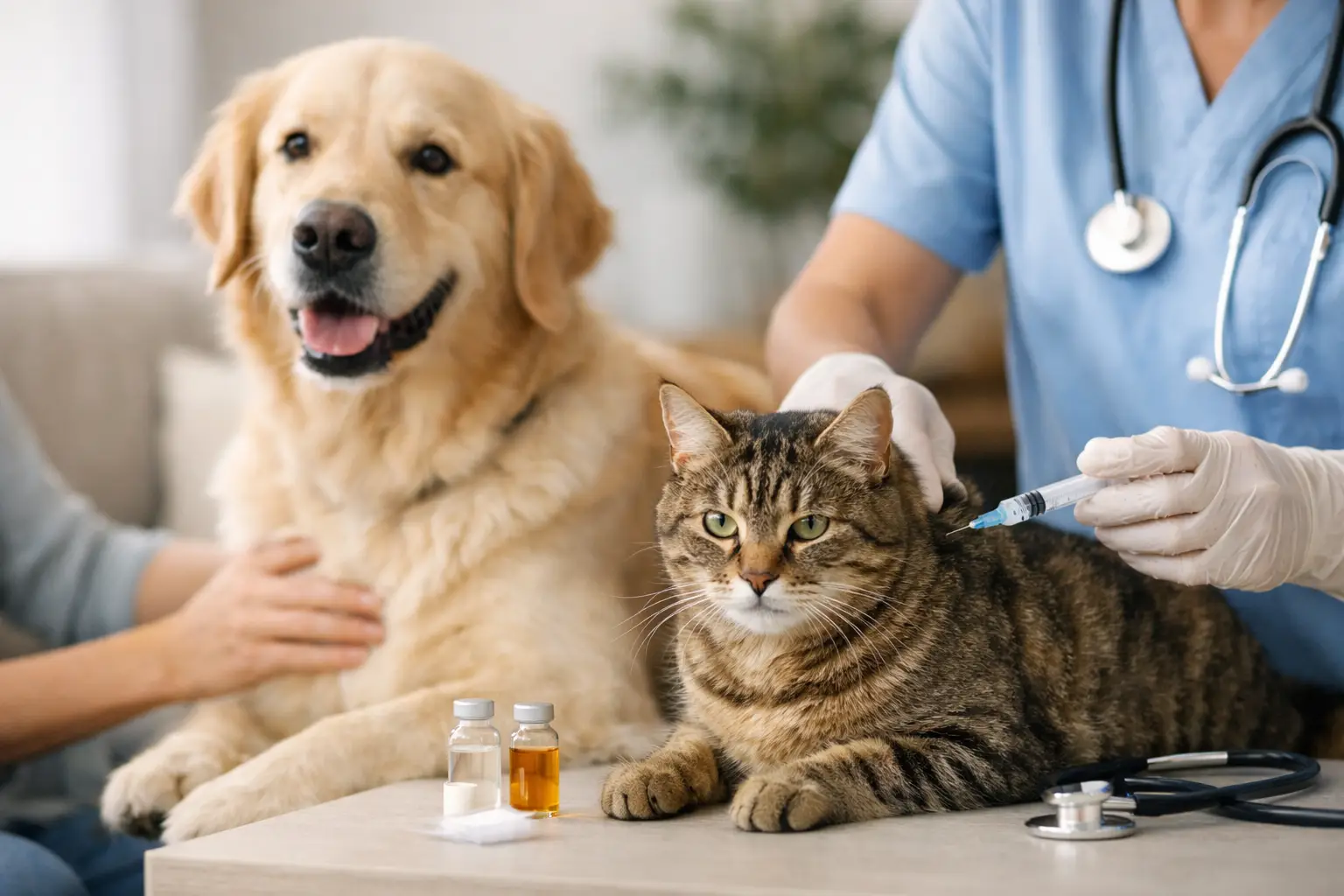
The cat carrier is out. Your cat has vanished behind the washing machine, the dog is already trembling at the word “vet”, and everyone is running late. It is no surprise that owners ask, are home vaccinations safe? When they are carried out by a properly qualified veterinary professional, with the right equipment and clinical checks, home vaccinations can be a safe, calm and very practical alternative to a trip to the surgery.
But “at home” should never mean cutting corners. A vaccination is not simply an injection. It is a clinical appointment: your pet needs an appropriate health check, the vaccine must have been stored correctly, and there needs to be a sensible plan should your pet feel unwell afterwards.
🩺 Are home vaccinations safe when done properly?
Yes, for most dogs and cats, vaccinations at home are safe when administered by an RCVS-registered vet or an appropriately trained veterinary professional working under the right veterinary direction. The vaccine itself is the same type of product used in a clinic. What matters is the standard of care around it.
A good home vaccination appointment starts with a conversation. Has your pet been eating normally? Have they had vomiting, diarrhoea, coughing, sneezing or a change in energy? Are they on medication? Have they reacted to a vaccine before? These details help the vet decide whether today is the right day to vaccinate.
Your pet should then have a proper examination. That may include listening to their heart and lungs, checking their eyes, ears, teeth, skin, coat and body condition, feeling their abdomen where appropriate, and discussing anything that has been worrying you. At Vet on the Loose , appointments are a minimum of 30 minutes, so there is time for more than a quick jab and a dash out of the door.
The home setting can make that examination easier in its own way. Many pets show their normal behaviour at home. A nervous cat may stay on their favourite chair rather than shutting down in a carrier. A worried dog can have a sniff around, sit beside their person and take treats without the pressure of a busy waiting room.
The safety checks that should happen behind the scenes
Vaccines are temperature-sensitive medicines. They need correct handling and storage from the supplier to the point they are given, usually within a controlled cold chain. A mobile vet should transport vaccines in suitable temperature-controlled equipment and follow the manufacturer’s instructions. A vaccine that has been left in a warm car or stored incorrectly is not something anyone should be using.
There is also record keeping. Your vet should check which vaccination your pet is due, confirm the product is suitable for their age and circumstances, and update their vaccination record. For puppies, kittens and pets restarting a lapsed course, the timing of each dose matters. It is not a one-size-fits-all diary reminder.
An established vet will also know when not to vaccinate. If a pet has a fever, is clearly unwell, is undergoing particular treatments, or has had a significant previous reaction, postponing or adapting the plan may be safer. That can feel frustrating when you have booked time off work, but a responsible “not today” is part of good care.
Calm does not mean casual
One of the biggest benefits of home vaccination is reduced stress. Stress does not make a vaccine dangerous in itself, but it can make the experience much harder for everyone. Cats in particular can find car journeys, unfamiliar smells and dogs in a waiting room overwhelming. Some dogs become anxious before they have even reached the practice car park.
At home, your pet has familiar smells, familiar people and no queue of other animals. There is often time to let a shy cat approach at their own pace or to give a food-motivated dog a few treats first. It can feel more like consultation and chill than an ordeal.
That said, not every pet will welcome an injection in their own kitchen. Some animals are still frightened of handling, needles or strangers. A good vet will not force the issue simply because the appointment is at home. They may suggest gentle handling techniques, a quieter room, a follow-up plan, or in some cases a clinic visit where extra support or equipment is available.
What about vaccine reactions?
Most pets have no major problems after routine vaccination. Some are a little sleepy, quieter than usual, or tender where the injection was given for a day or two. A small temporary lump at the injection site can also occur. Your vet should explain what is expected and when you should get in touch.
Serious reactions are uncommon, but they can happen. Signs such as facial swelling, hives, repeated vomiting, breathing difficulty, collapse, marked weakness or extreme distress need urgent veterinary attention. This is one reason vaccinations should be given by a veterinary professional, not bought online and administered at home by an owner.
For a mobile vet, safe practice includes having appropriate emergency medicines and clear arrangements for urgent escalation. In the rare event that a pet needs more intensive treatment, the fastest and safest next step may be referral to a nearby veterinary hospital or clinic. That is not a failure of home care. It is sensible medicine: most routine care can happen beautifully at home, while some emergencies need the facilities of a hospital.
If your pet has reacted to a previous vaccine, tell the vet before the appointment. The plan may involve selecting a different product where appropriate, giving vaccinations separately rather than together, monitoring more closely, or weighing the benefit of vaccination against the individual risk. There is no benefit in pretending every pet fits the same template.
When a clinic may be the better choice
Home vaccination is ideal for many healthy dogs and cats, particularly anxious pets, multi-pet households, busy families and owners who find travelling difficult. One travel fee for several pets can also make a home visit feel far more manageable than organising separate stressful journeys.
However, a clinic may be more suitable if your pet is very poorly, needs imaging or extensive diagnostics, requires sedation, has a complicated medical history, or has had a severe vaccine reaction before. Some pets also need more than routine preventive care at the same time, such as treatment for a painful condition or investigation of weight loss.
The key is not to treat a home visit as automatically better, or a clinic visit as automatically safer. The right setting depends on your pet’s needs that day. A candid vet should be happy to say so.
How to choose a safe home vaccination service
Before booking , ask who will attend and whether they are RCVS-registered. You can ask how vaccines are transported and stored, what happens if your pet is found to be unwell on examination, and what the emergency plan is if there is a reaction. These are normal questions, not awkward ones.
It is also worth asking what is included in the appointment. A lower headline price can be tempting, but a vaccination should include a meaningful clinical check, not just a syringe at the doorstep. Clear pricing matters too. You should know the consultation cost, vaccination cost and any travel fee before the vet arrives, rather than being left guessing at the bill while holding a worried cat.
Have your pet’s previous vaccination record available, along with a list of medications and any concerns you have noticed. On the day, choose a quiet room if possible. For cats, do not spend an hour trying to catch them beforehand unless advised - a relaxed cat who is settled in a room is often easier to assess than one who has already had a full-scale chase around the house.
A gentler way to keep protection up to date
Vaccinations protect individual pets and help reduce the spread of serious infectious disease. Keeping them up to date should not have to mean a stressful car journey, a rushed appointment or a battle with the cat carrier.
For the right pet, with a qualified veterinary professional and proper clinical standards, a home vaccination can be both safe and kinder. Put the kettle on, keep their favourite treats nearby, and let your vet bring the care to where your dog or cat feels most like themselves.