

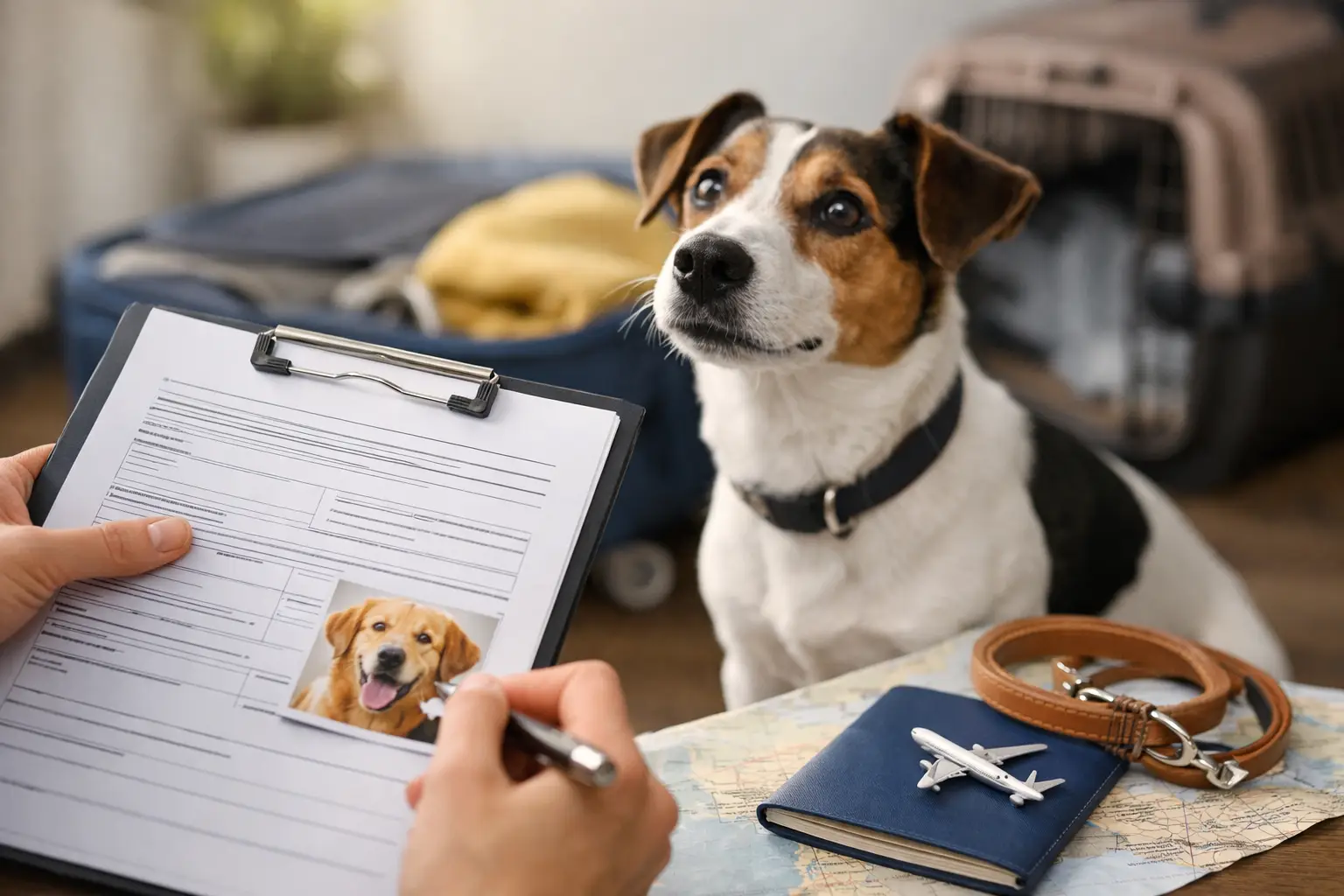
The carrier has finally come down from the loft, the ferry is booked, and now your pet has noticed something is up. If you need to apply for an Animal Health Certificate, do not leave it until the week before you travel. The paperwork itself is usually straightforward, but the vaccination rules and timing can catch even the most organised pet owner out.
For many dogs and cats, the most stressful part of travel preparation is not the certificate. It is the car journey, the waiting room, unfamiliar smells and being hurried through an appointment. A calm, properly planned visit gives everyone more breathing space - including you.
What is an Animal Health Certificate? 🐾
An Animal Health Certificate, often shortened to AHC, is the official document many pets need when travelling from Great Britain to the EU. It confirms that your dog, cat or ferret meets the relevant animal health requirements for the trip.
It is not a pet passport, and it is not an annual document you can keep reusing for every holiday. In most cases, you need a new AHC for each journey from Great Britain. Once issued, it is generally valid for entry into the EU for 10 days, for onward travel within the EU for six months, and for return to Great Britain for six months.
That sounds generous, but the 10-day entry window is the one that matters when you are arranging your appointment. If you are travelling on a Saturday, for example, the certificate cannot be issued weeks beforehand just because that is more convenient.
Start with the microchip and rabies vaccination
The core requirement is simple: your pet must be microchipped and have a valid rabies vaccination. The order matters. The microchip must be implanted before, or on the same day as, the rabies vaccination. If the rabies vaccine was given first, it won't be accepted for travel purposes, even if your pet has been chipped ever since.
For a first rabies vaccination, there is a 21-day wait before your pet can travel. This is where plans often need adjusting. A family booking a last-minute break can discover that a healthy, vaccinated dog still cannot travel because the rabies jab was only given a fortnight ago.
Booster vaccinations are a little different. If your pet has had uninterrupted rabies boosters, with each one given before the previous vaccine expired, there may be no further 21-day wait. However, if a booster has lapsed, it is treated as a new primary vaccination and the 21 days start again.
Bring any previous vaccination records with you. They help the certifying vet check dates, vaccine details and your pet’s microchip number properly. A tiny date error on travel paperwork is not something anyone wants to spot at the port.
When should you apply for an Animal Health Certificate?
A sensible rule is to contact your vet as soon as travel becomes a real plan, ideally several weeks ahead. This is particularly important if your pet needs a rabies vaccination, if you are unsure whether an old booster remained valid, or if you are travelling at a busy time such as school holidays.
The final AHC appointment must happen close enough to departure to fall within that 10-day entry period. Your vet will scan the microchip, review the rabies evidence and complete the certificate. Only an Official Veterinarian, often called an OV, can issue it.
Do not assume a routine vaccination appointment automatically includes travel certification. An AHC involves checking legal requirements and completing a detailed official document, so it needs to be booked specifically. It is worth asking what information the practice needs beforehand and how long the appointment will allow. Rushed paperwork is no one’s idea of holiday prep.
At Vet on the Loose, travel paperwork can be arranged around a longer, unhurried appointment, with the option of a home visit across parts of Essex, Hertfordshire and London. That can be a real relief for a cat who regards the carrier as a personal insult, or a dog who finds a busy waiting room overwhelming.
What to have ready for the appointment
The less detective work required on the day, the smoother the process. Have your pet’s vaccination record available, including the rabies vaccine date, manufacturer and batch details if recorded. You will also need your travel dates, destination and the route you are taking.
Check that the name, sex, species and microchip number in your pet’s records are correct. If you have changed surname, moved house or adopted a pet with incomplete paperwork, mention this when booking rather than hoping it will sort itself out later.
It is also helpful to tell the vet whether you are travelling directly to your destination, driving through several countries, or returning via a different route. Requirements can depend on where you enter and where you are going, rather than simply where you are spending most of the holiday.
Dogs may need tapeworm treatment
Dogs travelling to Finland, Ireland, Malta, Norway or Northern Ireland may need tapeworm treatment before entry. This must be given by a vet and recorded in the certificate within the required time window, usually between 24 and 120 hours before arrival.
This is not a treatment to pick up from the pet shop and give at home. The timing and the vet’s recorded details matter. If your journey involves one of these destinations, flag it from the first conversation so the treatment can be planned around your crossing time.
Common travel paperwork mistakes
The biggest mistake is leaving rabies too late, closely followed by assuming a previous pet passport is still valid for journeys from Great Britain. A passport issued in Great Britain is not generally accepted as a substitute for a new AHC when entering the EU.
Another is counting the 21-day rabies wait incorrectly. The vaccination day is day zero, not day one. If there is any doubt over dates, ask the certifying vet to check rather than relying on a calendar calculation made during a late-night packing session.
Owners sometimes forget that the person travelling must have the original certificate with them. Photographs on a mobile phone are useful as a back-up for your own records, but border officials need to see the original document. Keep it protected from spilled water bottles, chewed luggage tags and the general chaos of departure day.
Finally, check your transport provider’s rules as well as the animal health rules. Airlines, ferry companies and accommodation providers may have their own requirements around carrier sizes, muzzle policies, check-in times or advance notification. The AHC gets your pet through the official border process; it does not override a carrier’s conditions of travel.
Is home certification right for your pet? 🏡
It depends on your pet and the practicalities of the journey. Some animals are perfectly happy popping into a clinic, particularly if they know the team. Others become distressed before they have even left the driveway. For those pets, an in-home consultation can make the examination and microchip scan feel far less like an ordeal.
There are practical benefits for owners too. You can lay out the vaccination paperwork on the kitchen table, ask every question without watching the clock and enjoy a cuppa while the admin is checked. For multi-pet households, one travel visit may also be easier to coordinate than loading several carriers into the car.
Home visits are not a shortcut around the rules. Your pet still needs the right vaccination history, the examination still needs to be completed correctly and the certificate still has to be issued at the right time. What changes is the setting: calmer, more personal and without the extra stress of a waiting room.
Travel with pets takes more planning than travelling alone, but it should not feel like a legal puzzle. Get the rabies dates checked early, book the right certificate appointment close to departure, and give yourself enough time to deal with the details. Then you can focus on the much nicer question: whether your pet will approve of the holiday accommodation.