🐾 Start with the journey, not the paperwork
Before booking an appointment, pin down the exact route. Are you travelling from Great Britain to the EU? Driving through France to Spain? Flying directly to a non-EU country? Returning through Northern Ireland? Each detail can change what is required.
For most dogs, cats and ferrets travelling from Great Britain to the EU, an Animal Health Certificate (AHC) is the document owners need. It confirms your pet’s identity and rabies status, and is completed by an Official Veterinarian. An AHC is not a reusable passport: it is issued for one trip.
A valid AHC can usually be used to enter the EU for 10 days from the date it is issued, then for onward travel within the EU for four months, and for returning to Great Britain within four months. That means timing matters. Have it issued too early and it may expire before you reach the border. Leave it too late and there may be no room to fix a missing detail.
Pet travel is one area where a quick internet search can create more worry than clarity. Rules can change, and individual carriers or border officials may have their own checks. A veterinary practice can prepare the certificate, but owners remain responsible for checking the current entry requirements for every country on their route.
Animal travel documents for EU trips
For a straightforward trip from Great Britain to an EU country, your dog, cat or ferret will normally need a readable microchip and a current rabies vaccination. The microchip must be implanted before the rabies vaccine is given. If the vaccination record shows the vaccine was administered first, it may not be accepted for travel purposes, even if it was only by a day.
After a first rabies vaccination, pets must usually wait 21 clear days before they can travel. That catch-out is particularly common with young pets and newly adopted animals. A puppy can be old enough for vaccination but still not old enough, or not fully covered in time, for the planned holiday.
If your pet has had rabies vaccinations kept up to date without a gap, there is generally no new 21-day wait. However, the exact vaccine details, microchip number and vaccination dates must all be correct in the records. One transposed digit can turn a peaceful ferry check-in into a very stressful conversation.
Older UK-issued pet passports are not usually valid as travel documents for journeys from Great Britain to the EU. Some pets may hold a valid passport issued by an EU country or certain other recognised territories, but do not assume a blue passport is automatically acceptable. Bring it to your appointment so the vet can check what it is and whether it is current.
Dogs may need tapeworm treatment
Dogs travelling to Finland, Ireland, Malta, Norway or Northern Ireland need treatment against the tapeworm Echinococcus multilocularis. This must be given by a vet and recorded in the travel document between one and five days before arrival.
The timing is precise. If you are crossing several borders, work backwards from when you expect to enter the relevant country, not from when you set off from home. This is not a treatment you can give yourself from a tablet bought online - it needs the correct product, administration by a vet and the right paperwork entry.
✈️ Flying is a separate set of rules
An Animal Health Certificate does not automatically mean an airline will carry your pet. Airlines set their own rules on cabin travel, cargo transport, crate dimensions, breed restrictions and minimum check-in times. Some do not take pets at all on certain routes.
Your airline may also ask for a fit-to-fly certificate. This is different from an AHC. It confirms, based on a veterinary assessment, that your pet appears fit for the journey at the time of examination. It is not a guarantee that flying is risk-free, particularly for elderly pets, animals with heart or breathing conditions, or flat-faced breeds such as French Bulldogs, Pugs and Persian cats.
A calm, honest conversation is worthwhile here. Flying can be the right choice for some pets, but it is not automatically the kindest one. A long car journey with regular breaks may suit one dog beautifully, while another may cope better staying at home with a trusted carer. For cats, the answer is often even more individual.
Countries outside the EU can need much more notice
Non-EU travel can involve blood tests, import permits, official endorsements, quarantine arrangements or specific parasite treatments. Some destinations require a rabies blood test known as a titre test, followed by a waiting period. In practical terms, that can mean planning months ahead rather than weeks.
If you are travelling with a pedigree, rescue or unusual species, additional questions can arise. Certain birds, reptiles and animals made from protected species may fall under CITES controls. Commercial movement, moving more than five pets, or travelling for sale or rehoming can also follow different rules from ordinary pet travel.
This is why it helps to treat the destination country’s government guidance as the starting point. Check the requirements before you book non-refundable flights or accommodation. Then arrange a veterinary appointment early enough to build in a buffer if a vaccine, test or document needs repeating.
A practical timeline that avoids last-minute panic
For a standard EU trip, start looking at requirements as soon as you are considering travel. Check the microchip and rabies history several months ahead if possible, especially if you have a new pet or cannot find the paperwork.
Around six to eight weeks before travel, confirm your route, carrier requirements and whether any destination-specific treatment is needed. If the rabies vaccination is overdue, this gives you time for the 21-day post-vaccination wait. In the final two weeks, arrange the Animal Health Certificate appointment within the 10-day issue window and make sure the person travelling with the pet has the original paperwork.
Keep every document together: vaccination history, previous passport if there is one, booking references, your travel itinerary and any airline forms. Photograph them too, but remember that border staff usually need to see originals rather than a photo on your phone.
A quieter way to get travel-ready
A travel paperwork appointment should not feel like another rushed task squeezed into an already busy week. Your vet needs time to scan the microchip, review the vaccination record, check your pet’s general health where needed and complete the certificate accurately.
For pets who hate the carrier, the car park or the waiting room, an at-home appointment can take much of that strain away. Vet on the Loose offers Animal Health Certificates and fit-to-fly paperwork across parts of Essex, Hertfordshire and London , with longer appointments that allow time to check the details properly and answer the questions that tend to appear once the suitcase is already out.
Do not leave animal travel documents until the final few days. Start with your pet’s microchip and rabies record, check every country on the route, and give yourself enough breathing space to enjoy the journey - and perhaps even a cuppa before you leave.
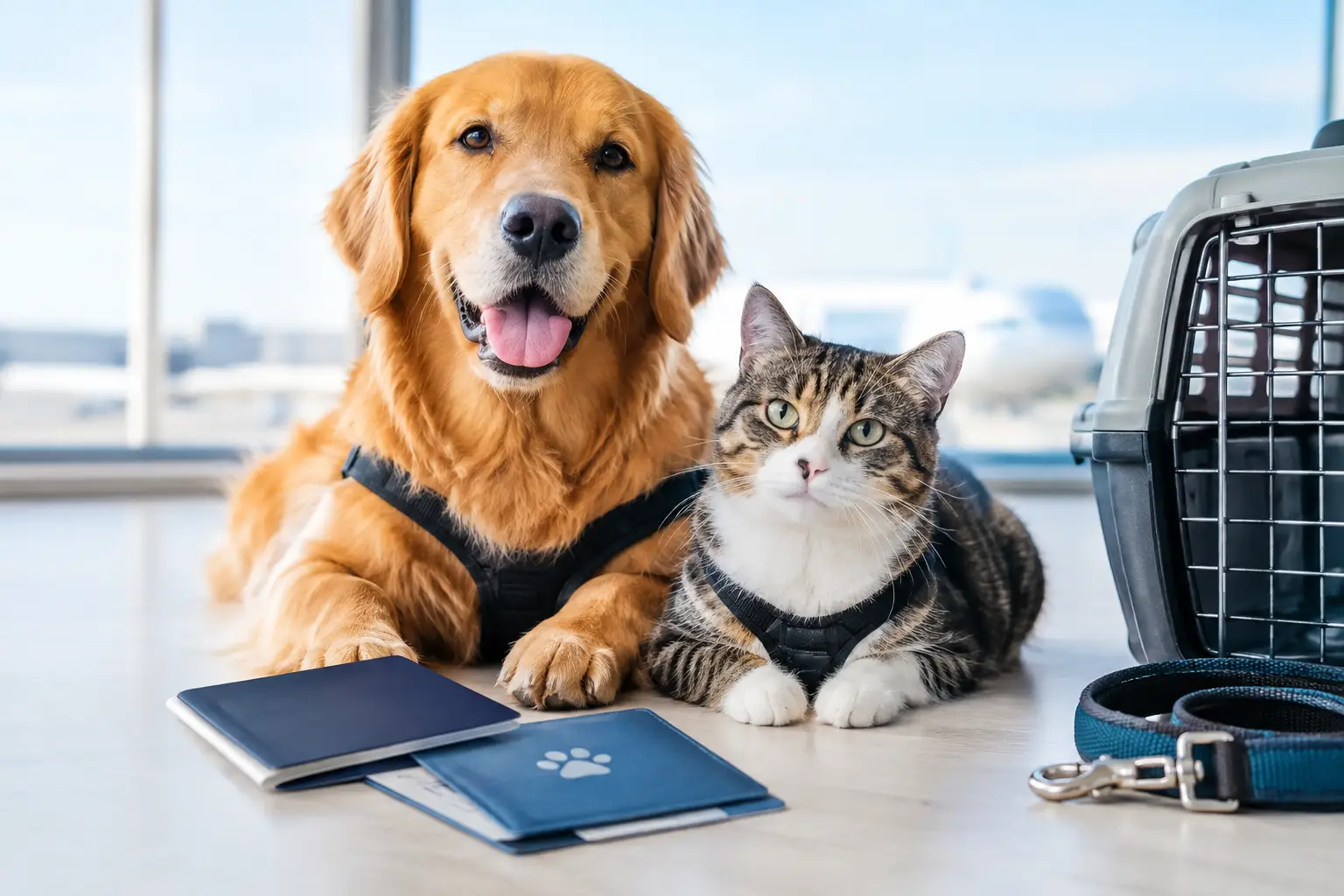
The holiday is booked, the pet sitter plan has changed, and now your dog or cat is coming with you. Lovely - until you discover that animal travel documents are not something to sort out the week before you leave. Depending on where you are going, your pet may need a microchip, rabies vaccination, an Animal Health Certificate, parasite treatment and sometimes extra paperwork from the airline or destination country.
The good news is that it is manageable when you start early. The less-good news is that rules vary by country, route and type of journey, so a friend’s experience travelling to France last year may not match your plans this year.
🐾 Start with the journey, not the paperwork
Before booking an appointment, pin down the exact route. Are you travelling from Great Britain to the EU? Driving through France to Spain? Flying directly to a non-EU country? Returning through Northern Ireland? Each detail can change what is required.
For most dogs, cats and ferrets travelling from Great Britain to the EU, an Animal Health Certificate (AHC) is the document owners need. It confirms your pet’s identity and rabies status, and is completed by an Official Veterinarian. An AHC is not a reusable passport: it is issued for one trip.
A valid AHC can usually be used to enter the EU for 10 days from the date it is issued, then for onward travel within the EU for four months, and for returning to Great Britain within four months. That means timing matters. Have it issued too early and it may expire before you reach the border. Leave it too late and there may be no room to fix a missing detail.
Pet travel is one area where a quick internet search can create more worry than clarity. Rules can change, and individual carriers or border officials may have their own checks. A veterinary practice can prepare the certificate, but owners remain responsible for checking the current entry requirements for every country on their route.
Animal travel documents for EU trips
For a straightforward trip from Great Britain to an EU country, your dog, cat or ferret will normally need a readable microchip and a current rabies vaccination. The microchip must be implanted before the rabies vaccine is given. If the vaccination record shows the vaccine was administered first, it may not be accepted for travel purposes, even if it was only by a day.
After a first rabies vaccination, pets must usually wait 21 clear days before they can travel. That catch-out is particularly common with young pets and newly adopted animals. A puppy can be old enough for vaccination but still not old enough, or not fully covered in time, for the planned holiday.
If your pet has had rabies vaccinations kept up to date without a gap, there is generally no new 21-day wait. However, the exact vaccine details, microchip number and vaccination dates must all be correct in the records. One transposed digit can turn a peaceful ferry check-in into a very stressful conversation.
Older UK-issued pet passports are not usually valid as travel documents for journeys from Great Britain to the EU. Some pets may hold a valid passport issued by an EU country or certain other recognised territories, but do not assume a blue passport is automatically acceptable. Bring it to your appointment so the vet can check what it is and whether it is current.
Dogs may need tapeworm treatment
Dogs travelling to Finland, Ireland, Malta, Norway or Northern Ireland need treatment against the tapeworm Echinococcus multilocularis. This must be given by a vet and recorded in the travel document between one and five days before arrival.
The timing is precise. If you are crossing several borders, work backwards from when you expect to enter the relevant country, not from when you set off from home. This is not a treatment you can give yourself from a tablet bought online - it needs the correct product, administration by a vet and the right paperwork entry.
✈️ Flying is a separate set of rules
An Animal Health Certificate does not automatically mean an airline will carry your pet. Airlines set their own rules on cabin travel, cargo transport, crate dimensions, breed restrictions and minimum check-in times. Some do not take pets at all on certain routes.
Your airline may also ask for a fit-to-fly certificate. This is different from an AHC. It confirms, based on a veterinary assessment, that your pet appears fit for the journey at the time of examination. It is not a guarantee that flying is risk-free, particularly for elderly pets, animals with heart or breathing conditions, or flat-faced breeds such as French Bulldogs, Pugs and Persian cats.
A calm, honest conversation is worthwhile here. Flying can be the right choice for some pets, but it is not automatically the kindest one. A long car journey with regular breaks may suit one dog beautifully, while another may cope better staying at home with a trusted carer. For cats, the answer is often even more individual.
Countries outside the EU can need much more notice
Non-EU travel can involve blood tests, import permits, official endorsements, quarantine arrangements or specific parasite treatments. Some destinations require a rabies blood test known as a titre test, followed by a waiting period. In practical terms, that can mean planning months ahead rather than weeks.
If you are travelling with a pedigree, rescue or unusual species, additional questions can arise. Certain birds, reptiles and animals made from protected species may fall under CITES controls. Commercial movement, moving more than five pets, or travelling for sale or rehoming can also follow different rules from ordinary pet travel.
This is why it helps to treat the destination country’s government guidance as the starting point. Check the requirements before you book non-refundable flights or accommodation. Then arrange a veterinary appointment early enough to build in a buffer if a vaccine, test or document needs repeating.
A practical timeline that avoids last-minute panic
For a standard EU trip, start looking at requirements as soon as you are considering travel. Check the microchip and rabies history several months ahead if possible, especially if you have a new pet or cannot find the paperwork.
Around six to eight weeks before travel, confirm your route, carrier requirements and whether any destination-specific treatment is needed. If the rabies vaccination is overdue, this gives you time for the 21-day post-vaccination wait. In the final two weeks, arrange the Animal Health Certificate appointment within the 10-day issue window and make sure the person travelling with the pet has the original paperwork.
Keep every document together: vaccination history, previous passport if there is one, booking references, your travel itinerary and any airline forms. Photograph them too, but remember that border staff usually need to see originals rather than a photo on your phone.
A quieter way to get travel-ready
A travel paperwork appointment should not feel like another rushed task squeezed into an already busy week. Your vet needs time to scan the microchip, review the vaccination record, check your pet’s general health where needed and complete the certificate accurately.
For pets who hate the carrier, the car park or the waiting room, an at-home appointment can take much of that strain away. Vet on the Loose offers Animal Health Certificates and fit-to-fly paperwork across parts of Essex, Hertfordshire and London , with longer appointments that allow time to check the details properly and answer the questions that tend to appear once the suitcase is already out.
Do not leave animal travel documents until the final few days. Start with your pet’s microchip and rabies record, check every country on the route, and give yourself enough breathing space to enjoy the journey - and perhaps even a cuppa before you leave.