

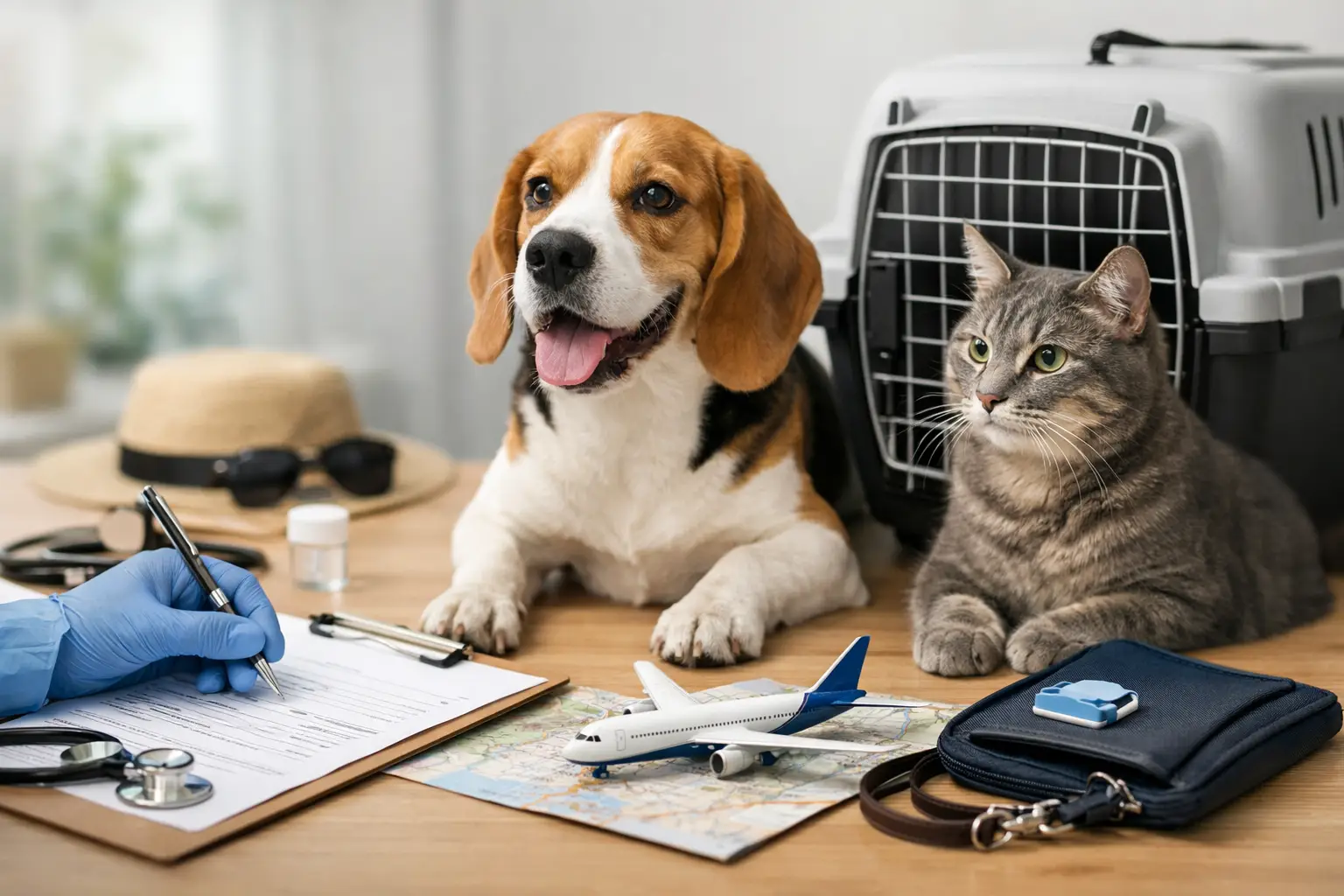
The carrier is out, the suitcase is open and your dog or cat has already noticed something is afoot. Before holiday excitement turns into travel-document panic, use this Animal Health Certificate guide to get the veterinary side organised early. An Animal Health Certificate, often called an AHC, is the document many pets need when travelling from Great Britain to the EU and certain other European destinations.
It is paperwork, yes, but it is not just paperwork. The certificate confirms that your pet can travel under the relevant animal health rules. Getting the timing wrong can mean a cancelled crossing, a very expensive last-minute change of plan or, worse, your pet being refused entry. The good news is that it is usually straightforward when you start early.
🐾 What is an Animal Health Certificate?
An AHC is an official veterinary certificate for an individual trip. It replaced the old UK-issued pet passport for most journeys from Great Britain to the EU after Brexit. It records your pet’s microchip details, rabies vaccination and the destination information required for travel.
A certificate must be completed by an authorised Official Veterinarian, not simply any member of the practice team. It is issued after the vet has checked the original vaccination evidence, scanned the microchip and made sure the details all match. A single incorrect digit in a microchip number is not a tiny admin error at a border - it can stop the journey.
An AHC is normally valid for entry into the EU for 10 days from the date it is issued. Once you have entered, it can generally be used for onward travel within the EU for up to six months, and for your return to Great Britain within that same period. It is not a reusable replacement for a pet passport, so a new certificate is usually needed for each new trip from Great Britain.
If your pet has a valid EU-issued pet passport, the position may be different. Keep it safe and ask a vet to check it before assuming you need an AHC.
Start with the rabies vaccination, not the certificate
The most common travel problem is not the AHC appointment. It is discovering the rabies vaccination was given too late.
Your pet must be microchipped before, or at the same time as, their rabies vaccination. If the rabies vaccine is their first one, they must wait at least 21 days before travelling. That waiting period is counted from the day after vaccination, so leaving it until the week before your ferry or flight will not work.
A rabies booster can avoid the 21-day wait, but only if it has been given before the previous vaccine expired. If there has been a lapse, the vaccine may be treated as a new primary vaccination and the 21-day rule can apply again. This is why checking the vaccination record several months before travel is far less stressful than finding it in a drawer the night before your appointment.
Your pet also needs to be at least 12 weeks old to have a rabies vaccination. In practical terms, that means very young puppies and kittens are not able to take a spontaneous European holiday.
When should you book the AHC appointment?
Book your AHC appointment as soon as you know your travel dates, ideally three to four weeks ahead. The certificate itself cannot be issued more than 10 days before you enter the EU, but planning early gives you time to sort out a missing rabies vaccine, unclear records or a microchip that is difficult to read.
The appointment is commonly booked around one to 10 days before travel. The best date depends on your route, when you are crossing a border and whether there are any destination-specific treatments to arrange. Do not assume the date of your flight is the only date that matters. If you travel by car and ferry, it is the point at which you enter the EU that counts.
For busy households, an at-home appointment can make the process much more manageable. There is no wrestling a worried cat into a carrier for a packed waiting room, and no trying to entertain the dog while balancing passports, vaccine cards and children. Vet on the Loose can check the required documents in the calm of your own home, with time to go through the details rather than rushing through a standard slot.
🧳 What to have ready for your Animal Health Certificate
Bring the original vaccination certificate or veterinary record showing the rabies vaccination. A photograph on your phone may help you remember the information, but the Official Veterinarian needs to see the original evidence. The record should show the microchip number, vaccine product, date it was given and the date it remains valid until.
You will also need your travel details, including the country where you will first enter the EU, your planned date of travel and the address where you will stay. Take your pet’s previous travel paperwork too, if they have any. It can be useful background even where a new AHC is needed.
Most importantly, bring the pet. The vet must scan the microchip in person and confirm it matches the vaccination record. If your pet is nervous, tell the practice when booking. A little extra preparation, some favourite treats and an unhurried approach can make a big difference.
The rules that can catch owners out
Travel paperwork has a habit of looking simple until one small detail changes the answer. Your destination, route, pet’s vaccine history and species all matter.
Dogs travelling to Finland, Ireland, Malta or Norway usually need tapeworm treatment before arrival. This must be given by a vet and recorded correctly in the certificate within a specific window, generally between one and five days before entering the country. Ordinary flea and worming at home does not count for this requirement.
Airlines, ferry companies and Eurotunnel also have their own rules. They may set limits on the number of pets, insist on a particular carrier, restrict certain routes or have check-in deadlines that are earlier than you expect. An AHC proves your pet meets the animal health requirements, but it does not override a carrier’s booking conditions.
Some destinations outside the EU require different documents, blood tests, import permits or a longer preparation period. Likewise, rules for Northern Ireland, return journeys and non-standard routes can change. Ask about the specific country and route when you book rather than relying on a social media post from someone who travelled last summer.
A calm appointment makes room for the important bits
An AHC appointment is not the place for guesswork. The vet needs to verify every entry, and owners deserve the chance to ask ordinary, sensible questions: Does the booster still count? Which date is my 10-day window? Does my dog need tapeworm treatment? What should I take to the ferry terminal?
That is why longer appointments matter. A certificate may look like a form, but it carries real consequences for your pet and your plans. A careful check can prevent the sort of problem that only becomes visible when you are already standing at check-in with a confused cat and a holiday booking you have been looking forward to for months.
Keep the completed AHC with your own passport rather than packing it in the luggage. Check it again before leaving home, alongside your pet’s microchip number and any carrier confirmation. If anything in the document looks wrong, raise it before you travel, not at the port.
A little forward planning leaves more space for the nice part: arriving safely, settling your pet in and enjoying that first relaxed walk or sunny windowsill nap together.